Trifluoroacetic acid → HCID 68459898, compound
Reaction equation

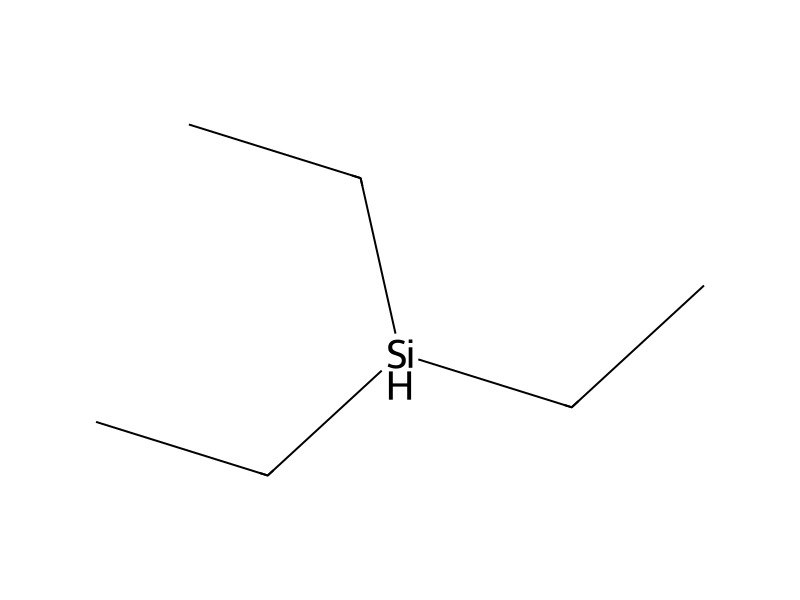
[CH3:1][O:2][C:3]1[C:4]([C:14](O)([CH3:16])[CH3:15])=[CH:5][C:6]2[CH2:7][CH2:8][CH2:9][CH:10]([CH3:13])[C:11]=2[CH:12]=1.C([SiH](CC)CC)C.FC(F)(F)C(O)=O>C(Cl)Cl>[CH:14]([C:4]1[CH:5]=[C:6]2[C:11](=[CH:12][C:3]=1[O:2][CH3:1])[CH:10]([CH3:13])[CH2:9][CH2:8][CH2:7]2)([CH3:16])[CH3:15]Participants
Reactant 3


Product 1

Reagents, catalysts & solvents 1

Procedure
To a stirred solution of 2-(3-methoxy-5-methyl-5,6,7,8-tetrahydro-naphthalen-2-yl)-propan-2-ol (5.38 g, 22.96 mmol) in methylene chloride (100 mL) at room temperature under nitrogen atmosphere, was added triethyl silane (36.6 mL, 229.6 mmol) followed by trifluoroacetic acid (17.7 mL, 229.6 mmol). The reaction mixture was stirred for five hours at room temperature, then was concentrated under reduced pressure. The residue was partitioned between methylene chloride and saturated aqueous potassium carbonate solution. The organic layer was separated, washed with brine, dried (Na2SO4), filtered and concentrated under reduced pressure. The residue was purified with flash chromatography on silica (10:0.1 hexanes/dichloromethane) to give 3.06 g of 6-isopropyl-7-methoxy-1-methyl-1,2,3,4-tetrahydro-naphthalene.
Workup
- concentrationwas concentrated under reduced pressure
- customThe residue was partitioned between methylene chloride and saturated aqueous potassium carbonate solution
- customThe organic layer was separated
- washwashed with brine
- dry with materialdried (Na2SO4)
- filtrationfiltered
- concentrationconcentrated under reduced pressure
- customThe residue was purified with flash chromatography on silica (10:0.1 hexanes/dichloromethane)
Sources & evidence
- ORD record
- ord-6027d7f84b7e4d77bf8f97723370324f
- Source dataset
- uspto-grants-2010_08
- Patent number
- US07776872B2
Reaction notes
Loading…