Hydrochloric Acid → 3-(4-Bromo-phenyl)-pyrrole-2,5-dione
Reaction equation

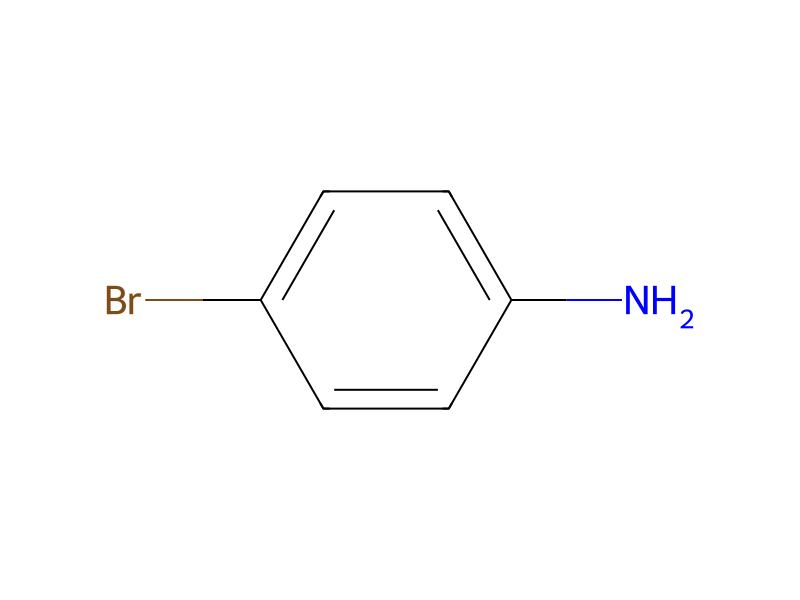
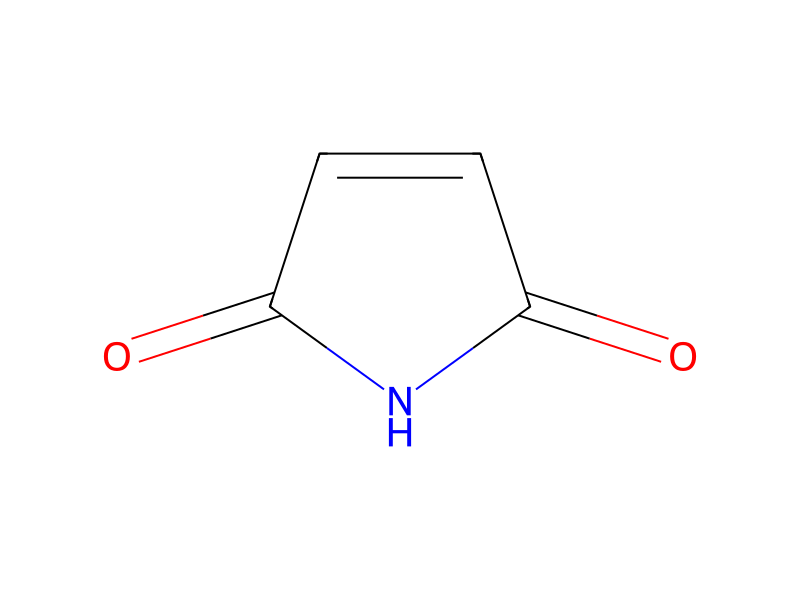
Cl.[Br:2][C:3]1[CH:9]=[CH:8][C:6](N)=[CH:5][CH:4]=1.N([O-])=O.[Na+].[C:14]1(=[O:20])[NH:18][C:17](=[O:19])[CH:16]=[CH:15]1.C([O-])(=O)C.[Na+]>O.CC(C)=O.[Cu](Cl)Cl>[Br:2][C:3]1[CH:9]=[CH:8][C:6]([C:16]2[C:17](=[O:19])[NH:18][C:14](=[O:20])[CH:15]=2)=[CH:5][CH:4]=1Participants
Reactant 5



Product 1

Reagents, catalysts & solvents 3



Procedure
A solution of hydrochloric acid (37%, 27 mL) in water (11 mL) was added to 4-bromo aniline (15 g) at room temperature with vigorous stirring and the formed precipitate was allowed to stir for further 30 minutes. Temperature was reduced to 0° C. and a solution of sodium nitrite (6.60 g) in water (17 mL) was added dropwise to the stirred suspension. At the end of diazotisation, a clear yellow solution was obtained. Maleimide (16.90 g) in acetone (70 mL) was added dropwise at 0° C. and then the pH of the solution was adjusted to 3-3.5 by adding sodium acetate. Copper (II) chloride (1.76 g) was added to the vigorously stirred mixture. The reaction mixture was allowed to stir at 0° C. for 1 h and overnight at room temperature. Acetone was removed in vacuo, the residue was filtered and dried overnight in vacuo to give the crude title compound (14.12 g) which was used without further purification.
Workup
- stirringto stir for further 30 minutes
- customwas reduced to 0° C.
- customAt the end of diazotisation, a clear yellow solution was obtained
- stirringto stir at 0° C. for 1 h and overnight at room temperature
- customAcetone was removed in vacuo
- filtrationthe residue was filtered
- customdried overnight in vacuo
Sources & evidence
- ORD record
- ord-a0ed9f0fbf124899862bee9254790451
- Source dataset
- uspto-grants-2010_08
- Patent number
- US07776904B2
Reaction notes
Loading…