1,3-Propanedithiol → 2-(4-bromophenyl)-5,6-dihydro-4H-1,3-dithiin-1-ium trifluoromethanesulfonate
Reaction equation

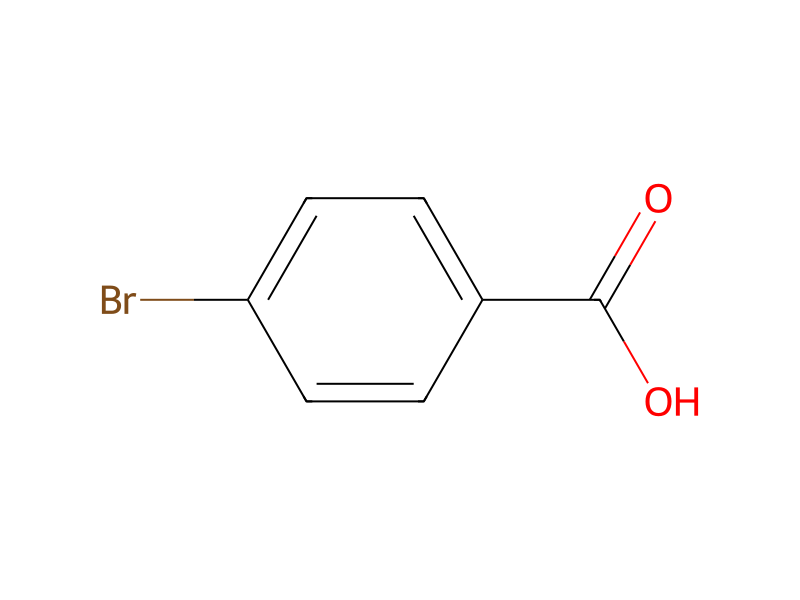
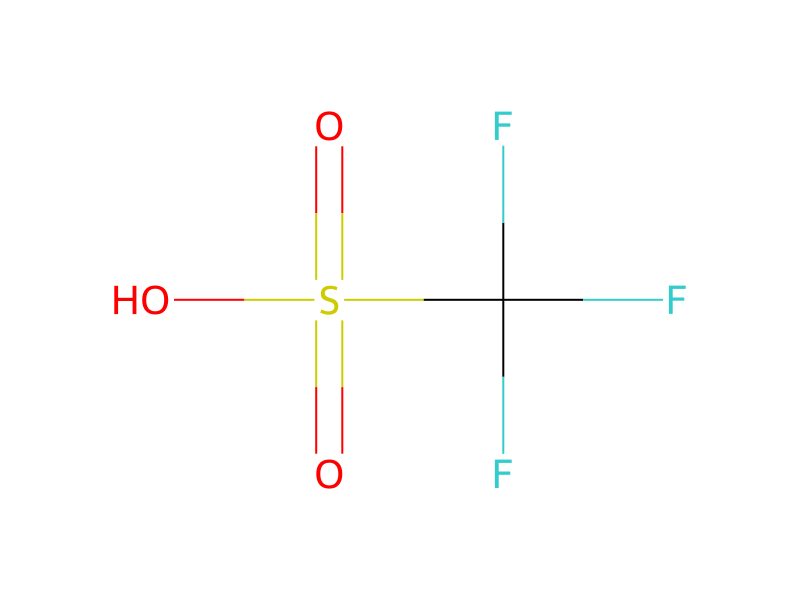
[Br:1][C:2]1[CH:10]=[CH:9][C:5]([C:6](O)=O)=[CH:4][CH:3]=1.[CH2:11]([SH:15])[CH2:12][CH2:13][SH:14].[F:16][C:17]([F:23])([F:22])[S:18]([OH:21])(=[O:20])=[O:19]>C(CC(C)(C)C)(C)C.C1(C)C=CC=CC=1>[F:16][C:17]([F:23])([F:22])[S:18]([O-:21])(=[O:20])=[O:19].[Br:1][C:2]1[CH:10]=[CH:9][C:5]([C:6]2[S:15][CH2:11][CH2:12][CH2:13][S+:14]=2)=[CH:4][CH:3]=1Participants
5



Procedure
48.64 g (242 mmol) of 4-bromobenzoic acid, 31.8 ml (314 mmol) of propane-1,3-dithiol and 27.9 ml (314 mmol) of trifluoromethanesulfonic acid are refluxed in 1.61 of a mixture 1/1 isooctane/toluene for 18 hours. The mixture is cooled down and the product is precipitated by addition of 1.51 of TBME to yield 75 g of 2-(4-bromophenyl)-5,6-dihydro-4H-1,3-dithiin-1-ium trifluoromethanesulfonate as yellow crystals.
Workup
- temperatureThe mixture is cooled down
- customthe product is precipitated by addition of 1.51 of TBME
Sources & evidence
- ORD record
- ord-1d5330b57a6e4a3a8748feac84113776
- Source dataset
- uspto-grants-2015_08
- Patent number
- US09097938B2
Reaction notes
Loading…