Acetic Acid → Ammonia
Reaction equation

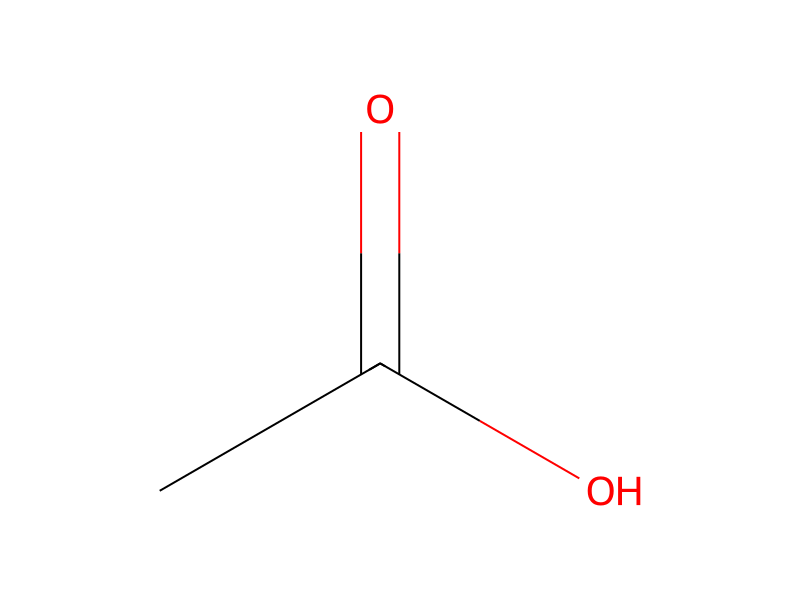
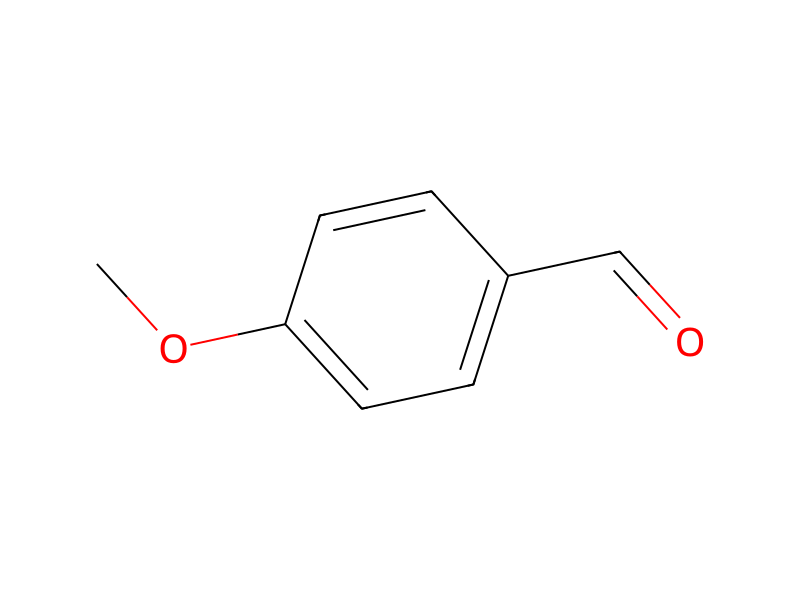
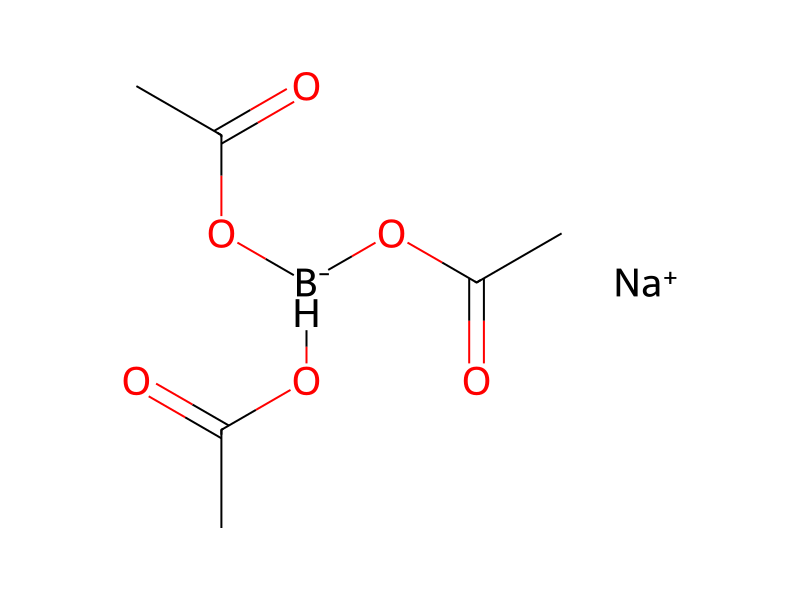
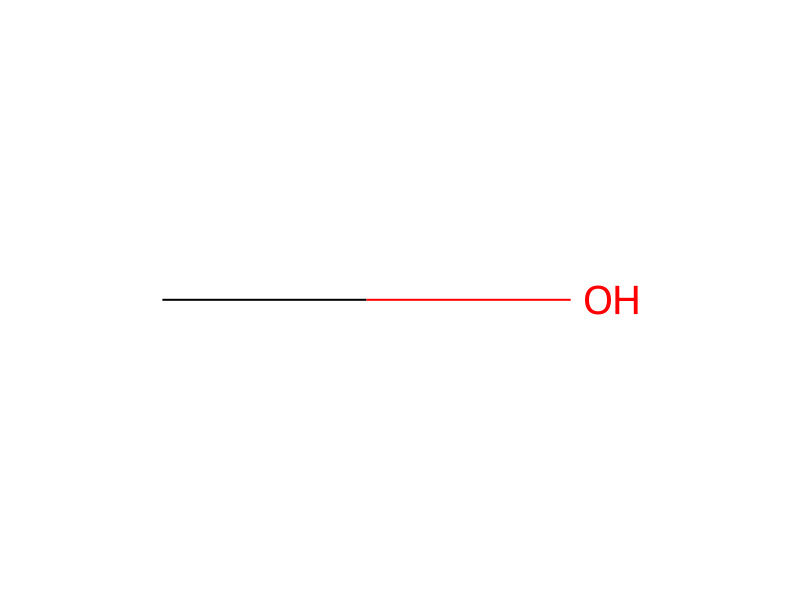
[NH2:1][C@H:2]([CH3:5])[CH2:3][OH:4].[CH:6](=O)[C:7]1[CH:12]=[CH:11][C:10]([O:13][CH3:14])=[CH:9][CH:8]=1.C(O)(=O)C.C(O[BH-](OC(=O)C)OC(=O)C)(=O)C.[Na+]>CO>[NH3:1].[CH3:14][O:13][C:10]1[CH:11]=[CH:12][C:7]([CH2:6][NH:1][C@H:2]([CH3:5])[CH2:3][OH:4])=[CH:8][CH:9]=1Participants



Procedure
(R)-(−)-2-Amino-1-propanol (10.36 ml, 133 mmol) was added dropwise to a solution of p-anisaldehyde (5.85 g, 42.9 mmol) in methanol (90 ml), and the solution was cooled in an ice-bath. Acetic acid (2.5 ml) and sodium triacetoxyborohydride (10.0 g, 47.2 mmol) were added and the reaction mixture was allowed to warm to room temperature over an hour. The solution was warmed to 40° C. and stirred for a further 48 hours then concentrated under reduced pressure. The residue was partitioned between saturated sodium bicarbonate solution (50 ml) and dichloromethane (100 ml) and the layers were separated. The aqueous phase was extracted with further dichloromethane (10×50 ml), and the combined organic solutions were dried (MgSO4) and evaporated under reduced pressure. The residue was purified twice by column chromatography on silica gel using an elution gradient of dichloromethane:methanol:0.88 ammonia (97:3:0.3 to 90:10:1) to afford the title compound, 6.0 g. 1H-NMR (CDCl3, 400 MHz) δ: 1.04 (d, 3H), 2.80 (m, 1H), 322 (dd, 1H), 3.58 (dd, 1H), 3.62 (d, 1H), 3.78 (m, 4H), 6.82 (d, 2H), 7.20 (d, 2H). LRMS: m/z (ES+) 196 [MH+]. [α]D=−34.85 (c=0.137, methanol)
Workup
- temperaturethe solution was cooled in an ice-bath
- temperatureThe solution was warmed to 40° C.
- concentrationthen concentrated under reduced pressure
- customThe residue was partitioned between saturated sodium bicarbonate solution (50 ml) and dichloromethane (100 ml)
- customthe layers were separated
- extractionThe aqueous phase was extracted with further dichloromethane (10×50 ml)
- dry with materialthe combined organic solutions were dried (MgSO4)
- customevaporated under reduced pressure
- customThe residue was purified twice by column chromatography on silica gel using an elution gradient of dichloromethane
Sources & evidence
- ORD record
- ord-d0cc1b53175841158cf9c155502589b0
- Source dataset
- uspto-grants-2004_03
- Patent number
- US06713496B2
Reaction notes
Loading…