1,4-Dioxane hydrochloride → HCID 66728677, compound
Reaction equation

[OH:1][C:2]([CH3:21])([CH3:20])[CH2:3][N:4]1[CH2:9][CH2:8][N:7](C(OCC2C=CC=CC=2)=O)[CH2:6][CH2:5]1.[ClH:22].O1CCOCC1>CCO.[Pd].CCOC(C)=O>[ClH:22].[CH3:21][C:2]([OH:1])([CH3:20])[CH2:3][N:4]1[CH2:5][CH2:6][NH:7][CH2:8][CH2:9]1Participants
6
Reactant 2
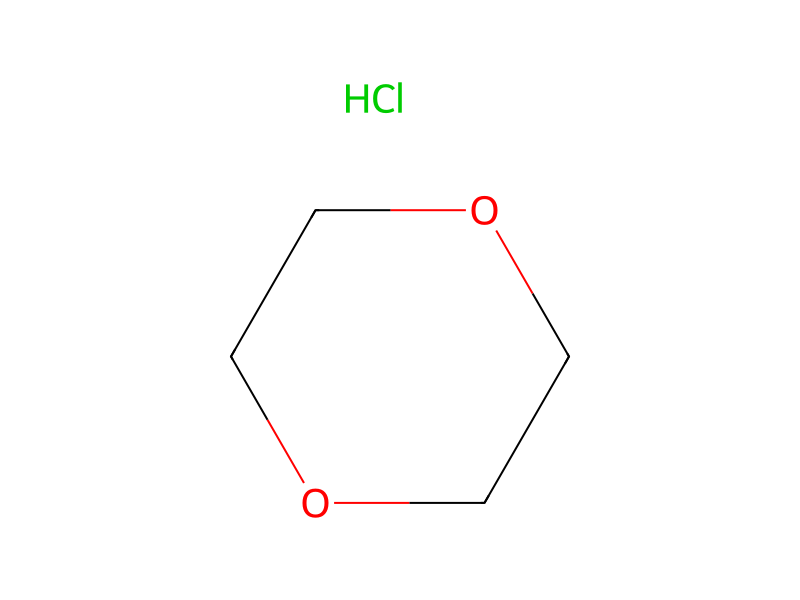

Product 1

Reagents, catalysts & solvents 3



Procedure
To a solution of benzyl 4-(2-hydroxy-2-methylpropyl)piperazine-1-carboxylate (0.54 g, 1.847 mmol) in EtOH (10 mL) was added 10% palladium on carbon (0.1 g, 0.094 mmol). The reaction was stirred overnight under a hydrogen atmosphere. After 16 hours, the reaction was filtered through Celite® brand filter aid (rinsed with MeOH and DCM). The filtrate was concentrated to a clear oil, the oil was diluted with EtOAc, and 4 N HCl/dioxane (0.5 mL; 2 mmol) was added dropwise. The white precipitate was collected by vacuum filtration, washed with diethyl ether, and dried in vacuo, to generate 2-methyl-1-(piperazin-1-yl)propan-2-ol hydrochloride as a brown powder (0.31 g, 86% yield).
Workup
- waitAfter 16 hours
- filtrationthe reaction was filtered through Celite® brand
- filtrationfilter
- washaid (rinsed with MeOH and DCM)
- concentrationThe filtrate was concentrated to a clear oil
- additionwas added dropwise
- filtrationThe white precipitate was collected by vacuum filtration
- washwashed with diethyl ether
- customdried in vacuo
Sources & evidence
- ORD record
- ord-37e4d87731bb489a936111a5c4521ce5
- Source dataset
- uspto-grants-2015_08
- Patent number
- US09115127B2
Reaction notes
Loading…