Chloroacetyl chloride → 6-Nitro-2H-1,4-benzoxazin-3(4H)-one
Reaction equation

[NH2:1][C:2]1[CH:7]=[C:6]([N+:8]([O-:10])=[O:9])[CH:5]=[CH:4][C:3]=1[OH:11].C([O-])([O-])=O.[K+].[K+].Cl[CH2:19][C:20](Cl)=[O:21]>[Br-].C([N+](CCCC)(CCCC)CCCC)CCC.CC#N>[N+:8]([C:6]1[CH:5]=[CH:4][C:3]2[O:11][CH2:19][C:20](=[O:21])[NH:1][C:2]=2[CH:7]=1)([O-:10])=[O:9]Participants


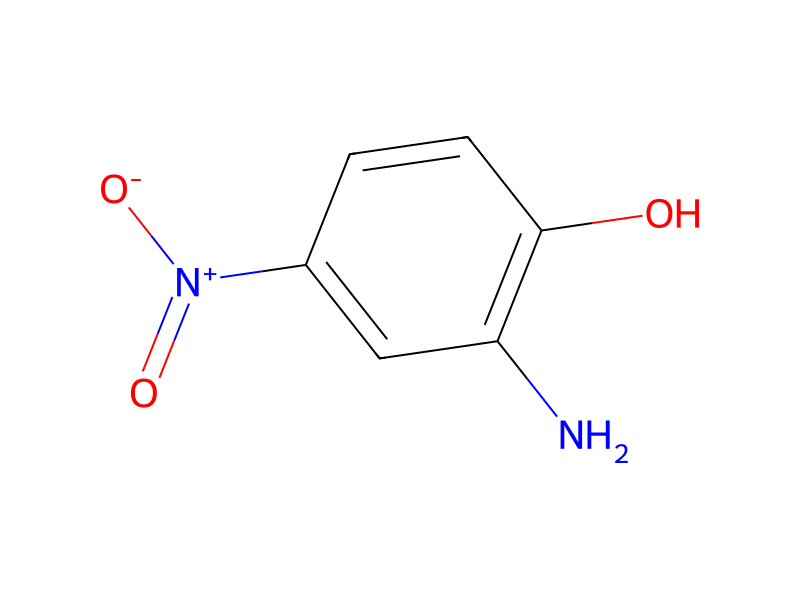



Conditions
- Temperature
- 80 °C
Procedure
To a solution of 2-amino-4-nitrophenol (114.0 g, 740 mmol), K2CO3 (306.2 g, 2220 mmol) and tetrabutyl ammonium bromide (23.8 g, 74 mmol) in MeCN (1.50 L) at 0° C. was added 2-chloroacetyl chloride (83.6 mL, 1110 mmol) dropwise. The reaction mixture was heated at 80° C. for 1 h. The mixture was cooled to ambient temperature and concentrated in vacuo. The residue was dissolved in water (500 mL) and extracted with EtOAc (3×150 mL). The combined organic phase was dried over anhydrous Na2SO4 and filtered. The filtrate was evaporated in vacuo to give 6-nitro-2H-benzo[1,4]oxazin-3-one as a white solid (135.0 g, 94%). 1H NMR (DMSO-d6, 400 MHz): δ 7.83 (dd, J=2.8 Hz, J=9.2 Hz, 1H), 7.75 (d, J=2.8 Hz, 1H), 7.15 (d, J=9.2 Hz, 1H), 4.78 (s, 2H). The amide proton was not observed in DMSO-d6.
Workup
- temperatureThe mixture was cooled to ambient temperature
- concentrationconcentrated in vacuo
- dissolutionThe residue was dissolved in water (500 mL)
- extractionextracted with EtOAc (3×150 mL)
- dry with materialThe combined organic phase was dried over anhydrous Na2SO4
- filtrationfiltered
- customThe filtrate was evaporated in vacuo
Sources & evidence
- ORD record
- ord-cad0cf8e4cb2400aaff8198c230d39d6
- Source dataset
- uspto-grants-2015_08
- Patent number
- US09115151B2
Reaction notes
Loading…