Carbon Disulfide → triethylammonium N-(2-pyrazinyl)-dithiocarbamate
Reaction equation

[NH2:1][C:2]1[CH:3]=[N:4][CH:5]=[CH:6][N:7]=1.[C:8](=[S:10])=[S:9].C(OCC)(=O)C.[CH2:17]([N:19]([CH2:22][CH3:23])[CH2:20][CH3:21])[CH3:18]>CCCCCC>[N:7]1[CH:6]=[CH:5][N:4]=[CH:3][C:2]=1[NH:1][C:8](=[S:9])[S-:10].[CH2:17]([NH+:19]([CH2:22][CH3:23])[CH2:20][CH3:21])[CH3:18]Participants
6
Reactant 4



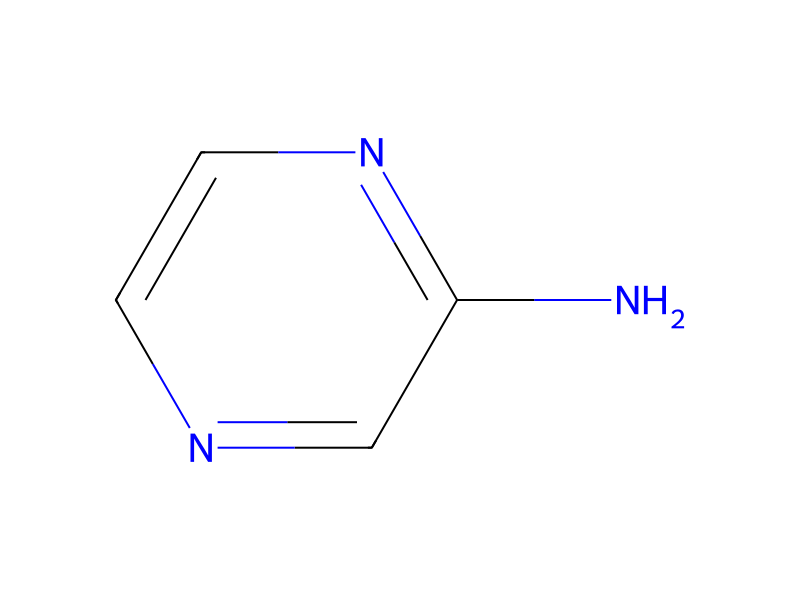
Product 1

Reagents, catalysts & solvents 1

Procedure
In a 100-ml flask, 4.9 g (50 mmol) of 3-aminopyrazine, 4.5 g (59 mmol) of carbon disulfide and 50 ml of ethyl acetate were placed, and 6.5 g (64 mmol) of triethylamine was added dropwise with stirring over a 5-min period on a water bath. After the mixture was stirred at 60° C. for 5 hr. 10 ml of hexane was added to the mixture, which was allowed to stand overnight at room temperature to precipitate yellow crystals. The crystals were separated from the solution by filtration, and washed with 5 ml of ethyl acetate to obtain 4.3 g of triethylammonium N-(2-pyrazinyl)-dithiocarbamate (Intermediate II-1). Yield 31%. Mp 113°-116° C. (dec).
Workup
- stirringAfter the mixture was stirred at 60° C. for 5 hr
- customto precipitate yellow crystals
- customThe crystals were separated from the solution by filtration
- washwashed with 5 ml of ethyl acetate
Sources & evidence
- ORD record
- ord-44ea6459c73449988937bfaeef87df1a
- Source dataset
- uspto-grants-1997_04
- Patent number
- US05616456
Reaction notes
Loading…