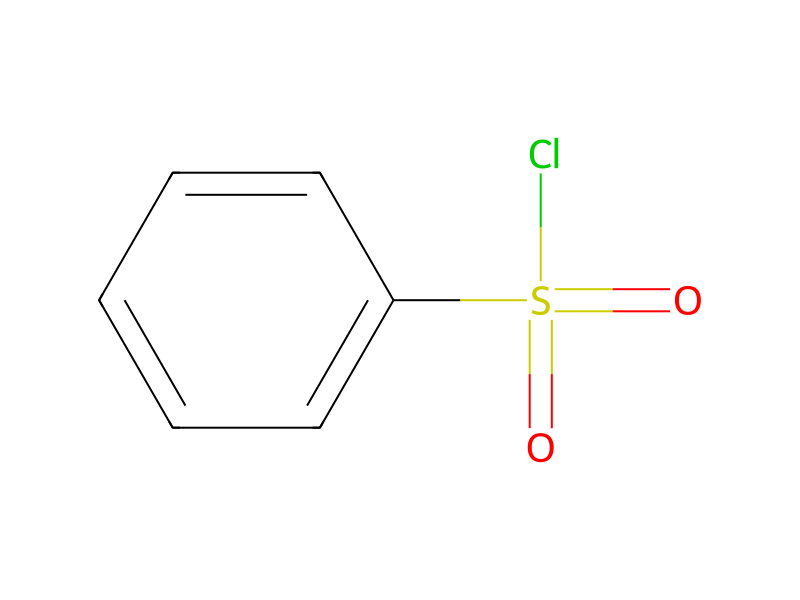
Benzenesulfonyl chloride → 4-Bromo-1-(phenylsulfonyl)-1H-pyrrolo[2,3-B]pyridine
Reaction equation

[Br:1][C:2]1[CH:7]=[CH:6][N:5]=[C:4]2[NH:8][CH:9]=[CH:10][C:3]=12.[H-].[Na+].[C:13]1([S:19](Cl)(=[O:21])=[O:20])[CH:18]=[CH:17][CH:16]=[CH:15][CH:14]=1>CN(C)C=O>[Br:1][C:2]1[CH:7]=[CH:6][N:5]=[C:4]2[N:8]([S:19]([C:13]3[CH:18]=[CH:17][CH:16]=[CH:15][CH:14]=3)(=[O:21])=[O:20])[CH:9]=[CH:10][C:3]=12Participants
Reactant 3


Product 1

Reagents, catalysts & solvents 1

Procedure
To a solution of 4-bromo-1H-pyrrolo[2,3-b]pyridine (15 g, 76 mmol) in N,N-dimethyformamide (300 mL) was added NaH (95%, 3.96 g, 99 mmol) at 0° C. The mixture was allowed to warm up to room temperature and was stirred for another 30 minutes. Benzenesulfonyl chloride (11.78 mL, 91 mmol) was added. After stirring at room temperature for 16 hours, the reaction mixture was quenched with aqueous NaHCO3 solution and was extracted with ethyl acetate (three times with 450 mL). The combined organic layers were washed with water, dried over MgSO4, and filtered. The filtrate was concentrated and the residue was separated by flash chromatography on silica gel (Teledyne CombiFlash Rf, 5% of ethyl acetate in dichloromethane) to provide the title compound. MS (ESI+) m/z 337 (M+1).
Workup
- stirringAfter stirring at room temperature for 16 hours
- customthe reaction mixture was quenched with aqueous NaHCO3 solution
- extractionwas extracted with ethyl acetate (three times with 450 mL)
- washThe combined organic layers were washed with water
- dry with materialdried over MgSO4
- filtrationfiltered
- concentrationThe filtrate was concentrated
- customthe residue was separated by flash chromatography on silica gel (Teledyne CombiFlash Rf, 5% of ethyl acetate in dichloromethane)
Sources & evidence
- ORD record
- ord-5e5a510e4548420280e0fc4c6f9c7aa0
- Source dataset
- uspto-grants-2016_05
- Patent number
- US09328112B2
Reaction notes
Loading…