Sodium hydride → HCID 67966894, compound
Reaction equation

[I-].[CH3:2][S+](C)(C)=O.[H-].[Na+].[CH3:9][C:10]1[C:11](=[O:24])[O:12][C:13]2[C:18]([CH:19]=1)=[C:17]([O:20][CH2:21][O:22][CH3:23])[CH:16]=[CH:15][CH:14]=2.[NH4+].[Cl-]>CS(C)=O>[CH3:9][C:10]12[CH2:2][CH:19]1[C:18]1[C:17]([O:20][CH2:21][O:22][CH3:23])=[CH:16][CH:15]=[CH:14][C:13]=1[O:12][C:11]2=[O:24]Participants





Procedure
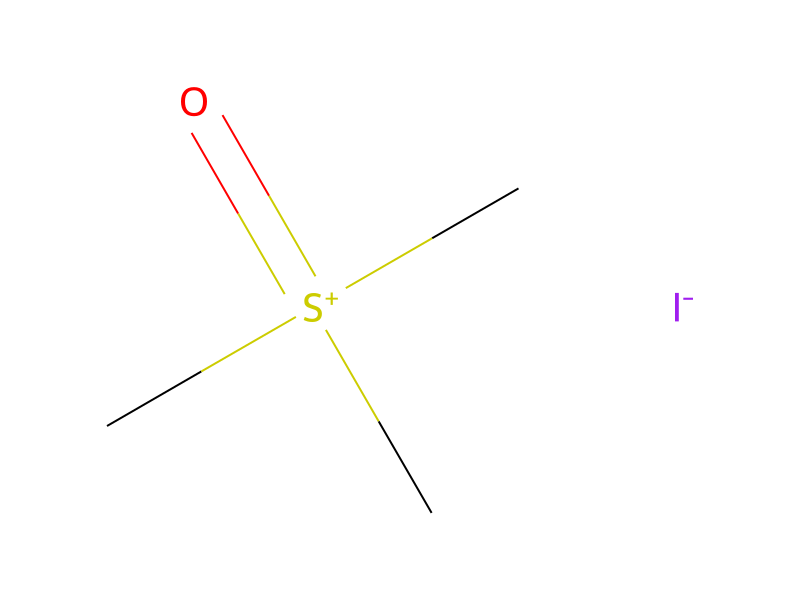
To a solution of trimethylsulfoxonium iodide (4.52 g, 20.55 mmol) in dry dimethyl sulfoxide (50 ml) stirred under nitrogen at room temperature was added neat sodium hydride (60%, 0.822 g, 20.55 mmol). The reaction mixture was stirred at room temperature for 1 hour before adding 3-methyl-5-{[(methyloxy)methyl]oxy}-2H-chromen-2-one (Intermediate 113, 1.81 g) dissolved into 15 ml of DMSO. The reaction mixture turned yellow and was heated and stirred at 100° C. for 4 h. The reaction was then worked up by the addition of a saturated solution of NH4Cl and extracted with diethyl ether, washed with brine, dried over sodium sulphate, filtered and concentrated under vacuum. The residue obtained was purified by silica gel chromatography (Biotage system, with a gradient from pure cyclohexane to cyclohexane/ethyl acetate 5/1) to give the title compound as a white solid (360 mg).
Workup
- temperaturewas heated
- stirringstirred at 100° C. for 4 h
- extractionextracted with diethyl ether
- washwashed with brine
- dry with materialdried over sodium sulphate
- filtrationfiltered
- concentrationconcentrated under vacuum
- customThe residue obtained
- customwas purified by silica gel chromatography (Biotage system
Sources & evidence
- ORD record
- ord-e6489e6f80ec4c6786a70720e728f653
- Source dataset
- uspto-grants-2016_05
- Patent number
- US09346790B2
Reaction notes
Loading…