Ammonia → Tribenzylamine
Reaction equation

N.[CH:2](=[O:9])[C:3]1[CH:8]=[CH:7][CH:6]=[CH:5][CH:4]=1.[CH2:10]([NH:17][CH2:18][C:19]1[CH:24]=[CH:23][CH:22]=[CH:21][CH:20]=1)[C:11]1[CH:16]=[CH:15][CH:14]=[CH:13][CH:12]=1>[Pd].O>[CH2:2]([OH:9])[C:3]1[CH:8]=[CH:7][CH:6]=[CH:5][CH:4]=1.[CH2:10]([NH2:17])[C:11]1[CH:16]=[CH:15][CH:14]=[CH:13][CH:12]=1.[CH2:2]([N:17]([CH2:10][C:11]1[CH:16]=[CH:15][CH:14]=[CH:13][CH:12]=1)[CH2:18][C:19]1[CH:24]=[CH:23][CH:22]=[CH:21][CH:20]=1)[C:3]1[CH:8]=[CH:7][CH:6]=[CH:5][CH:4]=1Participants
8
Reactant 3


Product 3

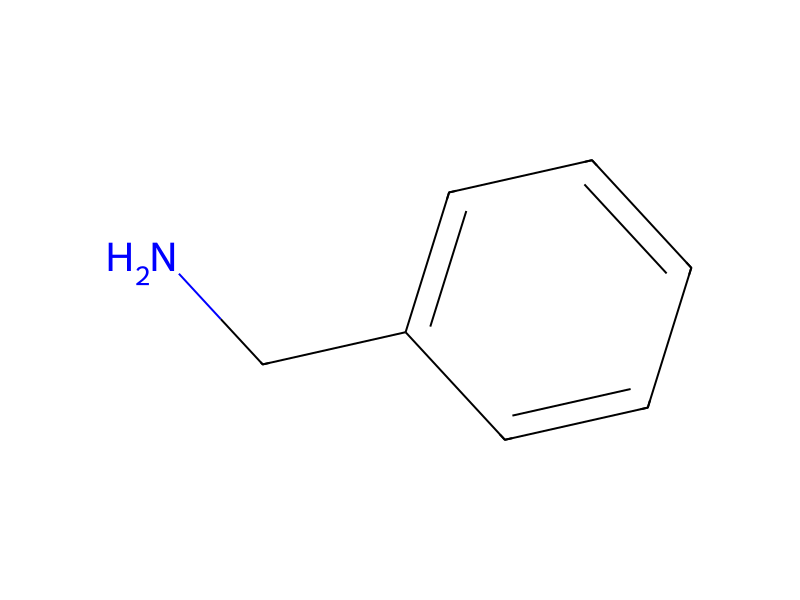

Reagents, catalysts & solvents 2


Procedure
Into an inertised Buss loop reactor with a capacity of 50 liters were successively introduced 40.74 kg BALD (0.384 kmol) and 4.1 kg H2O. The circulation pump was then started and 0.0815 kg 4% palladium/carbon (Degussa E196 NN-W; 50% H2O) was added. The trial was further carried out along the same lines as Example X, except that 4.76 kg NH3 (0.280 kmol) was added. Gas chromatography analysis of the organic phase showed that all the benzaldehyde had been converted. The selectivity to dibenzylamine was 92.5%. In addition, small amounts of benzylalcohol (sel. approx. 0.4%), benzylamine (sel. approx. 0.9%), dibenzylimine (sel. approx. 0-1%) and tribenzylamine (sel. approx. 2.4%) were formed.
Workup
- additionwas added
Sources & evidence
- ORD record
- ord-38cd10886926448bbb5deb01862826e1
- Source dataset
- uspto-grants-1997_04
- Patent number
- US05616804
Reaction notes
Loading…