Sodium hydride → HCID 67053538, compound
Reaction equation

[Br:1][C:2]1[N:3]=[C:4]([CH:8]2[CH2:10][CH2:9]2)[NH:5][C:6]=1[Br:7].[H-].[Na+].[CH3:13][Si:14]([CH3:21])([CH3:20])[CH2:15][CH2:16][O:17][CH2:18]Cl>C1COCC1>[Br:1][C:2]1[N:3]=[C:4]([CH:8]2[CH2:10][CH2:9]2)[N:5]([CH2:18][O:17][CH2:16][CH2:15][Si:14]([CH3:21])([CH3:20])[CH3:13])[C:6]=1[Br:7]Participants
Reactant 3

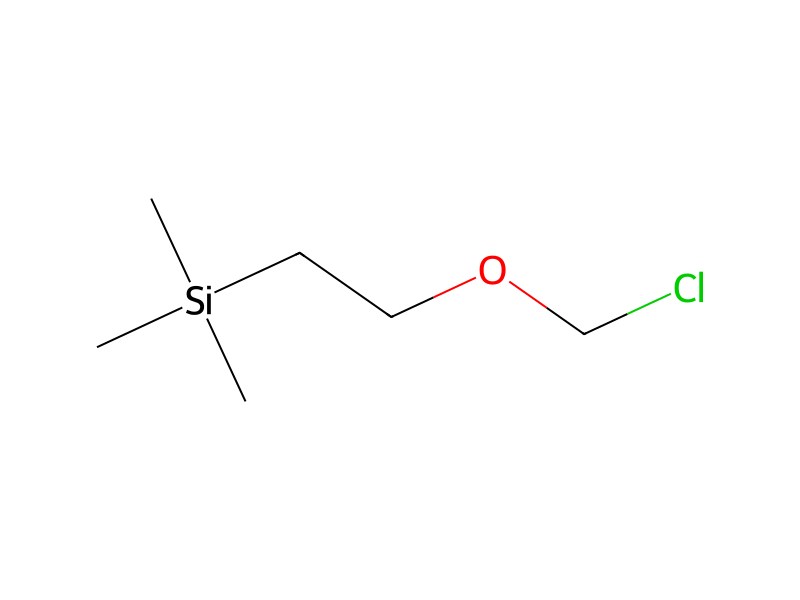

Product 1

Reagents, catalysts & solvents 1

Procedure
A solution of 4,5-dibromo-2-cyclopropyl-1H-imidazole (60 g, 226 mmol) in THF (150 mL) was added dropwise over 50 minutes under nitrogen to a stirring mixture of sodium hydride (95%, 6.3 g, 250 mmol) in dry THF (150 mL) at 0° C. The reaction mixture was stirred 30 minutes and 2-(trimethylsilyl)ethoxymethylchloride (SEMCl, 40 mL, 38 g, 226 mmol) was added dropwise over 50 minutes at 0° C. After stirring for 1 hour, the reaction was slowly quenched with water (20 mL) and added EtOAc (500 mL). The mixture was washed with water (2×750 mL) and the combined aqueous portions were back extracted with EtOAc (200 mL). The combined organic portions were washed with brine (1 L), dried (Na2SO4), and concentrated. The resulting residue was dissolved in heptane (200 mL) and the resulting solution was passed through a pad of silica gel, eluting with heptane (4×500 mL) and EtOAc-heptane (1:4, 2×250 mL) to give 4,5-dibromo-2-cyclopropyl-1-((2-(trimethylsilyl)ethoxy)methyl)-1H-imidazole (79 g, 199 mmol, 88%) as a pale yellow solid after concentration: LCMS (m/z) 394.9 (MH+), tR=1.20 minutes, 1H NMR (400 MHz, CDCl3) δ ppm −0.04-0.05 (m, 9H), 0.87-1.12 (m, 6H), 1.88-2.04 (m, 1H), 3.55-3.66 (m, 2H), 5.37 (s, 2H).
Workup
- stirringAfter stirring for 1 hour
- customthe reaction was slowly quenched with water (20 mL)
- additionadded EtOAc (500 mL)
- washThe mixture was washed with water (2×750 mL)
- extractionthe combined aqueous portions were back extracted with EtOAc (200 mL)
- washThe combined organic portions were washed with brine (1 L)
- dry with materialdried (Na2SO4)
- concentrationconcentrated
- dissolutionThe resulting residue was dissolved in heptane (200 mL)
- washeluting with heptane (4×500 mL) and EtOAc-heptane (1:4, 2×250 mL)
Sources & evidence
- ORD record
- ord-b9b7410899bd4dea97ad895b90204066
- Source dataset
- uspto-grants-2014_10
- Patent number
- US08859548B2
Reaction notes
Loading…