Dimethyl Sulfoxide → (R)-1-(4-fluorophenyl)-6-((4-(trifluoromethyl)phenyl)sulfonyl)-4,4a,5,6,7,8-hexahydro-1H-pyrazolo[3,4-g]isoquinoline-4a-carbaldehyde
Reaction equation

C(Cl)(=O)C(Cl)=O.CS(C)=O.[F:11][C:12]1[CH:17]=[CH:16][C:15]([N:18]2[C:22]3[CH:23]=[C:24]4[C@:29]([CH2:31][OH:32])([CH2:30][C:21]=3[CH:20]=[N:19]2)[CH2:28][N:27]([S:33]([C:36]2[CH:41]=[CH:40][C:39]([C:42]([F:45])([F:44])[F:43])=[CH:38][CH:37]=2)(=[O:35])=[O:34])[CH2:26][CH2:25]4)=[CH:14][CH:13]=1.C(N(CC)CC)C>ClCCl.O>[F:11][C:12]1[CH:17]=[CH:16][C:15]([N:18]2[C:22]3[CH:23]=[C:24]4[C@:29]([CH:31]=[O:32])([CH2:30][C:21]=3[CH:20]=[N:19]2)[CH2:28][N:27]([S:33]([C:36]2[CH:37]=[CH:38][C:39]([C:42]([F:45])([F:43])[F:44])=[CH:40][CH:41]=2)(=[O:35])=[O:34])[CH2:26][CH2:25]4)=[CH:14][CH:13]=1Participants
Reactant 4
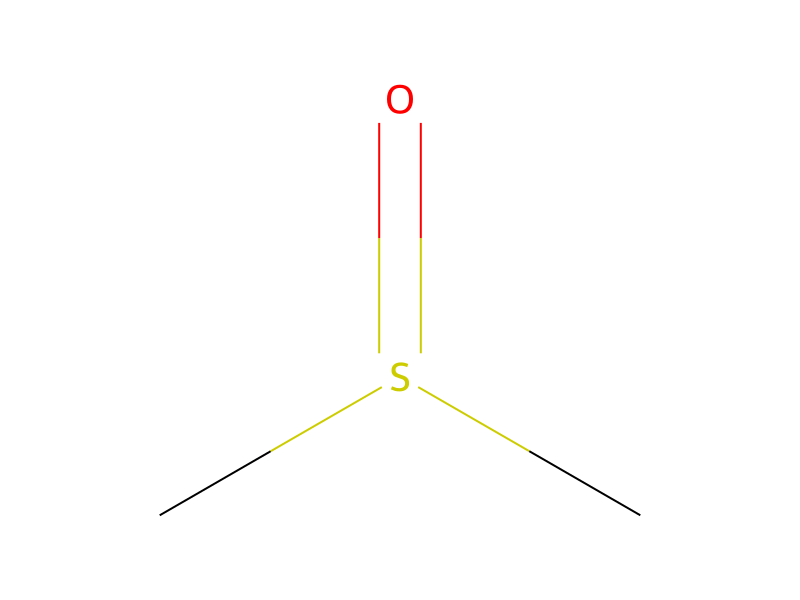
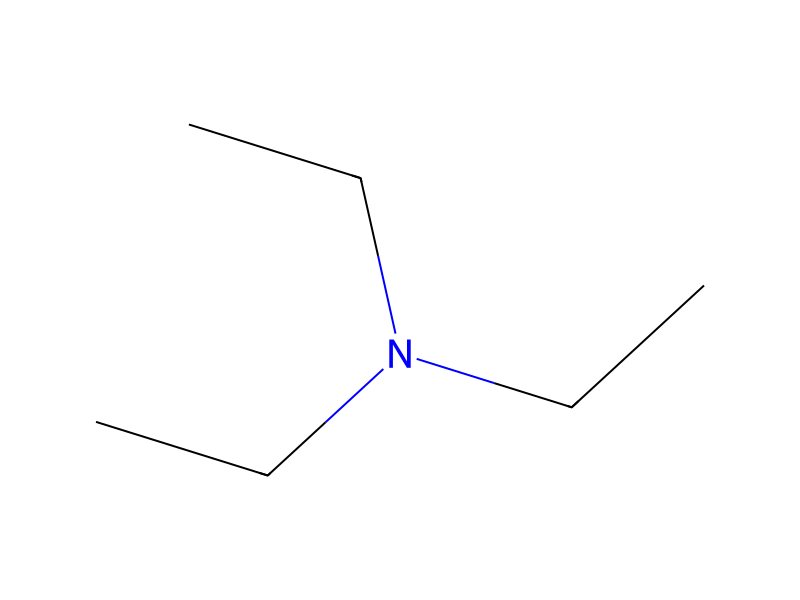
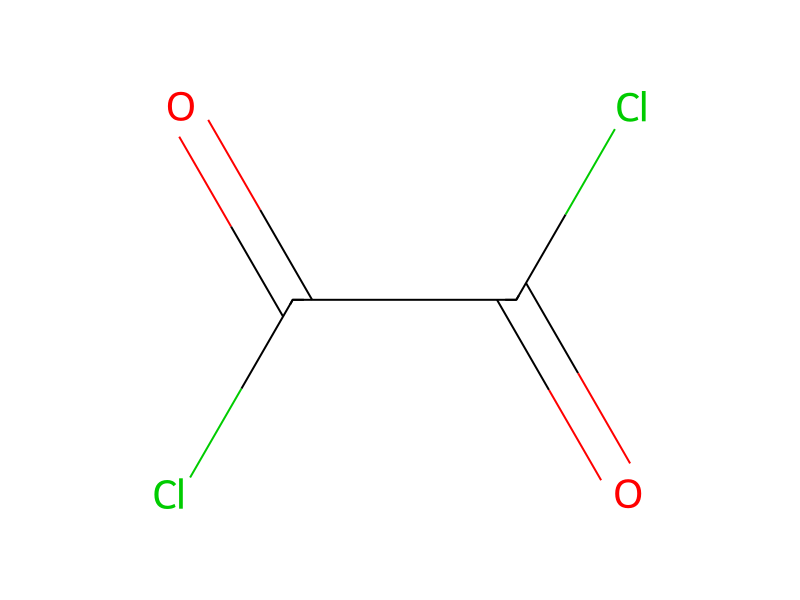

Product 1

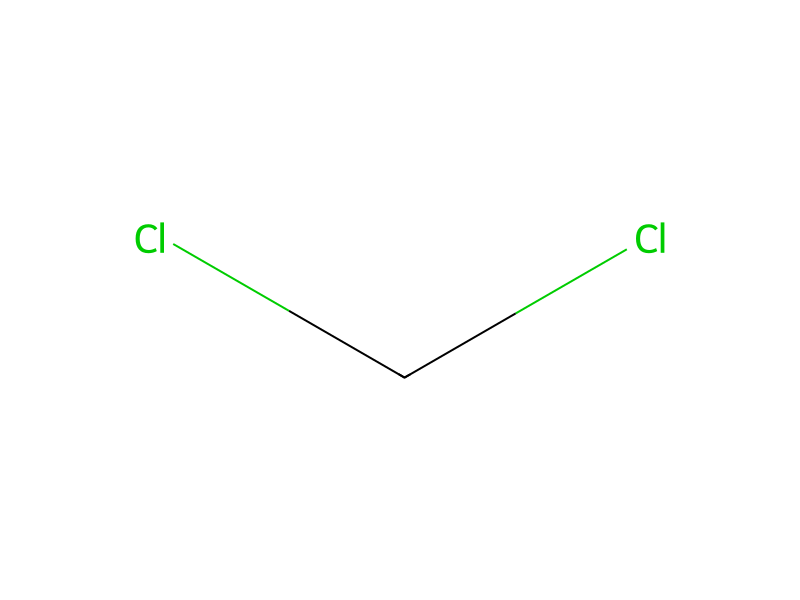
Reagents, catalysts & solvents 2
Conditions
- Temperature
- -55 °C
Procedure
A solution of oxalyl chloride (7.35 g, 58.8 mmol) in dry dichloromethane (160 mL) was cooled to −60° C. under nitrogen and treated dropwise with dry dimethyl sulfoxide (9.55 g, 122.5 mmol) such that the temperature did not rise above −50° C. The mixture was stirred at −55° C. for 15 minutes. A solution of (R)-(1-(4-fluorophenyl)-6-((4-(trifluoromethyl)phenyl)sulfonyl)-4,4a,5,6,7,8-hexahydro-1H-pyrazolo[3,4-g]isoquinolin-4a-yl)methanol (12.40 g, 24.5 mmol) in dry dichloromethane (140 mL) was added such that the temperature did not rise above −50° C. The mixture was stirred for 2 hours allowing the temperature to rise to −15° C. Triethylamine (12.64 g, 125 mmol) was added dropwise such that the temperature did not rise above −5° C. and the resultant mixture was stirred until the temperature reached 0° C. Water (100 mL) was added, the phases were separated, the aqueous phase was extracted with further dichloromethane (×2) and the combined organic phases were dried over sodium sulfate. The solids were removed by filtration, the filtrate was concentrated under reduced pressure and the residue was purified by column chromatography on silica gel eluting with a mixture of ethyl acetate and dichloromethane (1:1 by volume) followed by ethyl acetate to afford (R)-1-(4-fluorophenyl)-6-((4-(trifluoromethyl)phenyl)sulfonyl)-4,4a,5,6,7,8-hexahydro-1H-pyrazolo[3,4-g]isoquinoline-4a-carbaldehyde as a white foam (11.8 g). 1H NMR (400 MHz, CDCl3): δ 9.48 (s, 1 H); 7.93 (d, J=8.2 Hz, 2 H); 7.84 (d, J=8.3 Hz, 2 H); 7.39-7.40 (m, 3 H); 7.15-7.16 (m, 2 H); 6.52 (d, J=2.4 Hz, 1 H); 4.32 (dd, J=12.2, 2.1 Hz, 1 H); 3.90 (dd, J=11.0, 5.6 Hz, 1 H); 3.14 (d, J=16.4 Hz, 1 H); 2.71-2.73 (m, 1 H); 2.60 (d, J=16.4 Hz, 1H); 2.49-2.51 (m, 3 H).
Workup
- customdid not rise above −50° C
- customdid not rise above −50° C
- stirringThe mixture was stirred for 2 hours
- customto rise to −15° C
- customdid not rise above −5° C.
- customreached 0° C
- customthe phases were separated
- extractionthe aqueous phase was extracted with further dichloromethane (×2)
- dry with materialthe combined organic phases were dried over sodium sulfate
- customThe solids were removed by filtration
- concentrationthe filtrate was concentrated under reduced pressure
- customthe residue was purified by column chromatography on silica gel eluting with a mixture of ethyl acetate and dichloromethane (1:1 by volume)
Sources & evidence
- ORD record
- ord-54a1bd47828044769a8bb7d6c51032f7
- Source dataset
- uspto-grants-2014_10
- Patent number
- US08859774B2
Reaction notes
Loading…