Sodium Iodide → HCID 56687105, compound
Reaction equation

Cl.[CH3:2][N:3]1[CH2:8][CH2:7][C:6](=[O:9])[CH:5]([C:10]([OH:12])=[O:11])[CH2:4]1.[CH:13](N(C(C)C)CC)(C)C.[I-].[Na+].Cl.ClC[C:27]1[CH:28]=[N:29][CH:30]=[CH:31][CH:32]=1>CC#N.C(Cl)Cl>[O:9]=[C:6]1[CH2:7][CH2:8][N:3]([CH2:2][C:27]2[CH:28]=[N:29][CH:30]=[CH:31][CH:32]=2)[CH2:4][CH:5]1[C:10]([O:12][CH3:13])=[O:11]Participants






Procedure
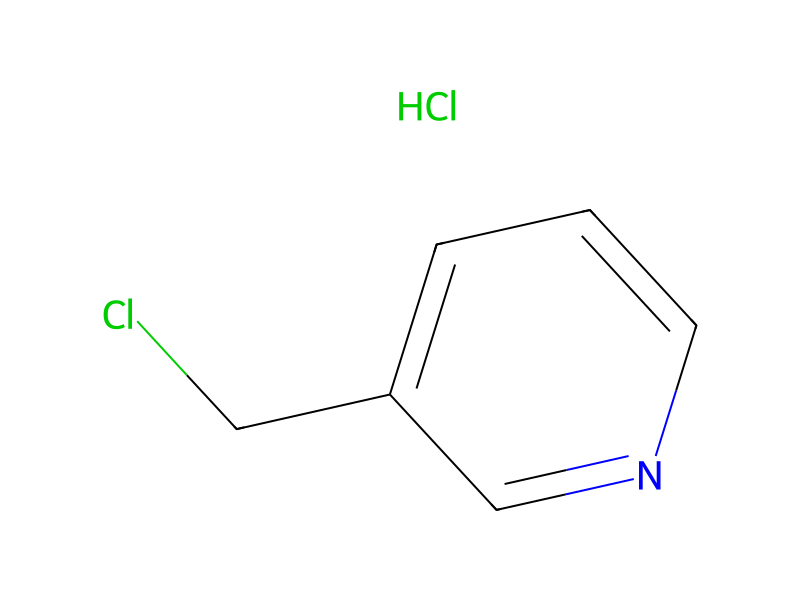
0.200 g (1.034 mmol) of 1-methyl-4-oxopiperidine-3-carboxylate hydrochloride (commercially available, ABCR), 0.54 mL (3.102 mmol) of diisopropylethylamine, 0.155 g (1.034 mmol) of sodium iodide and 0.170 g (1.034 mmol) of 3-(chloromethyl)pyridine hydrochloride were stirred at 80° C. in 5.0 mL of anhydrous CH3CN. The reaction was monitored by HPLC and UPLC-MS. After 1 h at 80° C., the insoluble inorganic materials were filtered off and the filtrate was concentrated in vacuo to give a yellowish residue. This residue was dissolved in CH2Cl2, washed with brine, H2O, dried over Na2SO4 and concentrated in vacuo to give pure methyl 4-oxo-1-(pyridin-3-ylmethyl)piperidine-3-carboxylate (0.257 g, 1.034 mmol, quantitative yield). The product was used for the next step without further manipulation.
Workup
- filtrationthe insoluble inorganic materials were filtered off
- concentrationthe filtrate was concentrated in vacuo
- customto give a yellowish residue
- washwashed with brine, H2O
- dry with materialdried over Na2SO4
- concentrationconcentrated in vacuo
Sources & evidence
- ORD record
- ord-83c67d5dbb1240549c4daa36b872a21e
- Source dataset
- uspto-grants-2014_10
- Patent number
- US08865758B2
Reaction notes
Loading…