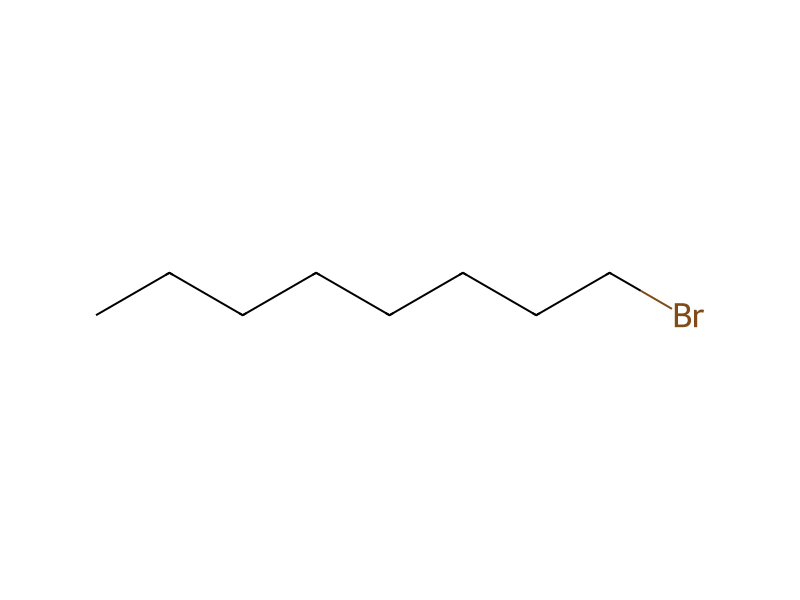
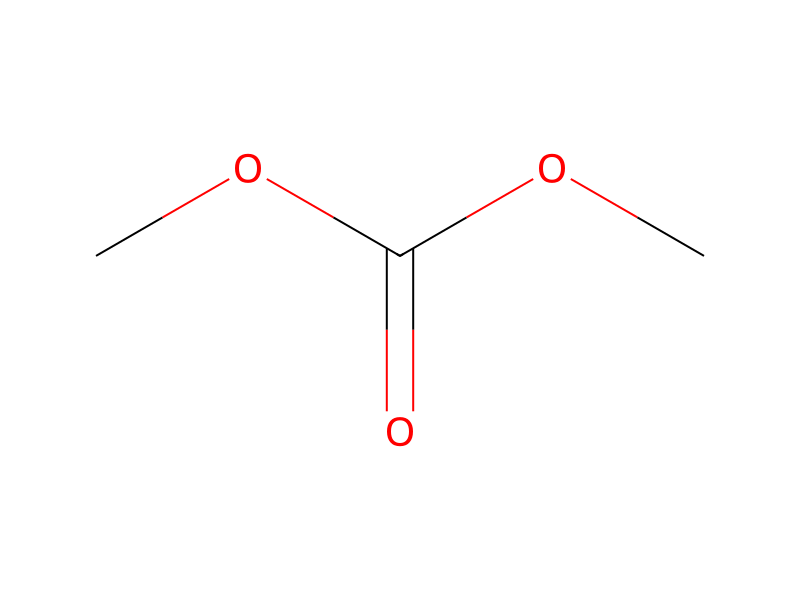
1-Bromooctane → Methyl octyl carbonate
Reaction equation

Br[CH2:2][CH2:3][CH2:4][CH2:5][CH2:6][CH2:7][CH2:8][CH3:9].[C:10](=[O:15])([O:13][CH3:14])[O:11][CH3:12]>[Br-].C([P+](CCCC)(CCCC)CCCC)CCC.CN(C)C=O>[C:10](=[O:13])([O:15][CH2:2][CH2:3][CH2:4][CH2:5][CH2:6][CH2:7][CH2:8][CH3:9])[O:11][CH3:12].[C:10](=[O:15])([O:13][CH2:14][CH2:2][CH2:3][CH2:4][CH2:5][CH2:6][CH2:7][CH3:8])[O:11][CH2:2][CH2:3][CH2:4][CH2:5][CH2:6][CH2:7][CH2:8][CH3:9]Participants
6



Procedure
1-Bromooctane (48.28 g, 0.25 mole), dimethyl carbonate (90.0 g, 1.0 mole), tetra-n-butylphosphonium bromide (3.39 g, 0.01 mole) and N,N-dimethylformamide (200 ml) are heated to 115° C. for 24 hours. After work-up as described for Example 34, distillation gives 7.5 g (16 percent yield based on 1-bromooctane) of methyl 1-octyl carbonate and 4.4 g (12 percent yield based on 1-bromooctane) of di-1-octyl carbonate.
Workup
- distillationAfter work-up as described for Example 34, distillation
Sources & evidence
- ORD record
- ord-30a75f2f5a7445029fc469f0fcfae373
- Source dataset
- uspto-grants-1987_04
- Patent number
- US04658041
Reaction notes
Loading…