Ethylene Glycol → 2-Hydroxyethyl 2-sulfamoylbenzoate
Reaction equation

Cl.[S:2]1([C:13]2[C:8](=[CH:9][CH:10]=[CH:11][CH:12]=2)[C:6](=[O:7])[NH:5]1)(=[O:4])=[O:3].[CH2:14]([OH:17])[CH2:15][OH:16]>>[NH2:5][S:2]([C:13]1[CH:12]=[CH:11][CH:10]=[CH:9][C:8]=1[C:6]([O:16][CH2:15][CH2:14][OH:17])=[O:7])(=[O:4])=[O:3]Participants
4


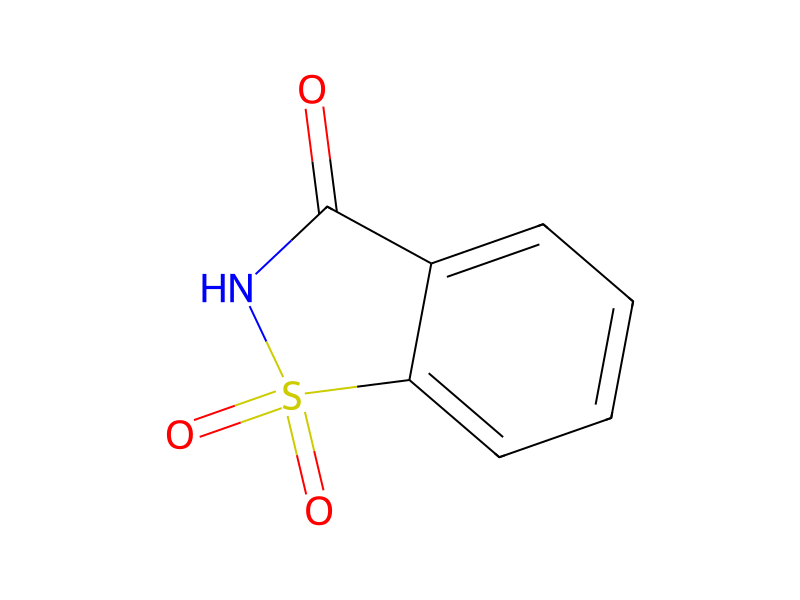

Conditions
- Temperature
- 41 °C
Procedure
Hydrogen chloride gas was passed through a mixture of 54.9 g of saccharin and 500 ml of ethylene glycol for 11/2 hours. The mixture, which had warmed to 41° C., was then stirred at ambient temperature for 65 hours. The resulting solution was poured into 2 liters of ice water and the product extracted with ethyl acetate. The extracts were washed with water, dried (MgSO4), and the solvent removed under reduced pressure to give a colorless oil which slowly crystallized. The white solid was triturated with n-butylchloride to give 44.9 g of the title compound, m.p. 84°-86.5° C.
Workup
- extractionthe product extracted with ethyl acetate
- washThe extracts were washed with water
- dry with materialdried (MgSO4)
- customthe solvent removed under reduced pressure
- customto give a colorless oil which
- customslowly crystallized
- customThe white solid was triturated with n-butylchloride
Sources & evidence
- ORD record
- ord-2b710a12705d441492e1279153e914de
- Source dataset
- uspto-grants-1987_04
- Patent number
- US04661147
Reaction notes
Loading…