Hydrogen Peroxide → 1-Propanol, 3,3'-[(1-methylpropyl)phosphinylidene]bis-
Reaction equation

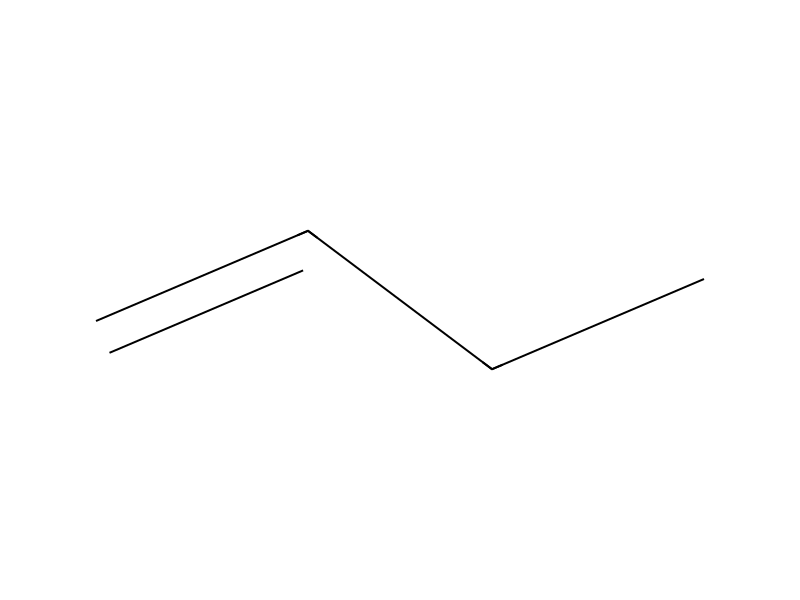
[CH:1]([P:5]([CH2:10][CH2:11][CH2:12][OH:13])[CH2:6][CH2:7][CH2:8][OH:9])([CH2:3][CH3:4])[CH3:2].[OH:14]CCCP(C(CC)C)C(CC)C.OO.C=CCC>C(O)(C)C.C(=S)=S>[CH:1]([P:5](=[O:14])([CH2:6][CH2:7][CH2:8][OH:9])[CH2:10][CH2:11][CH2:12][OH:13])([CH2:3][CH3:4])[CH3:2]Participants
7



Procedure
The residual product is believed to contain both s-butyl bis(3-hydroxypropyl) phosphine and 3-hydroxypropyl di-s-butyl phosphine. It is dissolved in an equal volume of isopropanol and oxidized with 30% hydrogen peroxide in an equal volume of isopropanol as described above in Example I until a negative carbon disulfide reading is obtained. The solution of oxidized phosphine is concentrated under reduced pressure to yield a syrupy yellow liquid weighing 555.6 g (99.2% yield on oxidation or a yield of 62.5% based on the starting butene).
Workup
- customis obtained
- concentrationThe solution of oxidized phosphine is concentrated under reduced pressure
- customto yield a syrupy yellow liquid
Sources & evidence
- ORD record
- ord-36bebf0f0836438fa43f9fdc69095aed
- Source dataset
- uspto-grants-1984_05
- Patent number
- US04446265
Reaction notes
Loading…