Chlorodifluoromethane → 2-Bromo-1-(difluoromethoxy)-4-nitrobenzene
Reaction equation

[Br:1][C:2]1[CH:7]=[C:6]([N+:8]([O-:10])=[O:9])[CH:5]=[CH:4][C:3]=1[OH:11].[OH-].[Na+].Cl[CH:15]([F:17])[F:16]>O1CCOCC1.O>[Br:1][C:2]1[CH:7]=[C:6]([N+:8]([O-:10])=[O:9])[CH:5]=[CH:4][C:3]=1[O:11][CH:15]([F:17])[F:16]Participants
6
Reactant 3


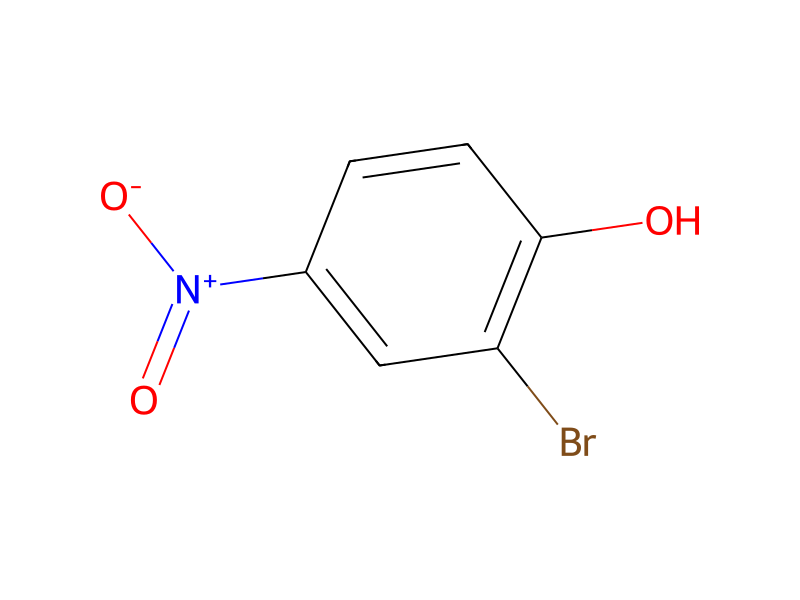
Product 1

Reagents, catalysts & solvents 2


Conditions
- Temperature
- 60 °C
Procedure
2-Bromo-4-nitrophenol (10.9 g) was dissolved in dioxane (60 ml), a solution of sodium hydroxide (18.4 g) in water (50 ml) was added thereto, and the resulting mixture was heated up to 60° C. while stirring vigorously. Chlorodifluoromethane gas was introduced therein, whereby the generation of heat was initiated. The reaction was continued for about 40 minutes. The reaction mixture was cooled to room temperature, poured onto ice-water and extracted with ether. The extract was washed with water and saturated sodium chloride solution, dried over anhydrous magnesium sulfate and concentrated under reduced pressure to give 3-bromo-4-difluoromethoxynitrobenzene (8.7 g) as a pale yellow oil. nD20.5 1.5500.
Workup
- temperaturewhereby the generation of heat
- temperatureThe reaction mixture was cooled to room temperature
- additionpoured onto ice-water
- extractionextracted with ether
- washThe extract was washed with water and saturated sodium chloride solution
- dry with materialdried over anhydrous magnesium sulfate
- concentrationconcentrated under reduced pressure
Sources & evidence
- ORD record
- ord-6b21e5cbea044fa8afc63f18af94c3e3
- Source dataset
- uspto-grants-1984_05
- Patent number
- US04447260
Reaction notes
Loading…