Hydroquinone → 3-Oxo-3-(pyridin-2-ylamino)propyl acrylate
Reaction equation

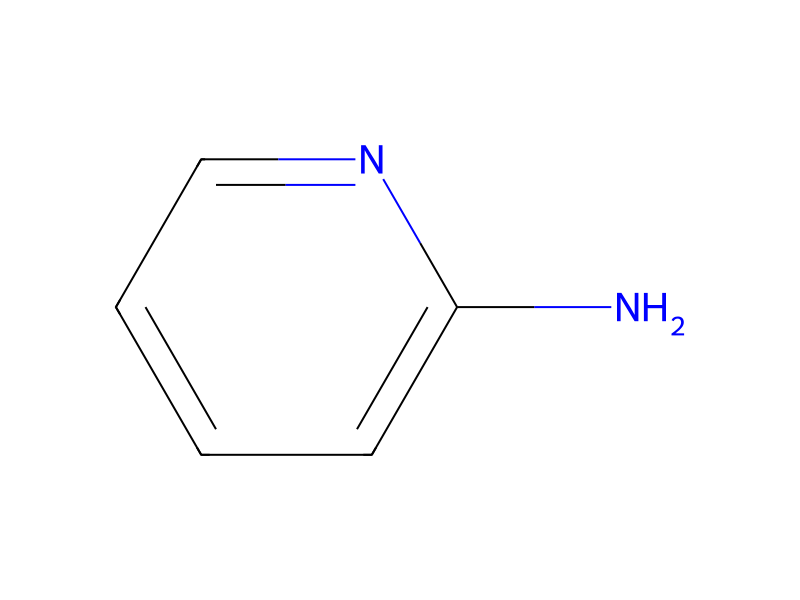
[C:1]([O:5][CH2:6][CH2:7][C:8](Cl)=[O:9])(=[O:4])[CH:2]=[CH2:3].[NH2:11][C:12]1[CH:17]=[CH:16][CH:15]=[CH:14][N:13]=1.C(N(CC)CC)C.C1(C=CC(O)=CC=1)O>C1(C)C=CC=CC=1>[C:1]([O:5][CH2:6][CH2:7][C:8](=[O:9])[NH:11][C:12]1[CH:17]=[CH:16][CH:15]=[CH:14][N:13]=1)(=[O:4])[CH:2]=[CH2:3]Participants
6
Reactant 4



Product 1

Reagents, catalysts & solvents 1

Procedure
3-Chloro-3-oxopropyl acrylate, 1, (1 eq.), 2-aminopyridine (1 eq.) and triethylamine (3 eq.) are dissolved in toluene at 0° C. A few crystals of hydroquinone is added to inhibit any polymerization side reactions. The solution is allowed to stir approximately 18 hours at a temperature from about 0° C. to room temperature. The solvent is removed under reduced pressure and the crude material purified over silica. For a more detailed account of this procedure See M. A. Diab, A. Z. El-Sonbati, A. A. El-S anabori, F. I. Taha, Polymer Degrad. Stab. 1989, 24, 51, included herein by reference.
Workup
- customThe solvent is removed under reduced pressure
- customthe crude material purified over silica
Sources & evidence
- ORD record
- ord-e8e6d1a01c224ab498b887947843fa9a
- Source dataset
- uspto-grants-2011_05
- Patent number
- US07935131B2
Reaction notes
Loading…