Tributylvinyltin → 3-Ethenyl-5-fluoropyridine
Reaction equation

[F:1][C:2]1[CH:3]=[N:4][CH:5]=[C:6](Br)[CH:7]=1.[CH2:9]([Sn](CCCC)(CCCC)C=C)[CH2:10]CC>C1(C)C=CC=CC=1.C1C=CC([P]([Pd]([P](C2C=CC=CC=2)(C2C=CC=CC=2)C2C=CC=CC=2)([P](C2C=CC=CC=2)(C2C=CC=CC=2)C2C=CC=CC=2)[P](C2C=CC=CC=2)(C2C=CC=CC=2)C2C=CC=CC=2)(C2C=CC=CC=2)C2C=CC=CC=2)=CC=1>[F:1][C:2]1[CH:3]=[N:4][CH:5]=[C:6]([CH:9]=[CH2:10])[CH:7]=1Participants
5
Reactant 2

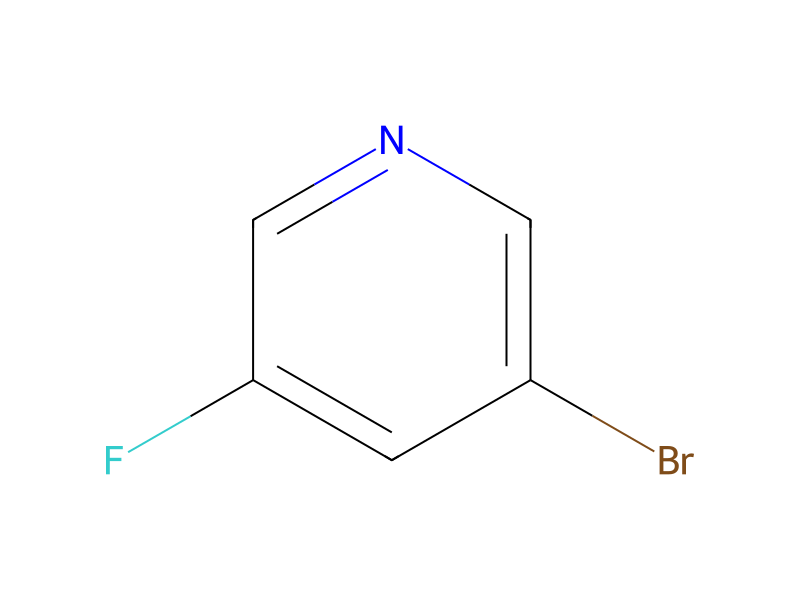
Product 1

Reagents, catalysts & solvents 2


Procedure
A mixture of 7.0 g (0.04 mole) 3-fluoro-5-bromopyridine, 15.3 g (0.048 mole) tributyl(vinyl)stannane, 2.5 g (0.002 mole) tetrakis(triphenylphosphine)palladium in 70 ml toluene was boiled with reflux during 16 hours. Toluene was evaporated with a 30 cm column. The residue was fractionated twice.
Workup
- temperaturewith reflux during 16 hours
- customToluene was evaporated with a 30 cm column
Sources & evidence
- ORD record
- ord-f5a454fae301499c90b5d8d45d8e49d5
- Source dataset
- uspto-grants-2011_05
- Patent number
- US07935823B2
Reaction notes
Loading…