Potassium Carbonate → HCID 22478236, compound
Reaction equation

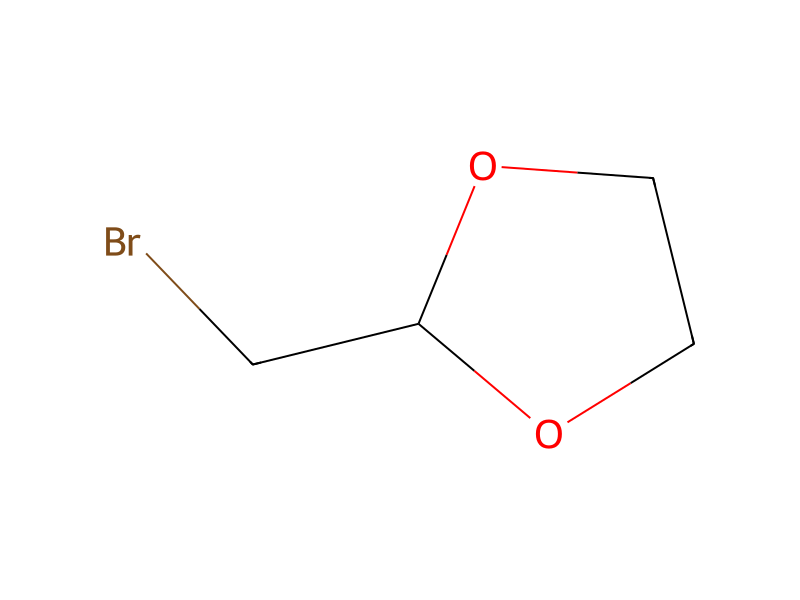
Br[CH2:2][CH:3]1[O:7][CH2:6][CH2:5][O:4]1.[Cl:8][C:9]1[CH:28]=[CH:27][C:12]([NH:13][C:14]2[C:23]3[C:18](=[CH:19][C:20]([OH:26])=[C:21]([O:24][CH3:25])[CH:22]=3)[N:17]=[CH:16][N:15]=2)=[C:11]([F:29])[CH:10]=1.C(=O)([O-])[O-].[K+].[K+]>CN(C=O)C>[Cl:8][C:9]1[CH:28]=[CH:27][C:12]([NH:13][C:14]2[C:23]3[C:18](=[CH:19][C:20]([O:26][CH2:2][CH:3]4[O:7][CH2:6][CH2:5][O:4]4)=[C:21]([O:24][CH3:25])[CH:22]=3)[N:17]=[CH:16][N:15]=2)=[C:11]([F:29])[CH:10]=1Participants
5




Conditions
- Temperature
- 100 °C
Procedure
A solution of 2-(bromomethyl)-1,3-dioxolane (190 mg, 1.1 mmol) in DMF (1 ml) was added to 4-(4-chloro-2-fluoroanilino)-7-hydroxy-6-methoxyquinazoline (258 mg, 0.81 mmol), (prepared as described for the starting material in Example 2), and potassium carbonate (200 mg, 1.5 mmol) in DMF (2 ml). The mixture was heated at 100° C. for 4 hours and then allowed to cool. The volatiles were removed by evaporation and the residue partitioned between water and methylene chloride. The organic phase was separated, passed through phase separating paper and purified by column chromatography eluting with methylene chloride/methanol (95/5) to give 4-(4-chloro-2-fluoroanilino)-7-(1,3-dioxolan-2-ylmethoxy)-6-methoxyquinazoline (130 mg, 38%).
Workup
- custom(prepared
- temperatureto cool
- customThe volatiles were removed by evaporation
- customthe residue partitioned between water and methylene chloride
- customThe organic phase was separated
- customseparating paper
- custompurified by column chromatography
- washeluting with methylene chloride/methanol (95/5)
Sources & evidence
- ORD record
- ord-3a6ee1f95e4c46b8a56e558c49c3e5b3
- Source dataset
- uspto-grants-2011_05
- Patent number
- USRE042353E1
Reaction notes
Loading…