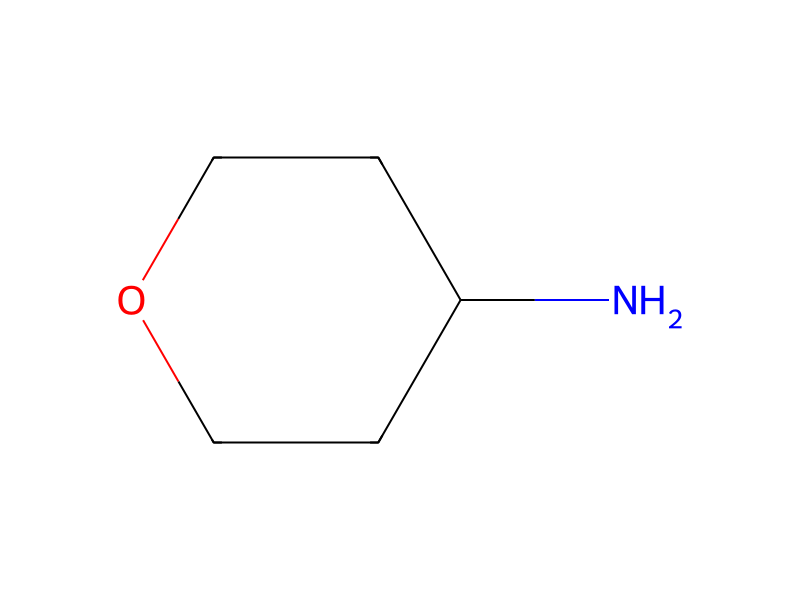
4-Aminotetrahydropyran → HCID 42630019, compound
Reaction equation

C(O[C:4]([C:6]1[N:7]=[N:8][C:9]([O:12][CH2:13][C:14]2[C:15]([C:20]3[CH:25]=[CH:24][C:23]([F:26])=[CH:22][CH:21]=3)=[N:16][O:17][C:18]=2[CH3:19])=[CH:10][CH:11]=1)=[O:5])C.[NH2:27][CH:28]1[CH2:33][CH2:32][O:31][CH2:30][CH2:29]1>>[O:31]1[CH2:32][CH2:33][CH:28]([NH:27][C:4]([C:6]2[N:7]=[N:8][C:9]([O:12][CH2:13][C:14]3[C:15]([C:20]4[CH:21]=[CH:22][C:23]([F:26])=[CH:24][CH:25]=4)=[N:16][O:17][C:18]=3[CH3:19])=[CH:10][CH:11]=2)=[O:5])[CH2:29][CH2:30]1Participants
3


Procedure
As described for example 59, 6-[3-(4-fluoro-phenyl)-5-methyl-isoxazol-4-ylmethoxy]-pyridazine-3-carboxylic acid ethyl ester (143 mg, 0.4 mmol) was converted, using 4-aminotetrahydropyran instead of aminomethylcyclopropane, to the title compound (120 mg, 73%) which was obtained as a white solid after recrystallization from heptane:ethyl acetate. MS: m/e=413.3 [M+H].
Sources & evidence
- ORD record
- ord-2613ba0ee44f4f4184556ee92a81eb93
- Source dataset
- uspto-grants-2011_05
- Patent number
- US07943619B2
Reaction notes
Loading…