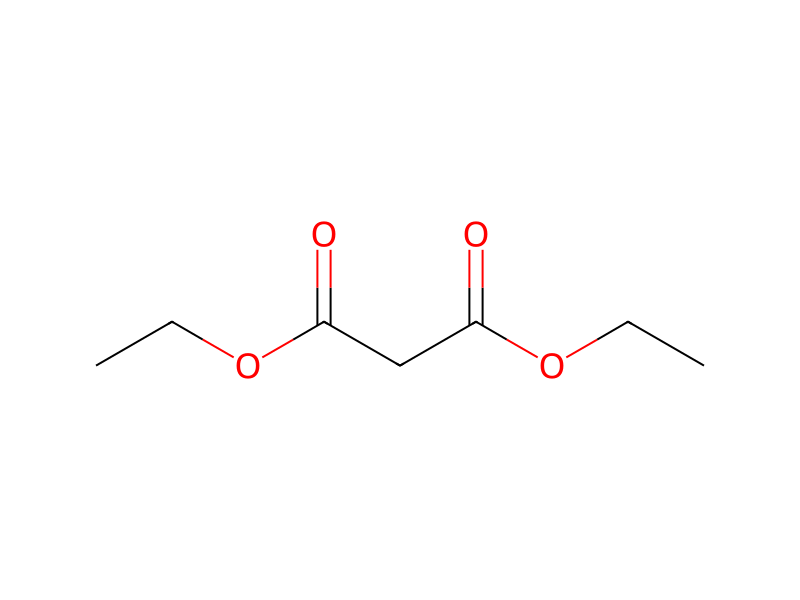
Diethyl Malonate → HCID 57903802, compound
Reaction equation

[C:1](OCC)(=O)[CH2:2][C:3]([O:5]CC)=O.Br[CH2:13][CH2:14][CH2:15][CH2:16]Br.[C:18]([O-:24])(=O)[CH2:19][C:20]([O-:22])=O.[H-].[Al+3].[Li+].[H-].[H-].[H-].[OH-].[Na+].O1CCC[CH2:34]1>O>[C:3]([O:22][CH2:20][C:19]1([CH2:18][OH:24])[CH2:16][CH2:15][CH2:14][CH2:13]1)(=[O:5])[C:2]([CH3:1])=[CH2:34]Participants







Procedure
In a nitrogen atmosphere, a mixture of 268 g of diethyl tetramethylenemalonate (which had been synthesized from diethyl malonate and 1,4-dibromobutane by a malonate synthesis standard technique) and 400 ml of tetrahydrofuran was added dropwise to a mixture of 80.0 g of lithium aluminum hydride (LiAlH4) and 1,000 ml of tetrahydrofuran under ice cooling. The reaction mixture was stirred for 3 hours at room temperature, after which it was ice cooled again. To the reaction mixture which was kept below 30° C. and vigorously stirred, 80 ml of water, 80 ml of a 15% sodium hydroxide aqueous solution, and 240 ml of water were added dropwise in sequence. The resulting crystals were filtered off. The filtrate was concentrated in vacuum, obtaining 150 g (crude yield 92%) of a crude product. By the same procedure as in Synthesis Example 2-2 except that the crude product was used instead of norbornane-2,2-dimethanol, it was converted into a methacryloyl form, obtaining the target compound (yield 35%).
Workup
- temperaturecooled again
- customwas kept below 30° C.
- stirringvigorously stirred
- filtrationThe resulting crystals were filtered off
- concentrationThe filtrate was concentrated in vacuum
- customobtaining 150 g (crude yield 92%) of a crude product
Sources & evidence
- ORD record
- ord-56dca5aaae4e460d8f272e44b8549717
- Source dataset
- uspto-grants-2011_11
- Patent number
- US08053165B2
Reaction notes
Loading…