Triethylamine → HCID 17985506, compound
Reaction equation

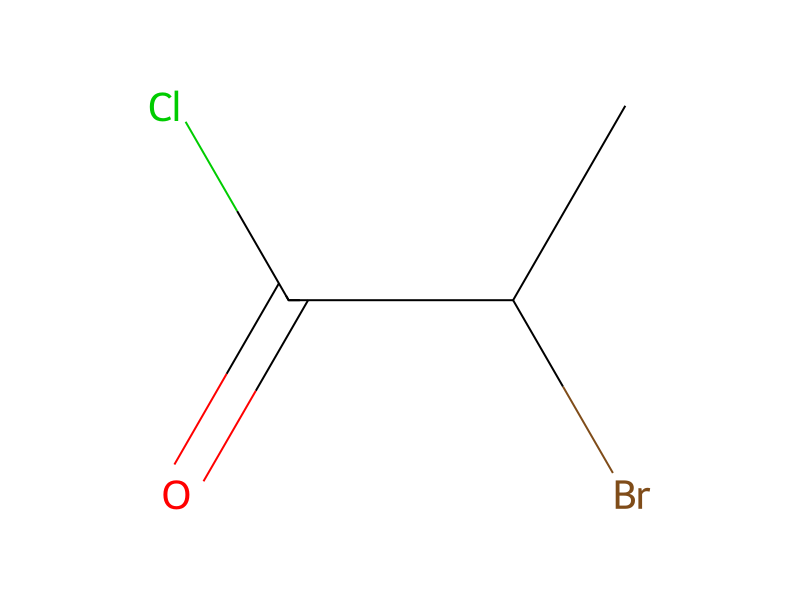
[Br:1][CH:2]([CH3:6])[C:3](Cl)=[O:4].[NH:7]1[C:15]2[C:10](=[CH:11][CH:12]=[CH:13][C:14]=2[CH2:16][NH:17][CH2:18][C:19]2[CH:24]=[CH:23][C:22]([O:25][CH3:26])=[CH:21][C:20]=2[O:27][CH3:28])[CH:9]=[CH:8]1.C(N(CC)CC)C>O1CCCC1>[CH3:28][O:27][C:20]1[CH:21]=[C:22]([O:25][CH3:26])[CH:23]=[CH:24][C:19]=1[CH2:18][N:17]([CH2:16][C:14]1[CH:13]=[CH:12][CH:11]=[C:10]2[C:15]=1[NH:7][CH:8]=[CH:9]2)[C:3](=[O:4])[CH:2]([Br:1])[CH3:6]Participants
5
Reactant 3


Product 1

Reagents, catalysts & solvents 1

Procedure
Add 2-bromopropionyl chloride (3.25 g, 18.96 mmol) to a solution of N-[(indol-7-yl)methyl]-2,4-dimethoxybenzylamine (5.0 g, 17.24 mmol) and triethylamine (3.49 g, 64.48 mmol) in tetrahydrofuran (100 ml). Stir for 1 hour at room temperature and quench with saturated aqueous sodium bicarbonate. Extract with ethyl acetate, concentrate under reduced pressure, and subject the residue to silica gel chromatography eluting with 1:1 ethyl acetate:hexanes to provide the desired compound (4.72 g, 63%).
Workup
- customquench with saturated aqueous sodium bicarbonate
- extractionExtract with ethyl acetate
- concentrationconcentrate under reduced pressure
- washeluting with 1:1 ethyl acetate
Sources & evidence
- ORD record
- ord-bbf5e667dc76488fb821310805d704ad
- Source dataset
- uspto-grants-2011_11
- Patent number
- US08058425B2
Reaction notes
Loading…