3,4-Dichlorobenzyl chloride → 4-(3,4-Dichlorobenzyloxy)-3-methylbenzaldehyde
Reaction equation
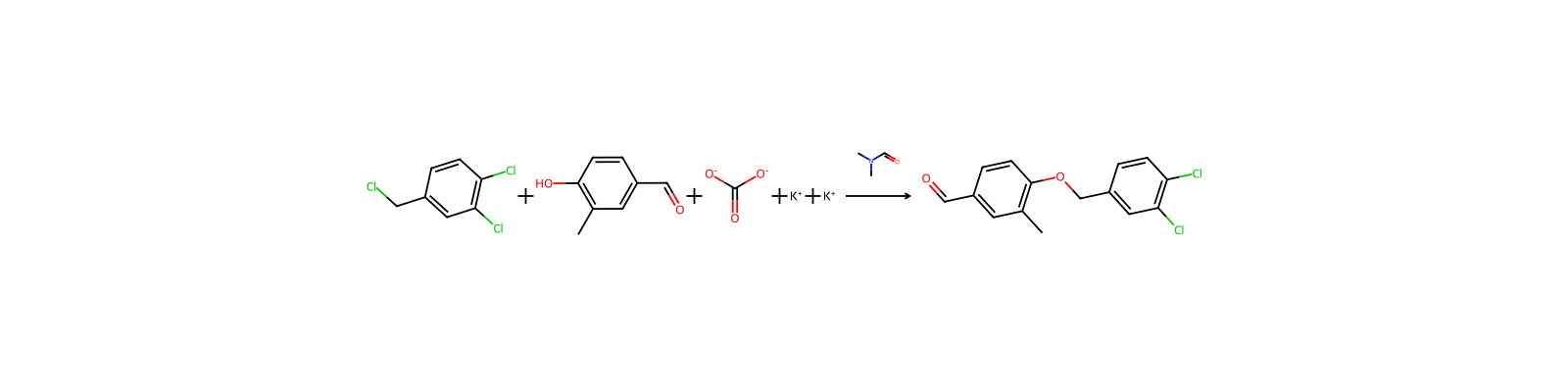
Cl[CH2:2][C:3]1[CH:8]=[CH:7][C:6]([Cl:9])=[C:5]([Cl:10])[CH:4]=1.[OH:11][C:12]1[CH:19]=[CH:18][C:15]([CH:16]=[O:17])=[CH:14][C:13]=1[CH3:20].C([O-])([O-])=O.[K+].[K+]>CN(C=O)C>[Cl:10][C:5]1[CH:4]=[C:3]([CH:8]=[CH:7][C:6]=1[Cl:9])[CH2:2][O:11][C:12]1[CH:19]=[CH:18][C:15]([CH:16]=[O:17])=[CH:14][C:13]=1[CH3:20]Participants
5




Procedure
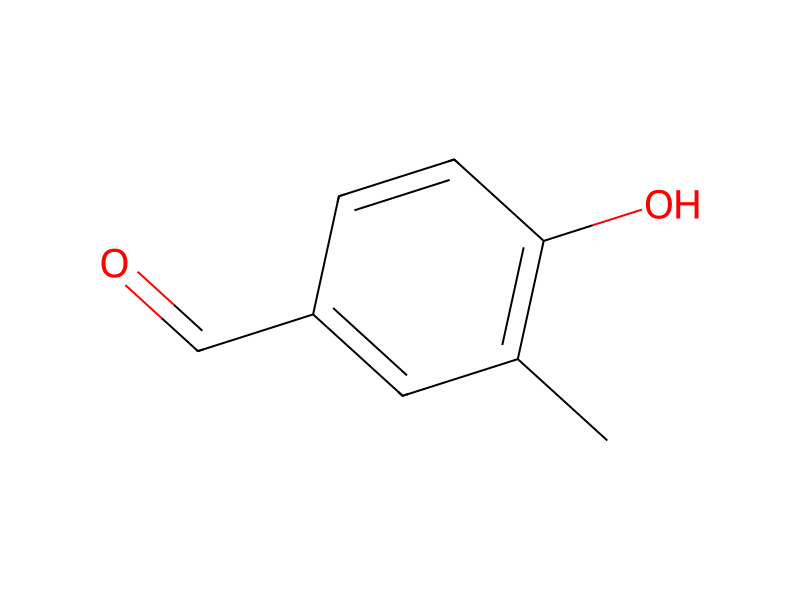
0.5M solution of 4-chloromethyl-1,2-dichloro-benzene (1.55 g, 8.0 mmol) in DMF was added dropwise to a suspension of 4-hydroxy-3-methyl-benzaldehyde (990 mg, 7.3 mmol), K2CO3 (1.51 g, 11 mmol) and KI (120 mg, 0.73 mmol) in DMF (100 ml). The reaction mixture was treated as described in Example 6. The residue was purified on silica gel, obtaining 2.15 g of the title compound in a quantitative yield.
Workup
- additionThe reaction mixture was treated
- customThe residue was purified on silica gel
Sources & evidence
- ORD record
- ord-ceb9bf25bb54464b82e1e54f2003aab6
- Source dataset
- uspto-grants-2011_11
- Patent number
- US08063039B2
Reaction notes
Loading…