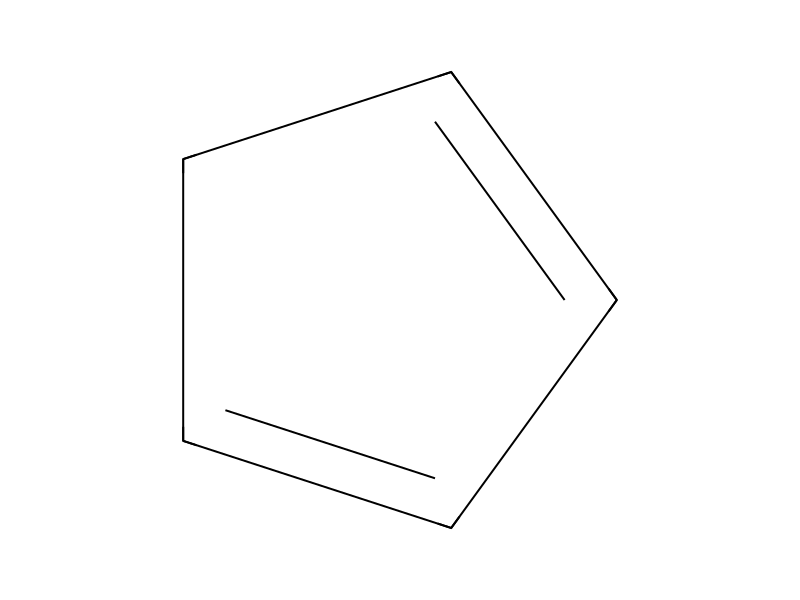
Dicyclopentadiene → 8-t-Butoxycarbonyltetracyclo[4.4.0.12,5.17,10]dodeca-3-ene
Reaction equation

[C:1]([O:5][C:6]([CH3:9])([CH3:8])[CH3:7])(=[O:4])[CH:2]=[CH2:3].[CH2:10]1[CH:14]2[CH:15]3[CH:19]=[CH:18][CH:17]([CH:13]2[CH:12]=[CH:11]1)[CH2:16]3.C(OC(C1CC2CC1C=C2)=O)(C)(C)C.C1CC=CC=1>>[C:6]([O:5][C:1]([CH:2]1[CH2:3][CH:10]2[CH2:11][CH:12]1[CH:13]1[CH:14]2[CH:15]2[CH2:16][CH:17]1[CH:18]=[CH:19]2)=[O:4])([CH3:9])([CH3:8])[CH3:7]Participants
5



Procedure
The reaction was carried out in the same manner as in the Synthesis Example 1(1), except for using t-butyl acrylate, dicyclopentadiene, and 5-t-butoxycarbonylbicyclo[2.2.1]hept-2-ene at a molar ratio of 3:1(as cyclopentadiene):1 as reaction raw materials, to obtain 8-t-butoxycarbonyltetracyclo[4.4.0.12,5.17,10]dodec-3-ene of the following formula (16) at an yield of 40%.
Sources & evidence
- ORD record
- ord-d9383f3050364303b277ccbbb6e521fc
- Source dataset
- uspto-grants-2001_01
- Patent number
- US06180316B2
Reaction notes
Loading…