Acetic Acid → HCID 53942418, compound
Reaction equation

[Cl:1][CH2:2][C:3]([CH3:13])([CH3:12])[C:4](=[O:11])[CH2:5][N:6]1[CH:10]=[N:9][CH:8]=[N:7]1.[Cl:14][C:15]1[CH:22]=[CH:21][C:18]([CH:19]=O)=[CH:17][CH:16]=1.N1CCCCC1.C(O)(=O)C>C1(C)C=CC=CC=1.O>[Cl:1][CH2:2][C:3]([CH3:13])([CH3:12])[C:4](=[O:11])[C:5]([N:6]1[CH:10]=[N:9][CH:8]=[N:7]1)=[CH:19][C:18]1[CH:21]=[CH:22][C:15]([Cl:14])=[CH:16][CH:17]=1Participants
Reactant 4

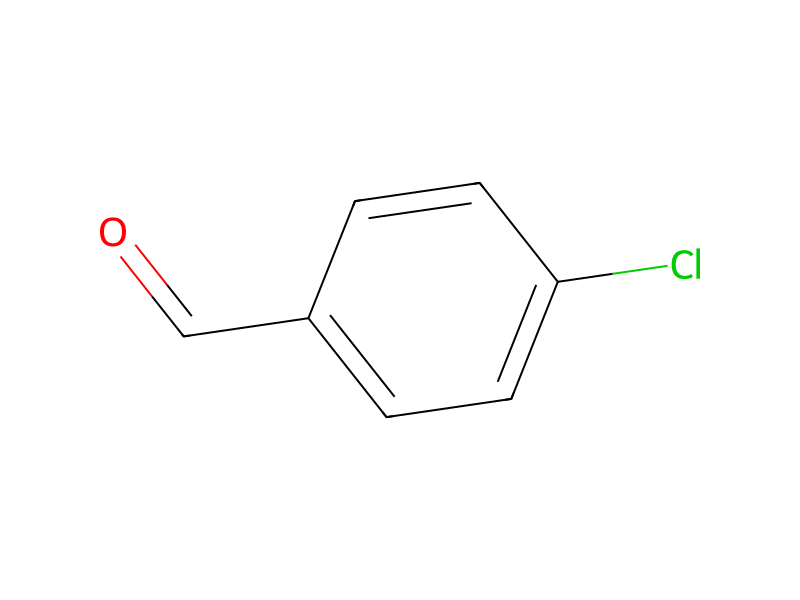


Product 1

Reagents, catalysts & solvents 2


Procedure
201.5 g (1 mole) of 1-chloro-2,2-dimethyl-4-(1,2,4-triazol-1-yl)-butan-3-one, 140.5 g (1 mole) of 4-chlorobenzaldehyde, 9,9 ml of piperidine and 30 g of glacial acetic acid in 300 ml of toluene were heated under reflux for 8 hours, the water of reaction formed being removed azeotropically. The reaction mixture was then washed with water and with dilute sodium bicarbonate solution, dried over sodium sulphate and evaporated in vacuo. 305.9 (94.4% of theory) of crude 1-chloro-5-(4-chlorophenyl)-2,2-dimethyl-4-(1,2,4-triazol-1-yl)-4-penten-3-one of boiling point 165° C./0.1 mm Hg were obtained as the E/Z-isomer mixture. The E-isomer could be isolated as crystals by stirring the product with isopropanol or ethanol. The E-isomer had a melting point of 112° C.
Workup
- temperatureunder reflux for 8 hours
- customformed
- custombeing removed azeotropically
- washThe reaction mixture was then washed with water and with dilute sodium bicarbonate solution
- dry with materialdried over sodium sulphate
- customevaporated in vacuo
Sources & evidence
- ORD record
- ord-ef164be3906e469e9a778f19b29c28ed
- Source dataset
- uspto-grants-1988_03
- Patent number
- US04729783
Reaction notes
Loading…