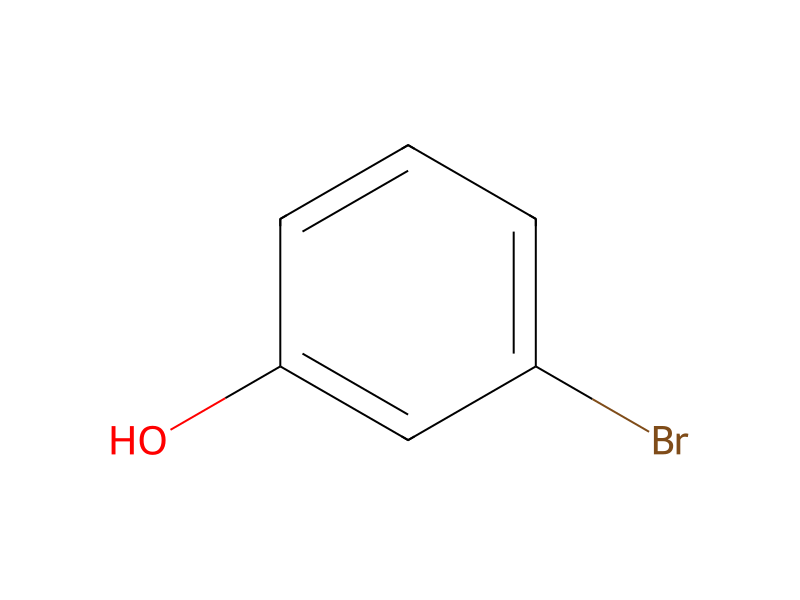
3-Bromophenol → HCID 14097602, compound
Reaction equation

[H-].[Na+].[Br:3][C:4]1[CH:5]=[C:6]([OH:10])[CH:7]=[CH:8][CH:9]=1.Cl[CH2:12][C:13]1[CH:22]=[CH:21][C:20]2[C:15](=[CH:16][CH:17]=[CH:18][CH:19]=2)[N:14]=1>CN(C)C=O>[Br:3][C:4]1[CH:5]=[C:6]([CH:7]=[CH:8][CH:9]=1)[O:10][CH2:12][C:13]1[CH:22]=[CH:21][C:20]2[C:15](=[CH:16][CH:17]=[CH:18][CH:19]=2)[N:14]=1Participants
5
Reactant 3


Product 1

Reagents, catalysts & solvents 1

Procedure
To 60% sodium hydride (9.8 g, 245 mmol) in 250 mL dimethylformamide at 5° C. under nitrogen is added portionwise 3-bromophenol (42.6 g, 246 mmol). After thirty minutes a solution of 2-(chloromethyl)quinoline (43.6 g, 246 mmol) in 250 mL dimethylformamide is rapidly added. The reaction is allowed to warm to room temperature. After overnight stirring, the reaction is freed of solvent and then partitioned between 1N sodium hydroxide and methylene chloride. The organic layer is separated, dried over magnesium sulfate and evaporated to 67.9 g of a yellow solid. Recrystallization from acetonitrile affords 42.8 g (55%) of brown crystals, m.p. 79°-81° C.
Workup
- custompartitioned between 1N sodium hydroxide and methylene chloride
- customThe organic layer is separated
- dry with materialdried over magnesium sulfate
- customevaporated to 67.9 g of a yellow solid
- customRecrystallization from acetonitrile
Sources & evidence
- ORD record
- ord-c9825e20cf5d42649fa8fd370e7de28a
- Source dataset
- uspto-grants-1988_03
- Patent number
- US04732978
Reaction notes
Loading…