Hydrochloric Acid → Naphthalene
Reaction equation

[CH2:1]([Li])[CH2:2][CH2:3][CH3:4].C(=O)C1C=CC=NC=1.Cl.[CH3:15][CH2:16][CH2:17][CH2:18][CH2:19][CH3:20]>CCOCC>[CH:1]1[C:16]2[C:17](=[CH:18][CH:19]=[CH:20][CH:15]=2)[CH:4]=[CH:3][CH:2]=1Participants
Reactant 4


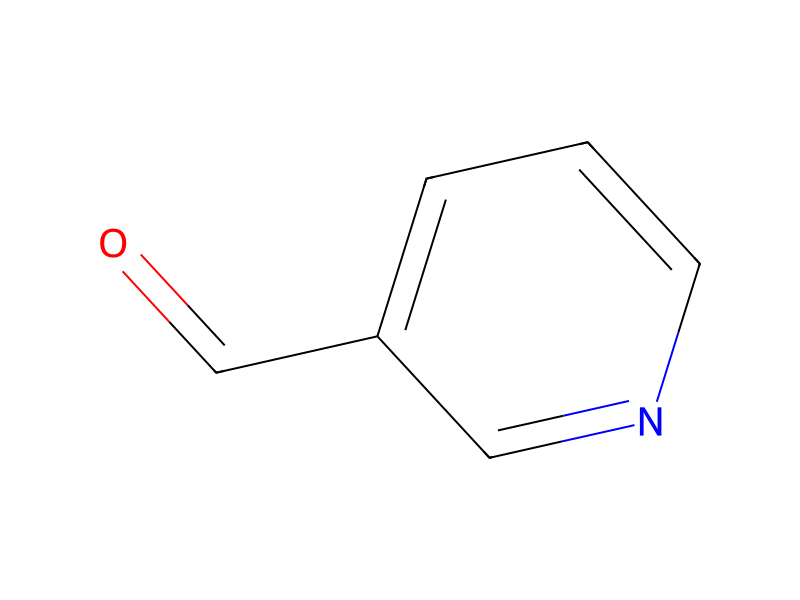

Product 1

Reagents, catalysts & solvents 1

Procedure
36.1 ml (57.75 mmol) of 1.6 M n-butyllithium in hexane are added dropwise, under argon, to a stirred solution of 16.1 g (55 mmol) of 2-bromo-6-napthyl methyl ketone ethylene acetal in 120 ml of absolute ether at -70° C. The mixture is then allowed to reach 0° C. and is stirred for one hour. Then, at -30° C., 6.19 g (57.75 mmol, 5.45 ml) of nicotinaldehyde in 15 ml of absolute ether are added dropwise. The mixture is subsequently allowed to reach room temperature within one hour, and is stirred for a further hour. After acidification to pH 1 with 2 N HCl the mixture is stirred overnight. After separation of the phases, the aqueous phase is extracted once with ether, the ether phase is discarded, and the aqueous phase is neutralized with sodium bicarbonate solution, which is then extracted with ethyl acetate. After drying and evaporation, the residue is recrystallized from isopropanol. 9.2 g (60%) of 2-acetyl-6-(1-hydroxy-1-(3-pyridyl) methyl(naphthalene are obtained. Melting point 157°-9° C.
Workup
- customto reach 0° C.
- waitto reach room temperature within one hour
- stirringis stirred for a further hour
- customAfter separation of the phases
- extractionthe aqueous phase is extracted once with ether
- extractionis then extracted with ethyl acetate
- customAfter drying
- customevaporation
- customthe residue is recrystallized from isopropanol
Sources & evidence
- ORD record
- ord-c2c4715119fe44da9d6365c44c34f0b8
- Source dataset
- uspto-grants-1988_03
- Patent number
- US04734406
Reaction notes
Loading…