Dichloromethane → 4-bromo-3-fluoro-N-(propan-2-yl)benzamide
Reaction equation

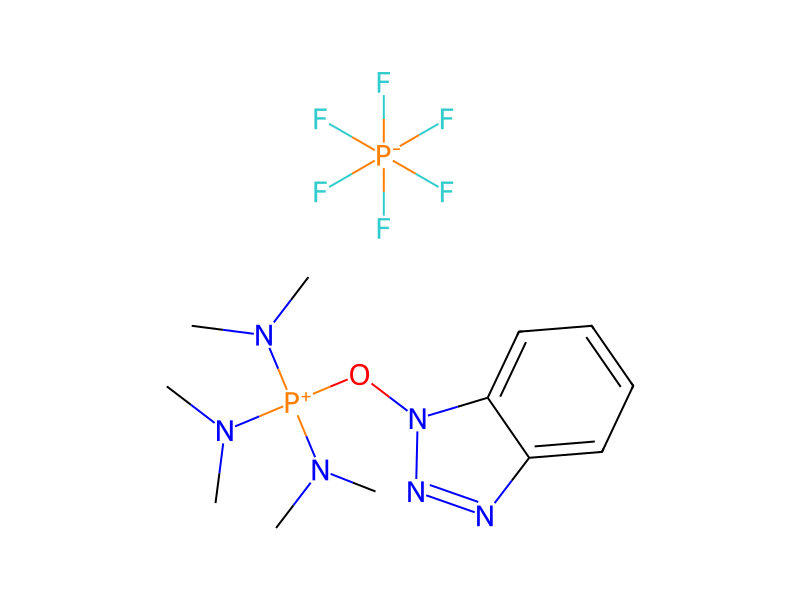
[CH3:1][CH:2]([NH2:4])[CH3:3].[Br:5][C:6]1[CH:14]=[CH:13][C:9]([C:10](O)=[O:11])=[CH:8][C:7]=1[F:15].C(Cl)Cl.F[P-](F)(F)(F)(F)F.N1(O[P+](N(C)C)(N(C)C)N(C)C)C2C=CC=CC=2N=N1.C(N(CC)C(C)C)(C)C.C([O-])(O)=O.[Na+]>>[Br:5][C:6]1[CH:14]=[CH:13][C:9]([C:10]([NH:4][CH:2]([CH3:3])[CH3:1])=[O:11])=[CH:8][C:7]=1[F:15]Participants
Reactant 6





Product 1

Procedure
2-Propanamine (1.2 mL, 14 mmol) was added to a mixture of 4-bromo-3-fluorobenzoic acid (2.09 g, 9.54 mmol, Alfa Aesar: Cat. #B25475) in methylene chloride (52.2 mL, 815 mmol), followed by benzotriazol-1-yloxytris(dimethylamino)-phosphonium hexafluorophosphate (4.6 g, 10. mmol) and N,N-diisopropylethylamine (3.3 mL, 19 mmol). The reaction mixture was stirred at room temperature overnight. The reaction mixture was worked up with aqueous NaHCO3, and extracted with dichloromethylene (3×20 mL). The combined organic layers were washed with brine, dried over MgSO4, filtered and concentrated under reduced pressure. The residue was purified by flash chromatography on a silica gel column with ethyl acetate in hexanes (0-20%) to afford the desired product (2.28 g, 91.8%). LCMS (M+H)+: m/z=260.0/262.0.
Workup
- extractionextracted with dichloromethylene (3×20 mL)
- washThe combined organic layers were washed with brine
- dry with materialdried over MgSO4
- filtrationfiltered
- concentrationconcentrated under reduced pressure
- customThe residue was purified by flash chromatography on a silica gel column with ethyl acetate in hexanes (0-20%)
Sources & evidence
- ORD record
- ord-127623ca617f4770a7740c00d3115186
- Source dataset
- uspto-grants-2015_05
- Patent number
- US09023840B2
Reaction notes
Loading…