Sulfuric Acid → Sorbitol
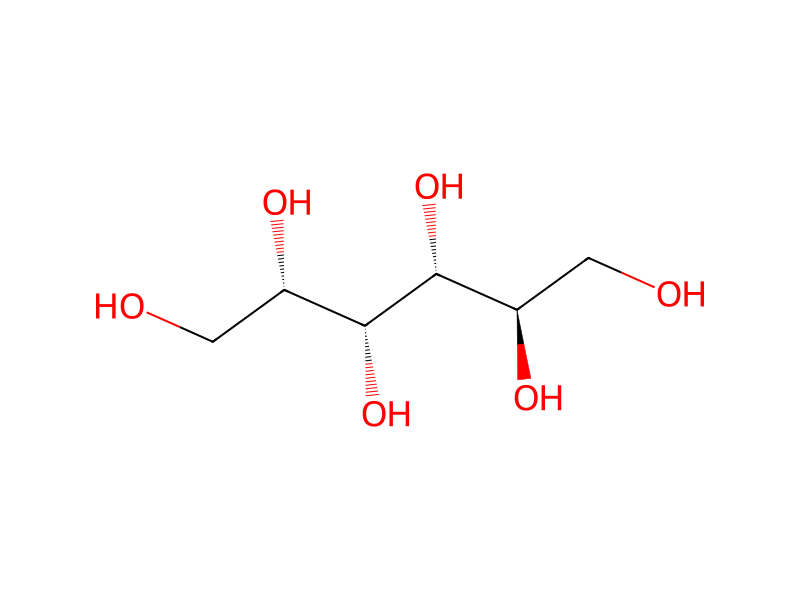
Reaction equation

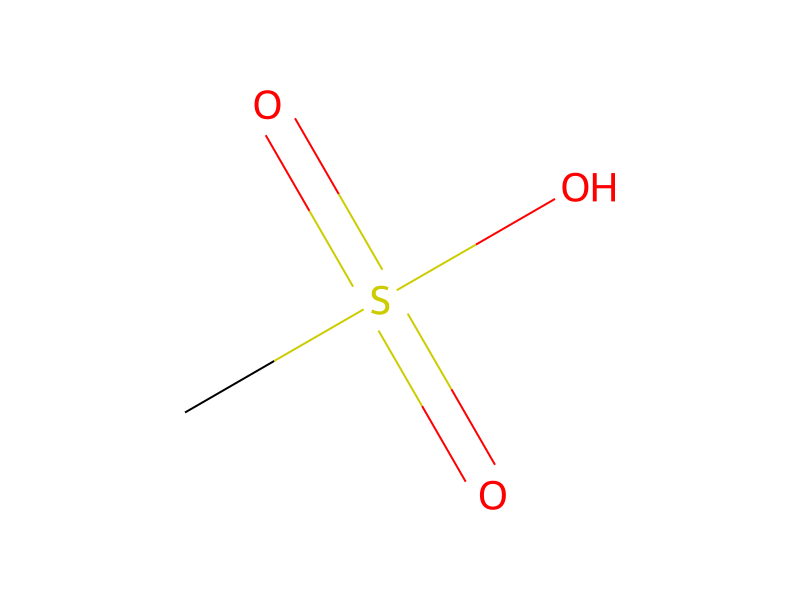
[OH:1][CH2:2][C@@H:3]([C@H:5]([C@@H:7]([C@@H:9]([CH2:11][OH:12])[OH:10])[OH:8])[OH:6])[OH:4].S(=O)(=O)(O)O.CS(O)(=O)=O>>[OH:12][CH2:11][C@@H:9]([C@H:7]([C@@H:5]([C@@H:3]([CH2:2][OH:1])[OH:4])[OH:6])[OH:8])[OH:10].[CH2:11]1[O:12][C@@H:5]2[C@@H:3]([OH:4])[CH2:2][O:8][C@@H:7]2[C@@H:9]1[OH:10]Participants


Procedure
1,000 g of a sorbitol powder (D-sorbitol, Samyang Genex Corp., Korea) was introduced into a three-necked glass reactor equipped with a stirrer and dissolved by elevating a temperature of the reactor to 110° C. under vacuum conditions of 3 mmHg. A mixed acid of 5 g of concentrated sulfuric acid (95%, Duksan Chemical Engineering, Co., Ltd., Korea) and 10 g of methanesulfonic acid (70%, Sigma) was added thereto, and then the reaction temperature was elevated to 145° C. The dehydration reaction was carried out for 3 hours under vacuum, resulting in conversion of sorbitol into isosorbide which is an anhydrosugar alcohol. The temperature of the reactor was lowered to 110° C., and 20 g of a 50% sodium hydroxide solution (Samchun Pure Chemical Co., Ltd., Korea) was added to neutralize the dehydration reaction liquid. Here, the anhydrosugar alcohol conversion rate was 85.4%, and the content of the resulting polymer was 6.3%.
Workup
- customequipped with a stirrer
- dissolutiondissolved
- customto 110° C.
- customwas elevated to 145° C
- customThe dehydration reaction
Sources & evidence
- ORD record
- ord-ca64a7ac7d0c411381db034e657a3315
- Source dataset
- uspto-grants-2015_05
- Patent number
- US09029578B2
Reaction notes
Loading…