Iodobenzene diacetate → 10-Bromo-2-carbamoyl-5,6-dihydrobenzo[f]imidazo[1,2-d][1,4]oxazepine-6-carboxylic acid
Reaction equation
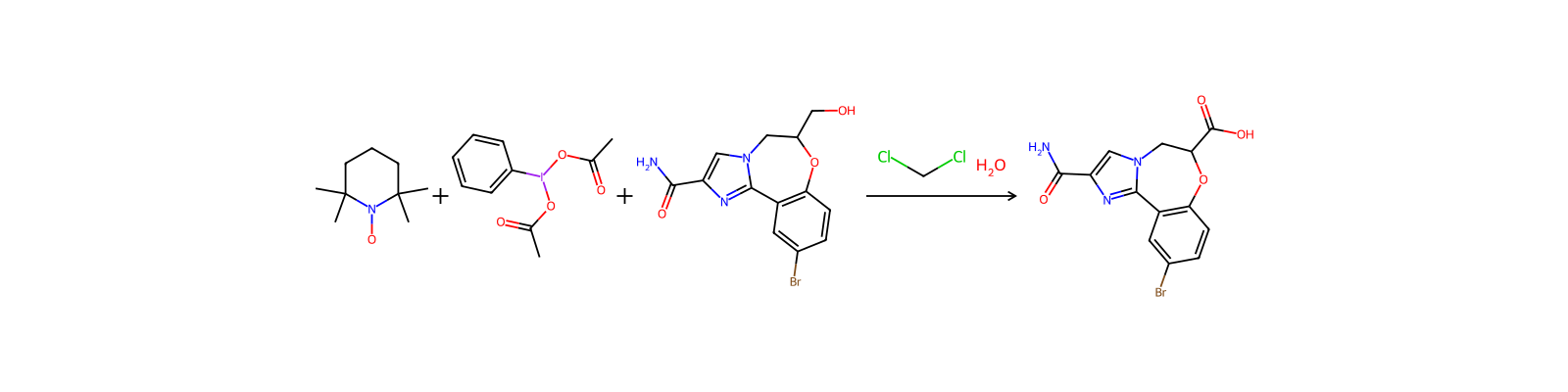
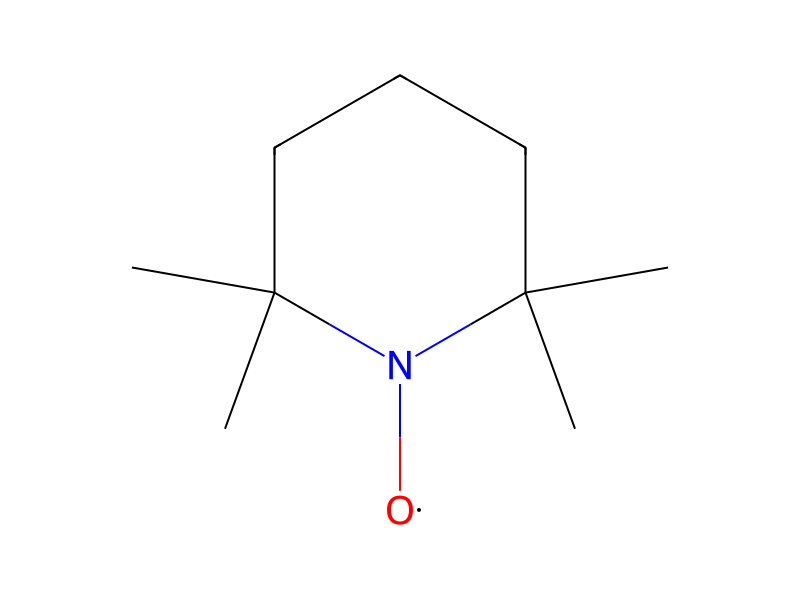
CC1(C)N([O])C(C)(C)CCC1.C(OI(C1C=CC=CC=1)OC(=O)C)(=[O:14])C.[Br:27][C:28]1[CH:29]=[CH:30][C:31]2[O:37][CH:36]([CH2:38][OH:39])[CH2:35][N:34]3[CH:40]=[C:41]([C:43]([NH2:45])=[O:44])[N:42]=[C:33]3[C:32]=2[CH:46]=1>ClCCl.O>[Br:27][C:28]1[CH:29]=[CH:30][C:31]2[O:37][CH:36]([C:38]([OH:14])=[O:39])[CH2:35][N:34]3[CH:40]=[C:41]([C:43](=[O:44])[NH2:45])[N:42]=[C:33]3[C:32]=2[CH:46]=1Participants
Reactant 3


Product 1

Reagents, catalysts & solvents 2


Procedure
TEMPO (17 mg, 0.11 mmol, 0.33 equiv) and PhI(OAc)2 (255 mg, 0.79 mmol, 2.37 equiv) were added to a stirred suspension of 10-bromo-6-(hydroxymethyl)-5,6-dihydrobenzo[f]imidazo[1,2-d][1,4]oxazepine-2-carboxamide (113 mg, 0.33 mmol, 1.00 equiv) in dichloromethane (4 mL) and water (0.8 mL) at 0° C. After 30 min the resulting mixture was warmed to room temperature and stirred overnight. The reaction was then quenched by the addition sodium bicarbonate and washed with dichloromethane. The pH value of the aqueous solution was adjusted to 2 by 2N hydrogen chloride. The aqueous layer was extracted with ethyl acetate, dried over anhydrous sodium sulfate, and concentrated under vacuum. This resulted in to 85 mg (crude) of 10-bromo-2-carbamoyl-5,6-dihydrobenzo[f]imidazo[1,2-d][1,4]oxazepine-6-carboxylic acid as a white solid.
Workup
- customThe reaction was then quenched by the addition sodium bicarbonate
- washwashed with dichloromethane
- extractionThe aqueous layer was extracted with ethyl acetate
- dry with materialdried over anhydrous sodium sulfate
- concentrationconcentrated under vacuum
Sources & evidence
- ORD record
- ord-6f0846b897a44948b3136671d9a08c40
- Source dataset
- uspto-grants-2015_05
- Patent number
- US09034866B2
Reaction notes
Loading…