Methanol → 5-Bromo-2-fluoroaniline
Reaction equation

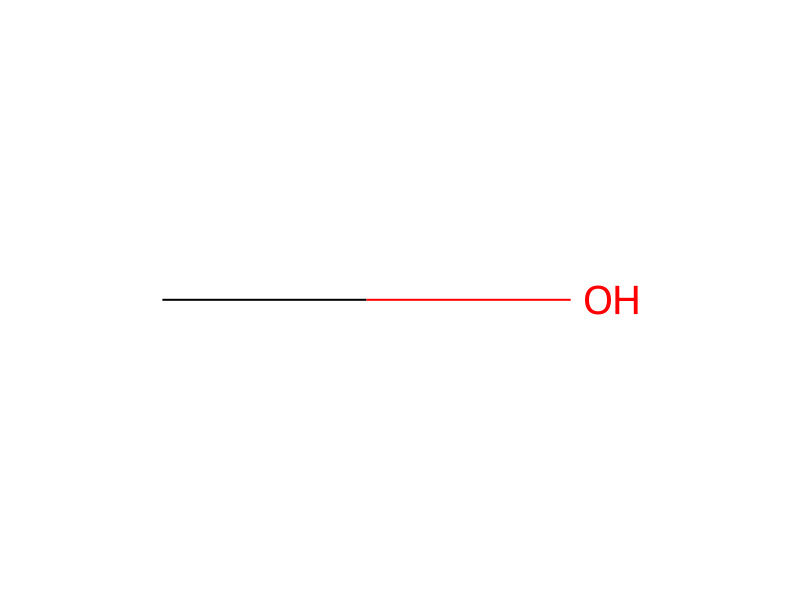
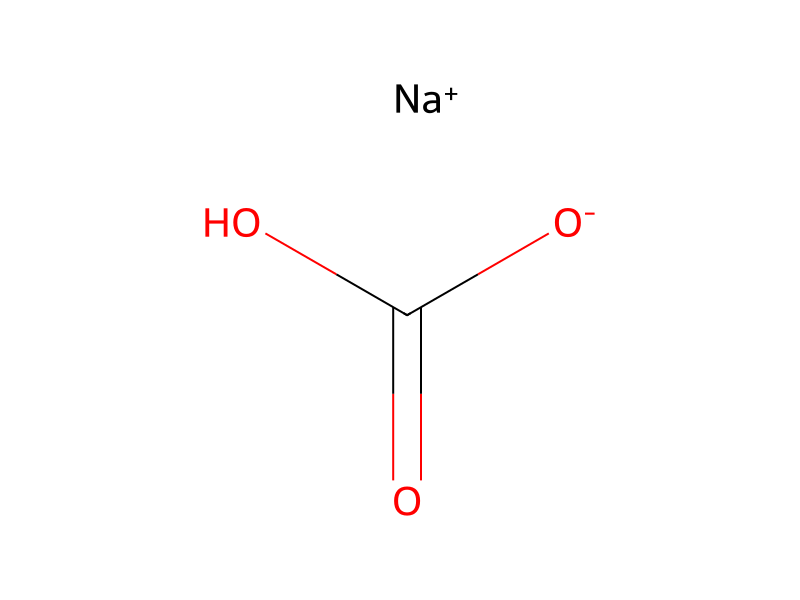
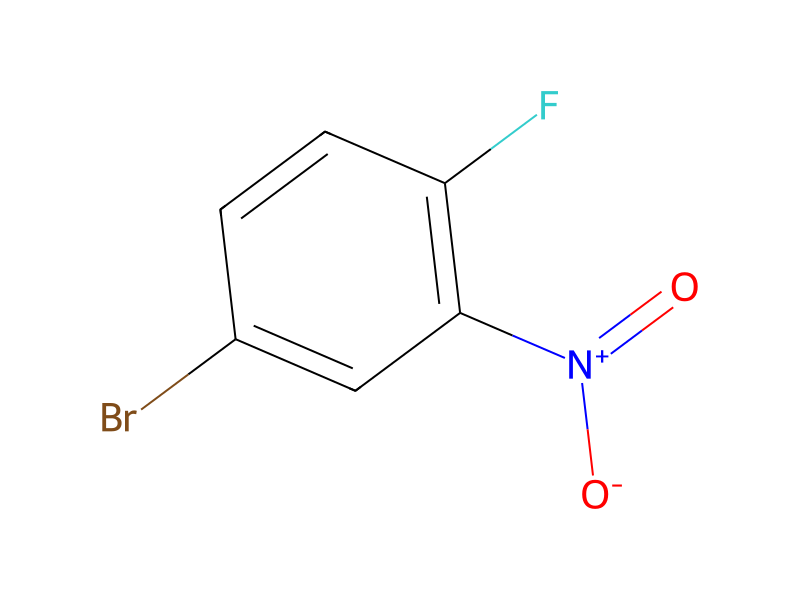
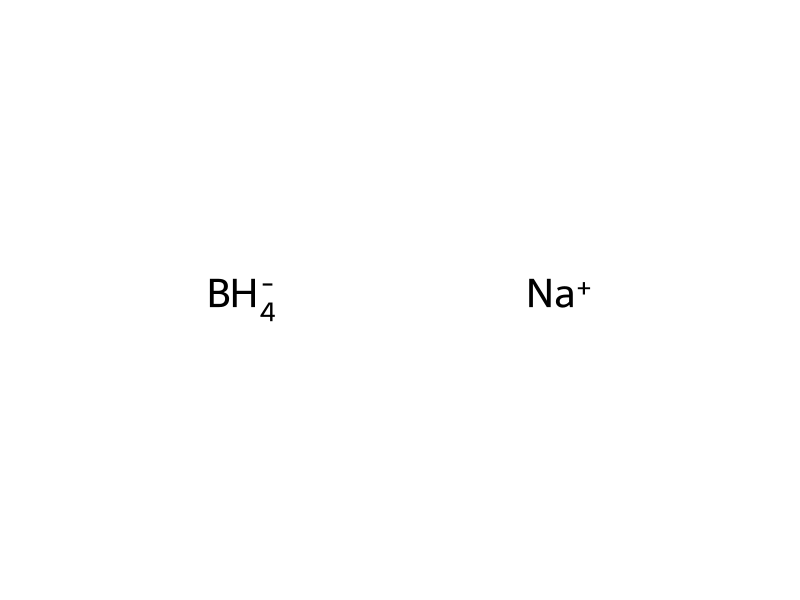
[Br:1][C:2]1[CH:7]=[CH:6][C:5]([F:8])=[C:4]([N+:9]([O-])=O)[CH:3]=1.CO.[BH4-].[Na+].C(=O)([O-])O.[Na+]>[Ni](Br)Br.O1CCCC1>[Br:1][C:2]1[CH:7]=[CH:6][C:5]([F:8])=[C:4]([CH:3]=1)[NH2:9]Participants


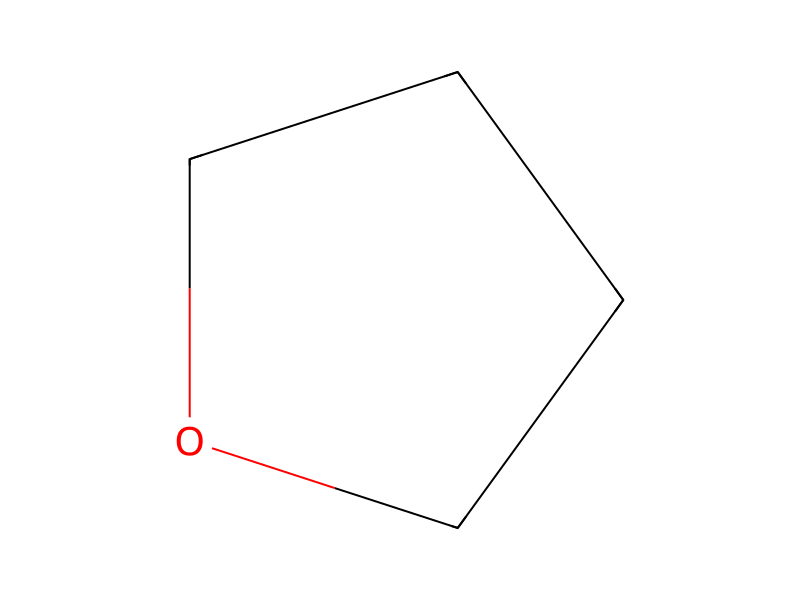
Procedure
To a mixture of 1-bromo-4-fluoro-3-nitrobenzene (1.56 g), nickel(II) bromide (78 mg), methanol (28 mL) and tetrahydrofuran (28 mL) was added sodium borohydride (805 mg) under ice-cooling, and the mixture was stirred at the same temperature for 30 minutes. The mixture was stirred at room temperature for 30 minutes, and the reaction mixture was poured into a saturated aqueous sodium hydrogen carbonate solution. The resulting mixture was extracted with ethyl acetate. The extract was washed with water and brine successively, and dried over anhydrous sodium sulfate. The solvent was removed under reduced pressure to give 5-bromo-2-fluoroaniline (1.3 g). This material was dissolved in tetrahydrofuran (30 mL). To the solution were added 4-dimethylaminopyridine(0.26 g)and di(tert-butyl)dicarbonate (3.1 g), and the mixture was heated for reflux for 1.5 hours. The reaction mixture was poured into 0.5 mol/L hydrochloric acid, and the resulting mixture was extracted with ethyl acetate. The extract was washed with water and brine successively, and dried over anhydrous sodium sulfate. The solvent was removed under reduced pressure. To the residue were added methanol (21 mL) and potassium carbonate (2.94 g), and the mixture was heated for reflux for 2 hours. To the reaction mixture was added water, and the mixture was poured into brine. The resulting mixture was extracted with ethyl acetate, and the extract was dried over anhydrous sodium sulfate. The solvent was removed under reduced pressure, and the residue was purified by column chromatography on silica gel (eluent: n-hexane/ethyl acetate=95/5) to give the title compound (1.72 g).
Workup
- temperaturecooling
- stirringThe mixture was stirred at room temperature for 30 minutes
- extractionThe resulting mixture was extracted with ethyl acetate
- washThe extract was washed with water and brine successively
- dry with materialdried over anhydrous sodium sulfate
- customThe solvent was removed under reduced pressure
Sources & evidence
- ORD record
- ord-c3fa736b216c459e97cf3ebf32b87df8
- Source dataset
- uspto-grants-2015_05
- Patent number
- US09040693B2
Reaction notes
Loading…