Sodium Carbonate → 4-chloro-6,7-dihydro-5H-cyclopenta[d]pyrimidine 1-oxide
Reaction equation

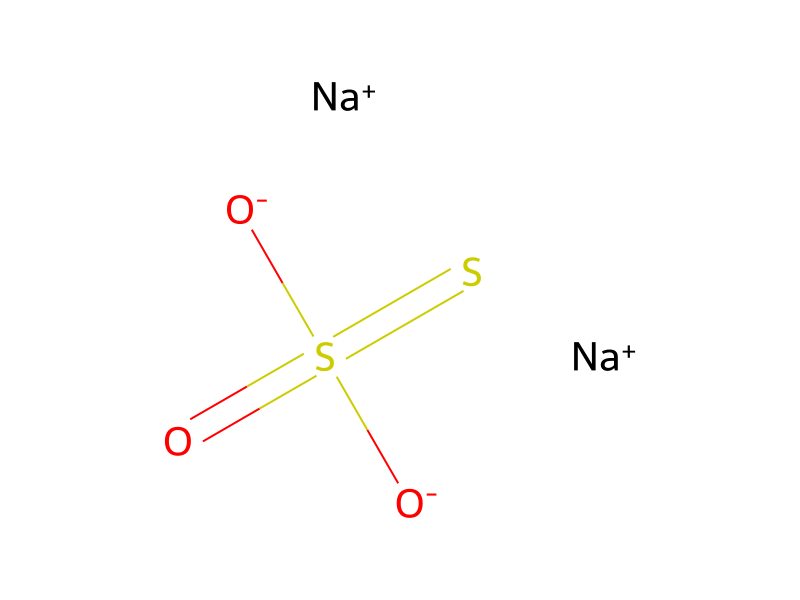
[Cl:1][C:2]1[C:3]2[CH2:10][CH2:9][CH2:8][C:4]=2[N:5]=[CH:6][N:7]=1.ClC1C=CC=C(C(OO)=[O:19])C=1.S([O-])([O-])(=O)=S.[Na+].[Na+].C(=O)([O-])[O-].[Na+].[Na+]>C(Cl)(Cl)Cl.O>[Cl:1][C:2]1[N:7]=[CH:6][N+:5]([O-:19])=[C:4]2[CH2:8][CH2:9][CH2:10][C:3]=12Participants
Reactant 4



Product 1

Reagents, catalysts & solvents 2


Procedure
77.5 g of 4-chloro-6,7-dihydro-5H-cyclopenta[d]pyrimidine were dissolved in 2 liters of chloroform, and then a solution of 259 g of m-chloroperbenzoic acid in 0.1 liter of chloroform was added dropwise. The mixture was stirred overnight, whilst cooling with water, and then a solution of 375 g of sodium thiosulfate in 1.5 liters of water and a solution of 191 g of sodium carbonate in 0.7 liters of water were added successively dropwise, whilst ice-cooling. The chloroform layer was separated, and the aqueous layer was extracted with chloroform. The separated chloroform layer and extracts were combined and dried over anhydrous sodium sulfate. The chloroform was evaporated off under reduced pressure, and the resulting residue was purified by silica gel column chromatography, using ethyl acetate as the eluent, to give 43.9 g of the title compound as colorless crystals melting at 85°-87° C. (with decomposition).
Workup
- temperaturecooling
- customThe chloroform layer was separated
- extractionthe aqueous layer was extracted with chloroform
- dry with materialdried over anhydrous sodium sulfate
- customThe chloroform was evaporated off under reduced pressure
- customthe resulting residue was purified by silica gel column chromatography
Sources & evidence
- ORD record
- ord-a3e1bbf5168e4591ad2c314695dcf2f7
- Source dataset
- uspto-grants-1988_06
- Patent number
- US04749704
Reaction notes
Loading…