3,4-dihydro-2H-pyran → HCID 86742225, compound
Reaction equation

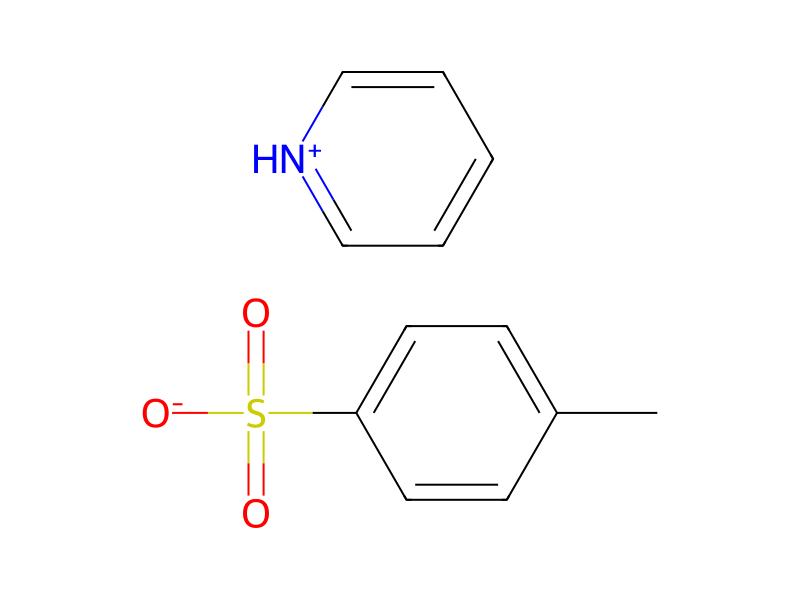
[OH:1][CH:2]([C@H:4]1[CH:7]([S:8][C:9]([S:11][CH2:12][S:13][CH3:14])=[S:10])[NH:6][C:5]1=[O:15])[CH3:3].C1(C)C=CC(S([O-])(=O)=O)=CC=1.[NH+]1C=CC=CC=1.[O:33]1[CH:38]=[CH:37][CH2:36][CH2:35][CH2:34]1>C(Cl)Cl>[O:33]1[CH2:38][CH2:37][CH2:36][CH2:35][CH:34]1[O:1][CH:2]([C@H:4]1[CH:7]([S:8][C:9]([S:11][CH2:12][S:13][CH3:14])=[S:10])[NH:6][C:5]1=[O:15])[CH3:3]Participants
Reactant 3


Product 1

Reagents, catalysts & solvents 1

Conditions
- Temperature
- 30 °C
Procedure
To a stirred solution of 2.67 g (10 mmole) 3-(R)-(1-hydroxyethyl)-4-(methylthiomethylthio[thiocarbonyl]thio)-2-azetidinone in 30 ml methylene chloride at room temperature is added 0.8 g pyridinium p-toluenesulfonate and 1.26 g (15 mmole) dihydropyran and the mixture is stirred at 30° C. for five hours. The solvent is evaporated in vacuo, the residual oil is dissolved in ethyl ether, washed with brine, water, dried (Na2SO4) and concentrated in vacuo to afford the title compound. B. A solution of 3.51 g (10 mmole) of the product of Part A, above, and 4.0 g (20 mmole) t-butoxycarbonyloxymethyl glyoxylate in 150 ml benzene is heated at reflux overnight while removing water in a Dean-Stark trap. The resulting product is isolated and purified as described in Example 4 to obtain the desired 2-hydroxyacetate.
Workup
- customThe solvent is evaporated in vacuo
- dissolutionthe residual oil is dissolved in ethyl ether
- washwashed with brine, water
- dry with materialdried (Na2SO4)
- concentrationconcentrated in vacuo
Sources & evidence
- ORD record
- ord-b7d299a184fb42fe95fbeb8d2e0bc2e6
- Source dataset
- uspto-grants-1988_06
- Patent number
- US04751297
Reaction notes
Loading…