Water → HCID 22324310, compound
Reaction equation

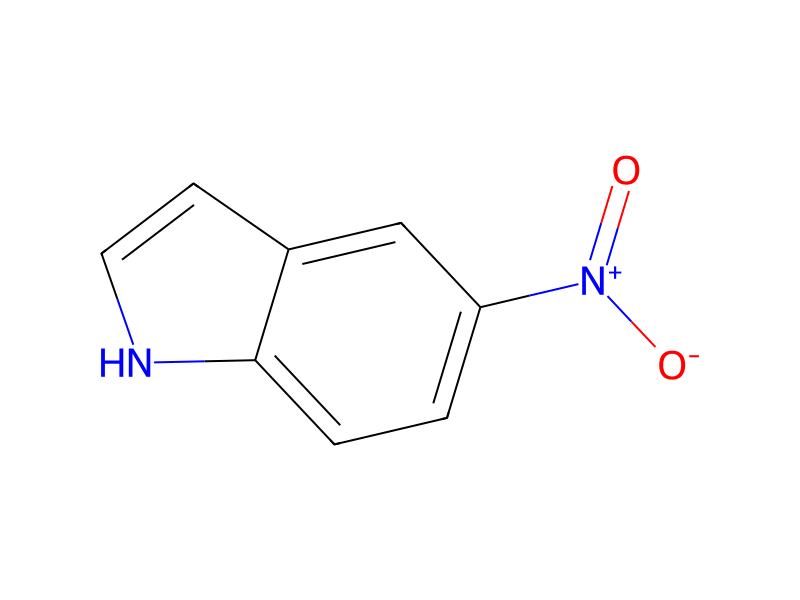
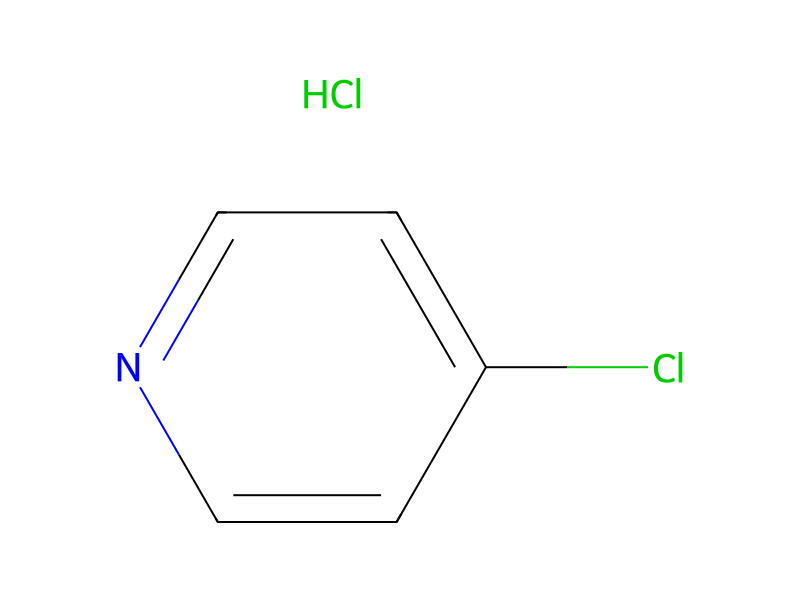
[N+:1]([C:4]1[CH:5]=[C:6]2[C:10](=[CH:11][CH:12]=1)[NH:9][CH:8]=[CH:7]2)([O-])=O.Cl.Cl[C:15]1[CH:20]=[CH:19][N:18]=[CH:17][CH:16]=1.CC(C)([O-])C.[K+].O>CN(C=O)C>[N:18]1[CH:19]=[CH:20][C:15]([N:9]2[C:10]3[C:6](=[CH:5][C:4]([NH2:1])=[CH:12][CH:11]=3)[CH:7]=[CH:8]2)=[CH:16][CH:17]=1Participants
6
Reactant 4


Product 1

Reagents, catalysts & solvents 1

Conditions
- Temperature
- 100 °C
Procedure
To a solution of 5-nitroindole (7.0 g, 43.2 mmol) and 4-chloropyridine hydrochloride (7.8 g, 51.8 mmol) in DMF (43 mL) was added potassium tert-butoxide (12.1 g, 108.0 mmol), portionwise. The reaction was heated at 100° C. for 48 h. The mixture was allowed to cool to room temperature and poured into water (400 mL). The resulting solid was removed by filtration and dried under vacuum. Desired compound (6.04 g, 25.3 mmol; 58% yield); 1H NMR (DMSO-d6) δ 8.76 (dd, J=1.7, 4.5, 2H), 8.68 (d, J=2.2, 1H), 8.06-8.13 (m, 2H), 7.92 (d, J=9.2, 1H), 7.75 (dd, J=1.5, 4.6, 2H), 7.07 (dd, J=0.9, 3.5, 1H); ES MS [M+H]+=240. Step 2. Preparation of 1-(4-pyridinyl)-1H-indol-5-amine
Workup
- temperatureto cool to room temperature
- customThe resulting solid was removed by filtration
- customdried under vacuum
Sources & evidence
- ORD record
- ord-77b2a0d039964e01b937127ea12e1f25
- Source dataset
- uspto-grants-2005_08
- Patent number
- US06924290B2
Reaction notes
Loading…