Potassium Carbonate → 2-(2-Chloro-4-vinylbenzyl)isoindoline-1,3-dione
Reaction equation

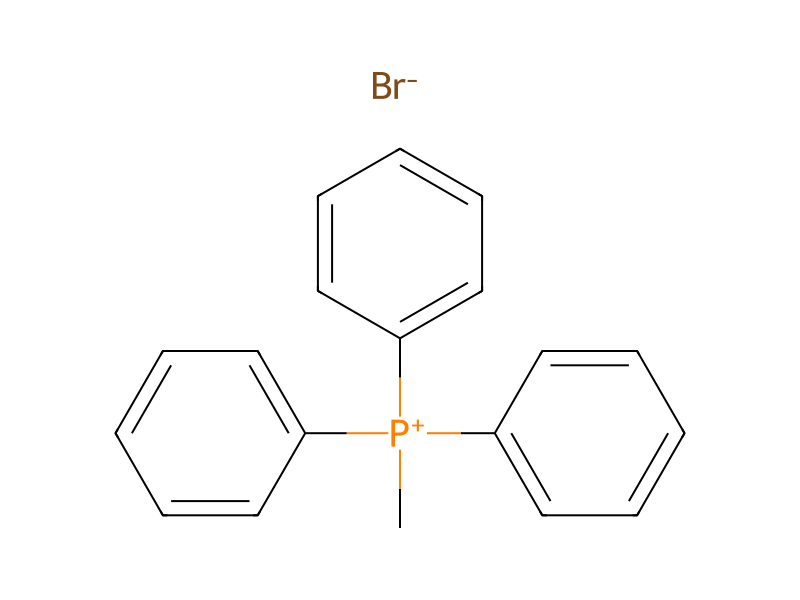
[Cl:1][C:2]1[CH:3]=[C:4]([CH:7]=[CH:8][C:9]=1[CH2:10][N:11]1[C:19](=[O:20])[C:18]2[C:13](=[CH:14][CH:15]=[CH:16][CH:17]=2)[C:12]1=[O:21])[CH:5]=O.[C:22]([O-])([O-])=O.[K+].[K+]>O1CCOCC1.[Br-].C[P+](C1C=CC=CC=1)(C1C=CC=CC=1)C1C=CC=CC=1>[Cl:1][C:2]1[CH:3]=[C:4]([CH:5]=[CH2:22])[CH:7]=[CH:8][C:9]=1[CH2:10][N:11]1[C:19](=[O:20])[C:18]2[C:13](=[CH:14][CH:15]=[CH:16][CH:17]=2)[C:12]1=[O:21]Participants
Reactant 2


Product 1

Reagents, catalysts & solvents 2

Conditions
- Temperature
- 100 °C
Procedure
To a stirred solution of 3-chloro-4-((1,3-dioxoisoindolin-2-yl)methyl)benzaldehyde (2.8 g, 8.2 mmol) in 1,4-dioxane (30 mL) were added K2CO3 (1.68 g, 12.24 mmol) and methyl triphenyl phosphonium bromide (4.37 g, 12.24 mmol) at ambient temperature. Then the resultant reaction mixture was heated at 100° C. for 18 h. After the reaction was deemed complete by TLC, the reaction mixture was cooled to ambient temperature and filtered, and the obtained filtrate was concentrated under reduced pressure. The residue was purified by flash chromatography (SiO2, 100-200 mesh; 20% EtOAc in n-Hexane) to afford the title compound as a white solid (1.94 g, 70%): mp 141-143° C.; 1H NMR (400 MHz, CDCl3) δ 7.85 (m, 2H), 7.70 (m, 2H), 7.41 (m, 1H), 7.21 (m, 2H), 6.71 (dd, J=17.6, 10.8 Hz, 1H), 5.72 (d, J=17.6 Hz, 1H), 5.23 (d, J=10.8 Hz, 1H), 4.92 (s, 2H); ESIMS m/z 298.10 ([M−H]−).
Workup
- customThen the resultant reaction mixture
- temperaturethe reaction mixture was cooled to ambient temperature
- filtrationfiltered
- concentrationthe obtained filtrate was concentrated under reduced pressure
- customThe residue was purified by flash chromatography (SiO2, 100-200 mesh; 20% EtOAc in n-Hexane)
Sources & evidence
- ORD record
- ord-6a71691d490d4ac4a4c7e72c195b5033
- Source dataset
- uspto-grants-2016_01
- Patent number
- US09226500B2
Reaction notes
Loading…