Hydrochloric Acid → 5-Difluoromethympyrazine-2-carboxylic acid
Reaction equation

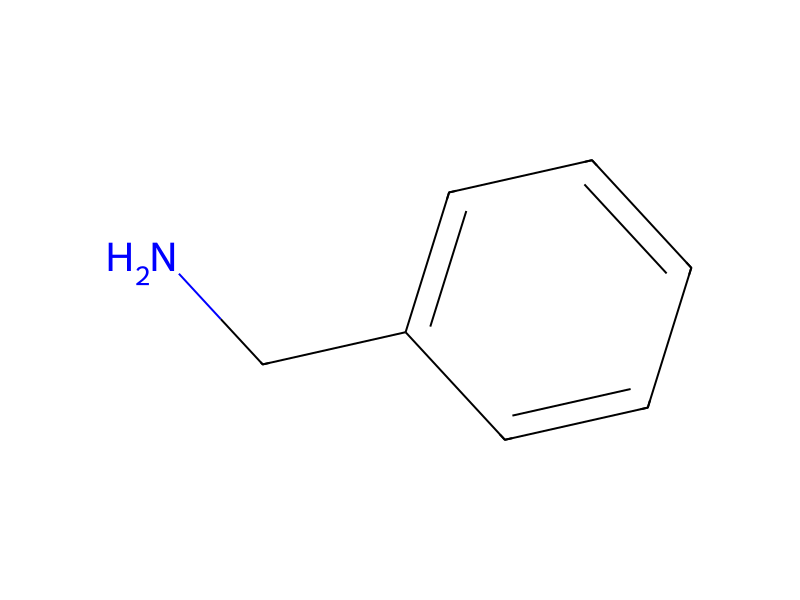
C(N)C1C=CC=CC=1.C([C:12]([F:23])([F:22])[C:13]1[N:14]=[CH:15][C:16]([C:19]([OH:21])=[O:20])=[N:17][CH:18]=1)(O)=O.P(=O)(O)(O)O.[OH-].[Na+].C(OC(C)C)(=O)C.Cl>C1(C)C=CC=CC=1.O>[F:23][CH:12]([F:22])[C:13]1[N:14]=[CH:15][C:16]([C:19]([OH:21])=[O:20])=[N:17][CH:18]=1Participants
Reactant 6





Product 1

Reagents, catalysts & solvents 2


Conditions
- Temperature
- 110 °C
Procedure
To a mixture of benzyl amine salt of 5-[carboxy(difluoro)methyl]pyrazine-2-carboxylic acid (IV, 110 g, 0.245 mol) and water (460 mL) were added toluene (550 mL) and an aqueous sodium hydroxide solution (5 M, 127 mL), and the aqueous layer was separated. After addition of phosphoric acid (85%, 121 mL, 1.78 mol) to the obtained aqueous layer and stirring the mixture at 110° C. for 24 h, and the reaction was cooled to room temperature. An aqueous sodium hydroxide solution (48%, 140 mL) was added, and the resulting mixture was stirred at 110° C. for 22 h and then cooled to room temperature. After addition of isopropyl acetate (412 mL) and concentrated hydrochloric acid (210 mL), the mixture was passed through a filter and the filter was rinsed with isopropyl acetate (137 mL). After phase separation of the obtained mixture, the aqueous layer was re-extracted with isopropyl acetate (550 mL). The obtained two organic layers were combined and washed six times with water (165 mL each), and the six washings were combined and re-extracted with isopropyl acetate (550 mL). After combining the obtained two organic layers, concentration at 50° C. under reduced pressure, and cooling the residue (about 93 mL) to 20° C. followed by addition of n-heptane (155 mL) over 1 h, the mixture was cooled to −10° C. The precipitated solids were collected by filtration, washed with n-heptane (53 mL), and dried at 50° C. under reduced pressure to afford the title compound (V, 29.1 g, 66% yield) as yellow solids.
Workup
- customan aqueous sodium hydroxide solution (5 M, 127 mL), and the aqueous layer was separated
- temperaturethe reaction was cooled to room temperature
- stirringthe resulting mixture was stirred at 110° C. for 22 h
- temperaturecooled to room temperature
- filtrationa filter
- washthe filter was rinsed with isopropyl acetate (137 mL)
- customAfter phase separation of the obtained mixture
- extractionthe aqueous layer was re-extracted with isopropyl acetate (550 mL)
- customThe obtained two organic layers
- washwashed six times with water (165 mL each)
- extractionre-extracted with isopropyl acetate (550 mL)
- customobtained
- concentrationtwo organic layers, concentration at 50° C. under reduced pressure
- temperaturecooling the residue (about 93 mL) to 20° C.
- additionfollowed by addition of n-heptane (155 mL) over 1 h
- temperaturethe mixture was cooled to −10° C
- filtrationThe precipitated solids were collected by filtration
- washwashed with n-heptane (53 mL)
- customdried at 50° C. under reduced pressure
Sources & evidence
- ORD record
- ord-acaf8f28397e4a7cadcc4f26273df6fd
- Source dataset
- uspto-grants-2016_01
- Patent number
- US09227942B2
Reaction notes
Loading…