Diisopropylethylamine → HCID 178513485, compound
Reaction equation

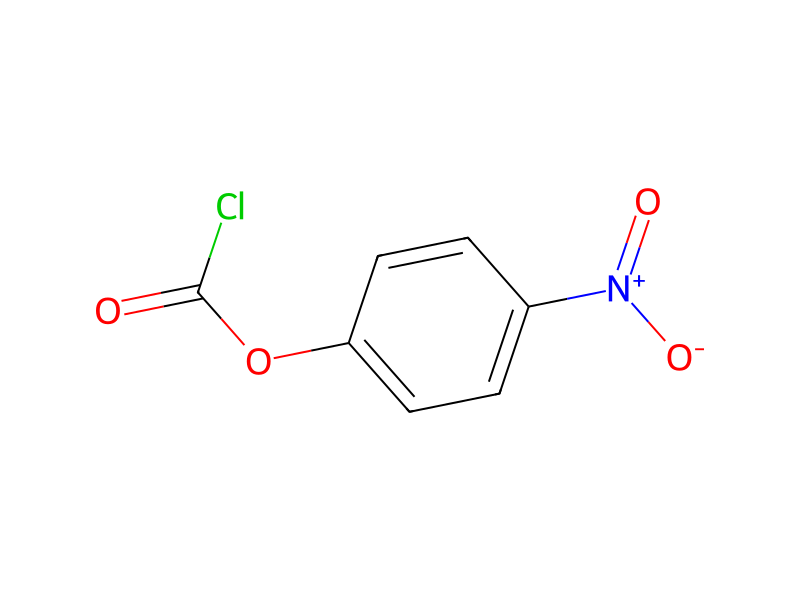
[NH2:1][C@H:2]1[CH2:7][CH2:6][C@H:5]([OH:8])[CH2:4][CH2:3]1.Cl[C:10](OC1C=CC([N+]([O-])=O)=CC=1)=[O:11].C(N(C(C)C)CC)(C)C.[Cl:31][C:32]1[N:36]2[CH2:37][CH2:38][NH:39][CH2:40][C:35]2=[C:34]([C:41]([NH2:43])=[O:42])[C:33]=1[C:44]1[CH:49]=[CH:48][CH:47]=[C:46]([F:50])[CH:45]=1>ClCCl>[Cl:31][C:32]1[N:36]2[CH2:37][CH2:38][N:39]([C:10]([NH:1][C@H:2]3[CH2:7][CH2:6][C@H:5]([OH:8])[CH2:4][CH2:3]3)=[O:11])[CH2:40][C:35]2=[C:34]([C:41]([NH2:43])=[O:42])[C:33]=1[C:44]1[CH:49]=[CH:48][CH:47]=[C:46]([F:50])[CH:45]=1Participants
Reactant 4



Product 1

Reagents, catalysts & solvents 1

Procedure
To a solution of 0.480 g (4.17 mmol) of trans-4-amino-cyclohexanol (CAS27489-62-9) in 10 ml of dichloromethane is added 0.84 g (4.17 mmol) of 4-nitrophenyl chloroformate (CAS 7693-46-1), followed by addition of 1.36 g (2.52 mmol) of diisopropylethylamine. After 1 hour at room temperature, the solvent is stripped off by evaporation under reduced pressure and the residue is suspended in 21 ml of ethyl acetate. 1.00 g (3.42 mmol) of 6-chloro-7-(3-fluorophenyl)-1,2,3,4-tetrahydropyrrolo[1,2-a]pyrazine-8-carboxamide and 0.90 g (0.70 mmol) of diisopropylethylamine are then added and the mixture is stirred for 30 minutes at reflux, to give a homogeneous solution. After cooling, the solvent is stripped off by evaporation under reduced pressure, the residue is then taken up in ethyl acetate and the solution is washed with aqueous sodium hydrogen carbonate solution and then with saturated aqueous sodium chloride solution. The organic phase is dried over sodium sulfate and then concentrated under reduced pressure. The residue is purified by two successive chromatographies on a column of silica gel, eluting with a mixture of 2 to 10% methanol in dichloromethane, to give 0.37 g of trans-6-chloro-7-(3-fluorophenyl)-N2-(4-hydroxycyclohexyl)-3,4-dihydropyrrolo[1,2-a]pyrazine-2,8(1H)-dicarboxamide in the form of a solid after recrystallizing from a mixture of methanol and diisopropyl ether and drying.
Workup
- customthe solvent is stripped off by evaporation under reduced pressure
- temperatureat reflux
- customto give a homogeneous solution
- temperatureAfter cooling
- customthe solvent is stripped off by evaporation under reduced pressure
- washthe solution is washed with aqueous sodium hydrogen carbonate solution
- dry with materialThe organic phase is dried over sodium sulfate
- concentrationconcentrated under reduced pressure
- customThe residue is purified by two successive chromatographies on a column of silica gel
- washeluting with a mixture of 2 to 10% methanol in dichloromethane
Sources & evidence
- ORD record
- ord-6354dce6ac8f463393bff590c6ecdbb7
- Source dataset
- uspto-grants-2016_01
- Patent number
- US09233965B2
Reaction notes
Loading…