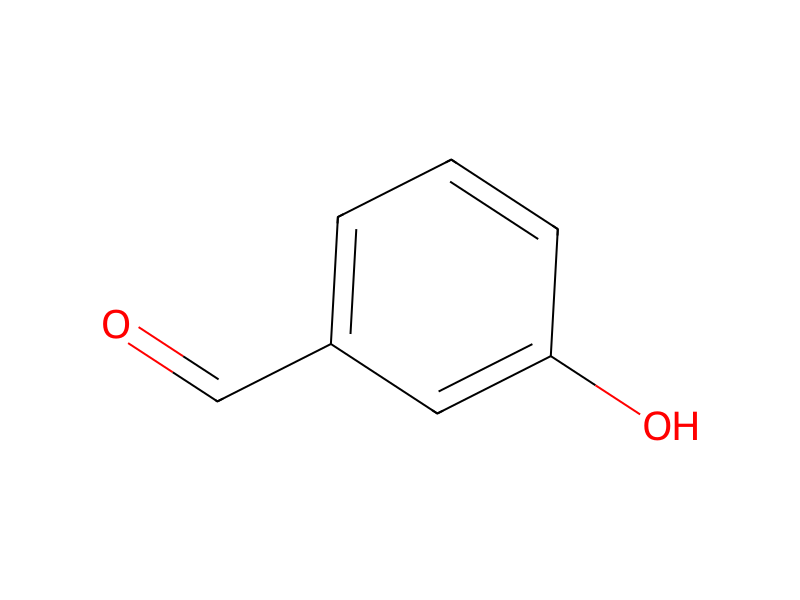
3-Hydroxybenzaldehyde → 3-(t-Butyldimethylsilyloxy)benzaldehyde
Reaction equation

[Si:1](Cl)([C:4]([CH3:7])([CH3:6])[CH3:5])([CH3:3])[CH3:2].[OH:9][C:10]1[CH:11]=[C:12]([CH:15]=[CH:16][CH:17]=1)[CH:13]=[O:14].C(N(CC)CC)C.O>C(Cl)Cl.CN(C1C=CC=CN=1)C>[Si:1]([O:9][C:10]1[CH:11]=[C:12]([CH:15]=[CH:16][CH:17]=1)[CH:13]=[O:14])([C:4]([CH3:7])([CH3:6])[CH3:5])([CH3:3])[CH3:2]Participants
7





Procedure
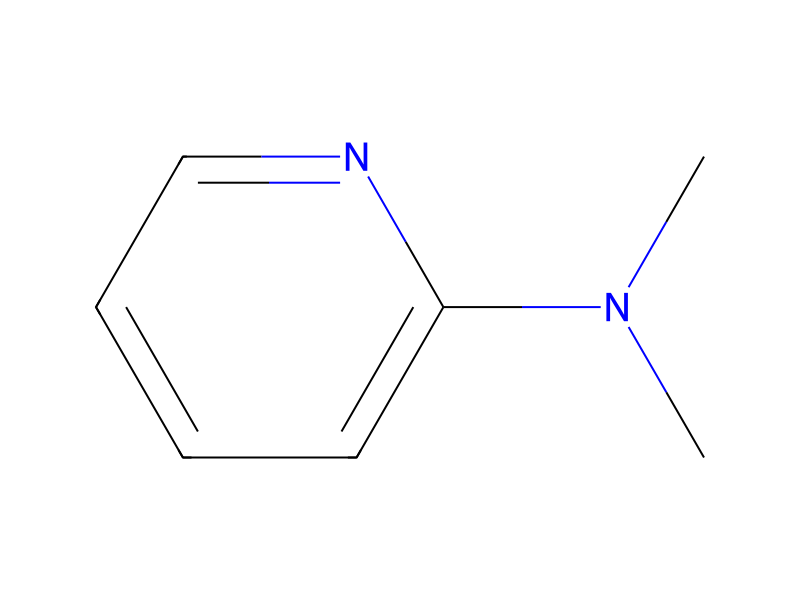
tert-butyldimethylsilyl chloride (3.7 g, 1.5 eq) was added portionwise to a solution of 3-hydroxybenzaldehyde (2.0 g, 16 mmol), triethylamine (3.4 mL, 1.5 eq) and dimethylaminopyridine (50 mg, 0.025 eq) in DCM (100 mL). After stirring for 2 h at rt, water was added. The aqueous phase was extracted with DCM, the combined organic phases dried over sodium sulfate and concentrated in vacuo to afford 3-((tert-butyldimethylsilyl)oxy)benzaldehyde (3.6 g, 16 mmol, 100%).
Workup
- extractionThe aqueous phase was extracted with DCM
- dry with materialthe combined organic phases dried over sodium sulfate
- concentrationconcentrated in vacuo
Sources & evidence
- ORD record
- ord-1d02d6ffce9d4a1a93dcaa2d89d00e04
- Source dataset
- uspto-grants-2016_01
- Patent number
- US09242987B2
Reaction notes
Loading…