4-Nitrophenethyl alcohol → 2-(4-Nitrophenyl)ethyl3-[(tert-butyl)oxycarbonyl]pyrrolo[4,5-e]indoline-7-carboxylate
Reaction equation

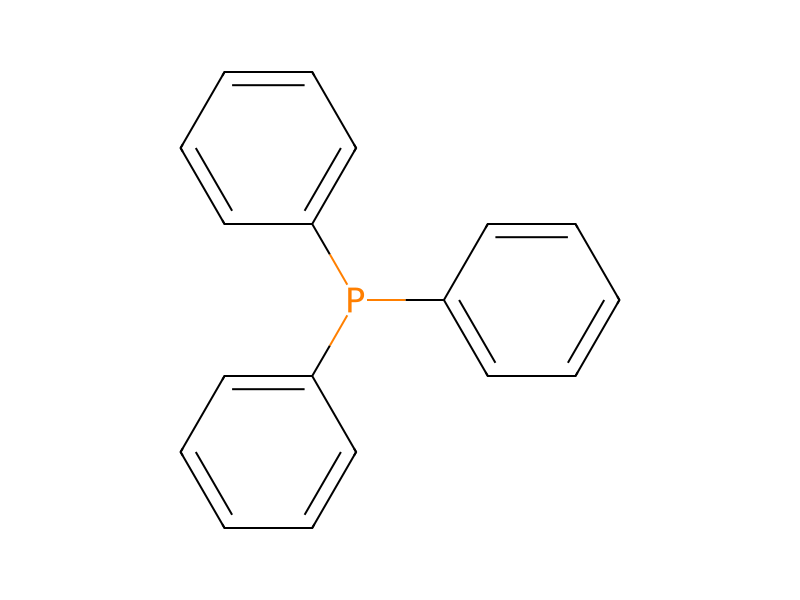
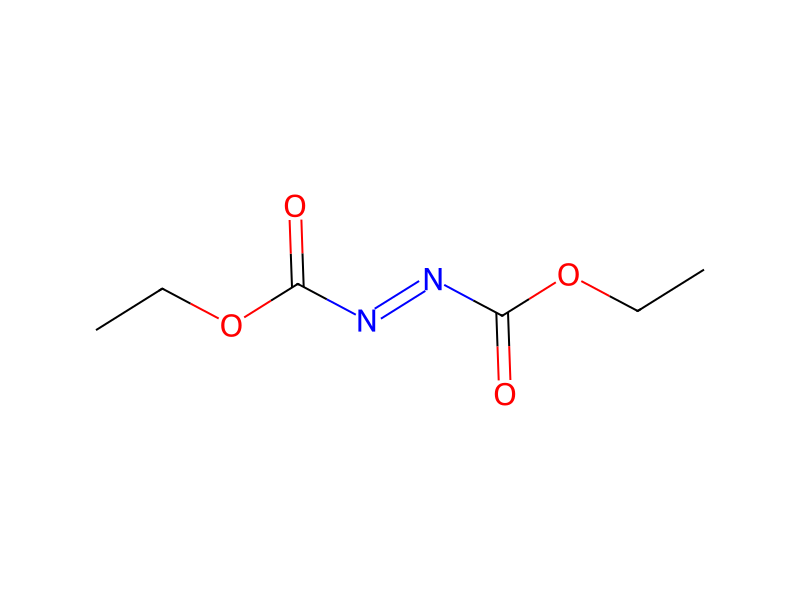
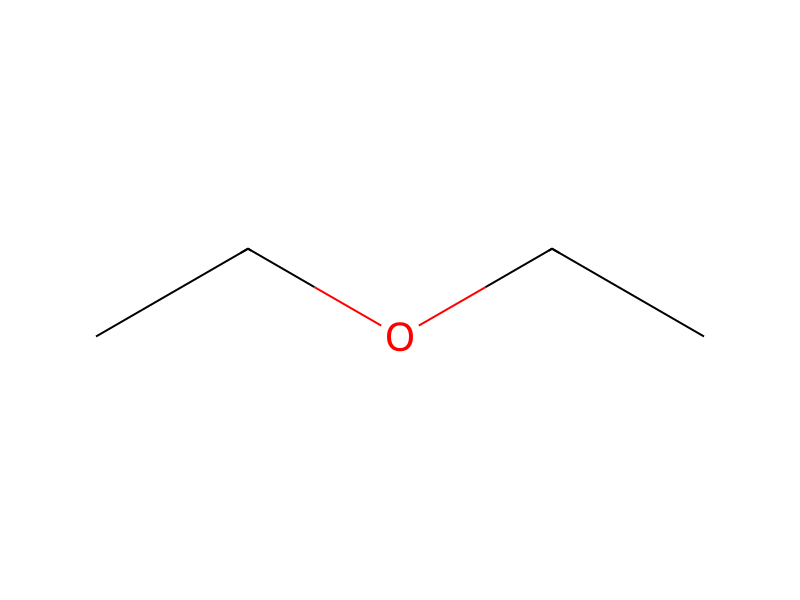
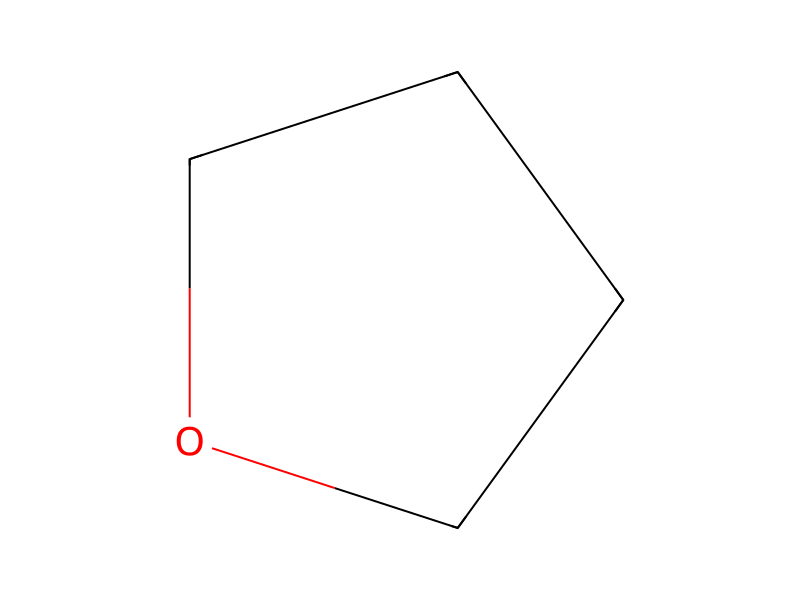
[C:1]([O:5][C:6]([N:8]1[C:19]2[C:11](=[C:12]3[C:16](=[CH:17][CH:18]=2)[NH:15][CH:14]([C:20]([OH:22])=[O:21])[CH2:13]3)[CH:10]=[CH:9]1)=[O:7])([CH3:4])([CH3:3])[CH3:2].N(C(OCC)=O)=NC(OCC)=O.C1(P(C2C=CC=CC=2)C2C=CC=CC=2)C=CC=CC=1.[N+:54]([C:57]1[CH:62]=[CH:61][C:60]([CH2:63][CH2:64]O)=[CH:59][CH:58]=1)([O-:56])=[O:55]>C(OCC)C.C1COCC1>[C:1]([O:5][C:6]([N:8]1[C:19]2[C:11](=[C:12]3[C:16](=[CH:17][CH:18]=2)[NH:15][CH:14]([C:20]([O:22][CH2:64][CH2:63][C:60]2[CH:59]=[CH:58][C:57]([N+:54]([O-:56])=[O:55])=[CH:62][CH:61]=2)=[O:21])[CH2:13]3)[CH:10]=[CH:9]1)=[O:7])([CH3:4])([CH3:2])[CH3:3]Participants
Reactant 4


Product 1

Reagents, catalysts & solvents 2
Conditions
- Temperature
- 4 °C
Procedure
Ten grams (33.1 mmol) of 3-[(tert-butyl)oxycarbonyl]pyrrolo[3,2-e]indoline-7-carboxylic acid (Boger et al., J. Org. Chem. 52:1521 (1987)), well dried, are placed into an argon filled flask, and 84 mL of THF and 10.4 mL (66.2 mmol) of diethyl azodicarboxylate (DEAD) are added. A dropping funnel is placed atop the flask (flushed with argon) and a water bath (to cool the flask) is placed under it. A solution of 17.3 g (66 mmol) of triphenylphosphine and 6.64 g (39.7 mmol) of 2-(p-nitrophenyl) ethanol in 160 mL of ethyl ether is made. This solution is added to the dropping funnel, and then to the reaction flask, dropwise, with stirring. The reaction is allowed to proceed for an hour, at which time, a TLC analysis is done (2:1 hexanes/ethyl acetate) examined by UV (254 nm) to determine whether the reaction is complete. If it is complete, then the baseline spot (bluish) will disappear and the product, with an Rf of 0.55, will appear as a dark spot. Often, especially if the reactants are not entirely dry, another portion of triphenylphosphine and DEAD are required. If so, a tenth of the original amounts is usually sufficient, i.e., 1.73 g of triphenylphosphine and 1.04 mL of DEAD. These can be added neat to the stirred solution. Allow to react another hour, after which another TLC analysis usually reveals complete reaction. The product usually precipitates out in part; this is collected bt filtration and washed with methanol, then recrystallized by dissolving in a minimum amount (typically, 80-100 ml) of warm acetone and adding four times that volume of warm methanol. Cool to 4° C. for several hours or perhaps overnight. The supernatant from the original precipitation is saved and evaporated to a syrup or until dry. It too is dissolved in a minimum amount of warm acetone; typically about 100-120 mL of warm acetone. The total amount or acetone used for the two recrystallizations is usually approximately 200 mL. As before, an amount of warm methanol equal to four times the amount of acetone is added. The solution is cooled; crystallization begins almost at once but is allowed to continue several hours to overnight. The recrystallizations are quite efficient, but the product from the reaction supernatant is usually not quite as pure and is purified by recrystallization. The yield is approximately 85%. (mp 191-193° C.) 1H NMR (DMSO-d6) δ 11.83 (s, 1H), 8.18 (d, J=8.5 Hz, 2H), 7.84 (br s, 1H), 7.64 (d, J=8.5 Hz, 2H), 7.25 (d, J=8.8 Hz), 6.96 (s, 1H), 4.56 (t, J=6 Hz, 2H), 4.00 (t, J=8.8 Hz, 2H), 3.21 (m, 4H), 1.51 (s, 9H). Combustion Analysis: Found: C, 63.16%; H, 5.56%; N, 9.45%. Calculated for 0.4 mole added water: C, 62.8%; H, 5.7%; N, 9.16%.
Workup
- customare placed into an argon filled flask
- customA dropping funnel is placed atop the flask (flushed with argon) and a water bath (
- temperatureto cool the flask)
- additionThis solution is added to the dropping funnel
- waitto proceed for an hour, at which time
- customOften, especially if the reactants are not entirely dry
- additionThese can be added neat to the stirred solution
- customto react another hour
- customafter which another TLC analysis usually reveals complete reaction
- customThe product usually precipitates out in part
- customthis is collected
- filtrationbt filtration
- washwashed with methanol
- customrecrystallized
- dissolutionby dissolving in a minimum amount (typically, 80-100 ml) of warm acetone
- additionadding four times that volume of warm methanol
- customThe supernatant from the original precipitation
- customevaporated to a syrup
- customuntil dry
- dissolutionIt too is dissolved in a minimum amount of warm acetone
- customThe total amount or acetone used for the two recrystallizations
- additionAs before, an amount of warm methanol equal to four times the amount of acetone is added
- temperatureThe solution is cooled
- customcrystallization
- waitto continue several hours to overnight
- customThe recrystallizations
- customis purified by recrystallization
- additionCalculated for 0.4 mole added water
Sources & evidence
- ORD record
- ord-156af94368374e37a5a7c3ce43b8e3de
- Source dataset
- uspto-grants-2011_03
- Patent number
- US07897736B2
Reaction notes
Loading…