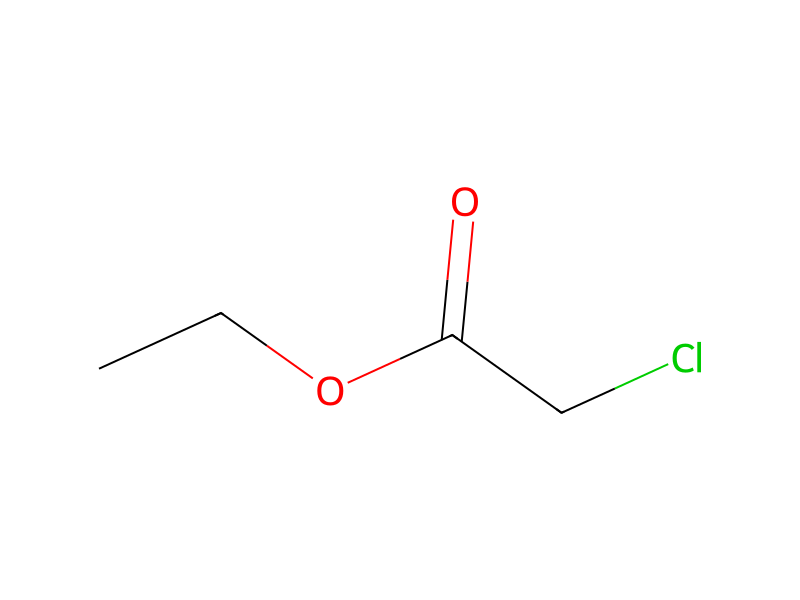
Ethyl chloroacetate → HCID 16724470, compound
Reaction equation

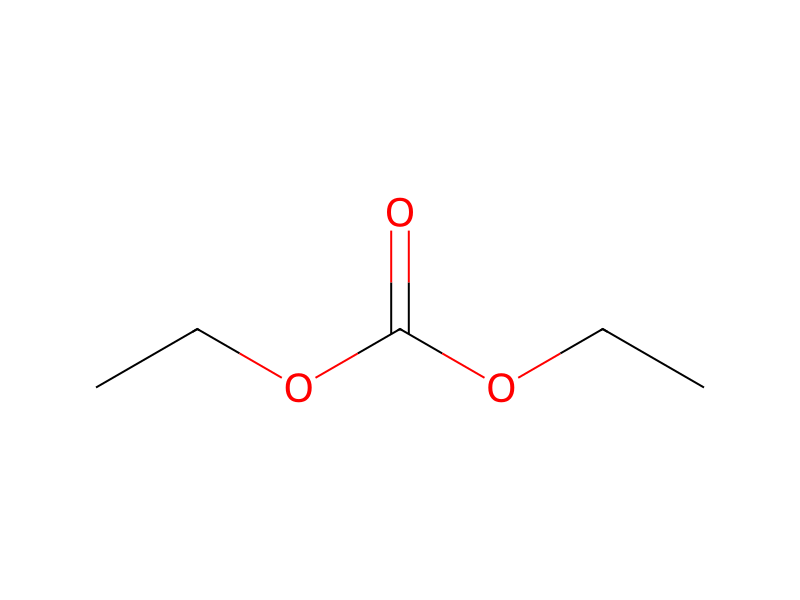
Cl[CH2:2][C:3]([O:5][CH2:6][CH3:7])=O.[O-]CC.[Na+].[C:12](=[O:19])([O:16]CC)OCC.[S:20]1[CH:24]=[CH:23][C:22](C=O)=[CH:21]1>C(O)C.O.[OH-].[Na+]>[CH2:6]([O:5]/[C:3](=[CH:2]\[C:22]1[CH:23]=[CH:24][S:20][CH:21]=1)/[C:12]([OH:16])=[O:19])[CH3:7]Participants






Conditions
- Temperature
- 25 °C
Procedure
Following the procedure of (Vol. 8, No. 6, 2004, Organic Research & Development) with modification, this compound was synthesised as follows: Ethyl chloroacetate (44.8 ml, 421 mmol) and anhydrous ethanol (30 ml) were cooled to 10-12° C. A solution of sodium ethoxide in ethanol (21% w/w, 165 ml) was added over 25 min at 12-16° C. under N2. After addition was complete the reaction mixture was warmed to 25° C. and stirred for 1 h. The mixture was then cooled to 10° C. and solid NaOEt (33.3 g, 488 mmol) was then added portion-wise over 0.5 h at 10-14° C. Ethanol (20 ml) was then added followed by the addition of diethyl carbonate (31 ml, 256 mmol). The slurry was then cooled to 0-5° C. and then 3-thiophene carboxaldehyde (20.2 g, 179.5 mmol) was added over a period of 1 h. After addition was complete the mixture was stirred at 40° C. in an oil bath for 15 h. The slurry was then cooled to 10-15° C. and then water (40 ml) was added followed by the addition of aqueous NaOH (55 ml of a 10 M solution). The resulting slurry was then stirred at pH 14 for 3 h at 20° C. The mixture was then diluted with water (60 ml) and then placed under reduced pressure at 45° C. to remove most of the ethanol and some water. The resulting thick slurry was then cooled to 4° C. in an ice-bath and then treated with conc. HCl (115 ml) drop-wise. The resulting slurry was then stirred at room temperature for 1.5 h and then extracted with EtOAc (2×200 ml) and the organic layer washed with water, brine and then dried (sodium sulphate). Evaporation of the solvent under reduced pressure afforded a deep-brown residue. This was dissolved in 5 M NaOH (250 ml) and this solution was washed with EtOAc (100 ml). The basic aqueous was then cooled to 4° C. and acidified with conc. HCl (11 M) to pH 4-6. The product was extracted with diethyl ether (3×200 ml), washed with brine, dried (sodium sulphate) and the solvent removed under reduced pressure. The residue was then filtered through a pad of silica (eluent hexane:EtOAc 90:10). The solvent was removed under reduced pressure and then the residue recrystallised from Et2O/hexane to afford the title compound as yellow crystals (79%). M.p. 88-89° C. 1H NMR (CDCl3, 250 MHz) δ 11.16 (1H, br s, COOH), 7.73-7.75 (1H, dd, j=0.5 Hz, Ar), 7.44-7.47 (1H, dd, J=1 Hz, Ar), 7.25-7.28 (1H, m, Ar), 7.18 (1H, s, CH═C), 3.96-4.05 (2H, q, J=7 Hz, CH2CH3), 1.35 (3H, t, J=7 Hz, CH2CH3),). Found: C, 54.64; H, 5.08; Calculated for C9H10SO3 C, 54.54; H, 5.08. M/z [(Cl) 222 (M)+ 30%, 223 (M+H)+ 50%, 240 (M+NH4)+ 100%; Found: 223.09705; required for C12H15O4 223.09155]. M/z [(Cl) 198 (M)+ 22%, 199 (M+H)+ 50%, 216 (M+NH4)+ 100%].
Workup
- custom6, 2004, Organic Research & Development) with modification, this compound was synthesised
- additionAfter addition
- temperatureThe mixture was then cooled to 10° C.
- temperatureThe slurry was then cooled to 0-5° C.
- additionAfter addition
- stirringwas stirred at 40° C. in an oil bath for 15 h
- temperatureThe slurry was then cooled to 10-15° C.
- stirringThe resulting slurry was then stirred at pH 14 for 3 h at 20° C
- customplaced under reduced pressure at 45° C.
- customto remove most of the ethanol
- temperatureThe resulting thick slurry was then cooled to 4° C. in an ice-bath
- additiontreated with conc. HCl (115 ml) drop-wise
- stirringThe resulting slurry was then stirred at room temperature for 1.5 h
- extractionextracted with EtOAc (2×200 ml)
- washthe organic layer washed with water, brine
- dry with materialdried (sodium sulphate)
- customEvaporation of the solvent under reduced pressure
- customafforded a deep-brown residue
- washthis solution was washed with EtOAc (100 ml)
- temperatureThe basic aqueous was then cooled to 4° C.
- extractionThe product was extracted with diethyl ether (3×200 ml)
- washwashed with brine
- dry with materialdried (sodium sulphate)
- customthe solvent removed under reduced pressure
- filtrationThe residue was then filtered through a pad of silica (eluent hexane:EtOAc 90:10)
- customThe solvent was removed under reduced pressure
- customthe residue recrystallised from Et2O/hexane
Sources & evidence
- ORD record
- ord-39237556e1894b999f6e7a6b550293d3
- Source dataset
- uspto-grants-2011_03
- Patent number
- US07906669B2
Reaction notes
Loading…