Hydrochloric Acid → Ethyl 5-cyanomethyl-4-oxo-3,4-dihydrothieno[2,3-d]pyrimidine-2-carboxylate
Reaction equation

Br[CH2:2][C:3]1[C:11]2[C:10](=[O:12])[NH:9][C:8]([C:13]([O:15][CH2:16][CH3:17])=[O:14])=[N:7][C:6]=2[S:5][CH:4]=1.[C-:18]#[N:19].[Na+].Cl>CN(C=O)C>[C:18]([CH2:2][C:3]1[C:11]2[C:10](=[O:12])[NH:9][C:8]([C:13]([O:15][CH2:16][CH3:17])=[O:14])=[N:7][C:6]=2[S:5][CH:4]=1)#[N:19]Participants
5
Reactant 3

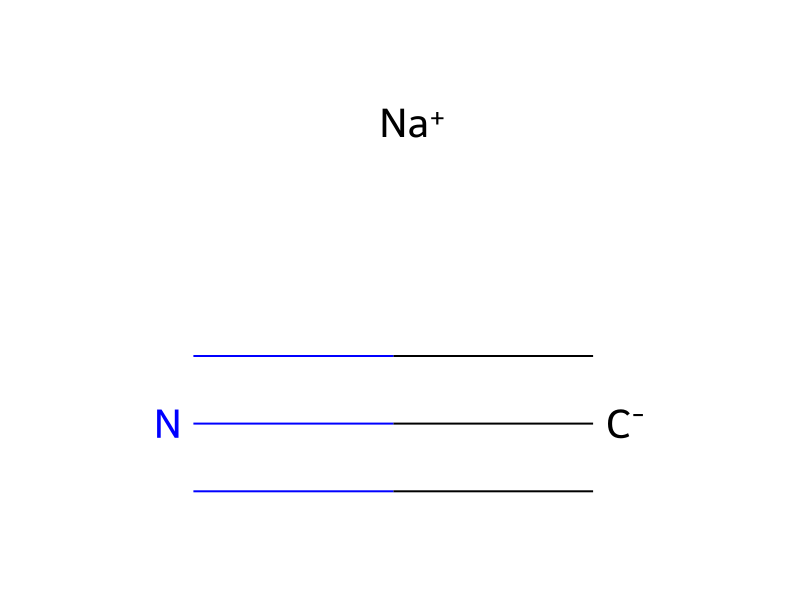

Product 1

Reagents, catalysts & solvents 1

Procedure
To a mixture of ethyl 5-(bromomethyl)-4-oxo-3,4-dihydrothieno[2,3-d]pyrimidine-2-carboxylate (2000 mg, 6.31 mmol) in DMF (10 mL) was added sodium cyanide (649 mg, 13.2 mmol) at room temperature, and the mixture was stirred for 12 hr. The reaction mixture was acidified with 1N hydrochloric acid, and extracted with ethyl acetate. The organic layer was washed with water and saturated brine, dried over anhydrous sodium sulfate, and concentrated under reduced pressure. The residue was crystallized from ethyl acetate to give the title compound as a pale-brown powder (300 mg, 18%).
Workup
- extractionextracted with ethyl acetate
- washThe organic layer was washed with water and saturated brine
- dry with materialdried over anhydrous sodium sulfate
- concentrationconcentrated under reduced pressure
- customThe residue was crystallized from ethyl acetate
Sources & evidence
- ORD record
- ord-d1241b60cb5142faae8f2c190d494c39
- Source dataset
- uspto-grants-2011_03
- Patent number
- US07915267B2
Reaction notes
Loading…