1,8-Diazabicyclo(5.4.0)undec-7-ene → 3-Bromo-5-(methylthio)pyridine
Reaction equation

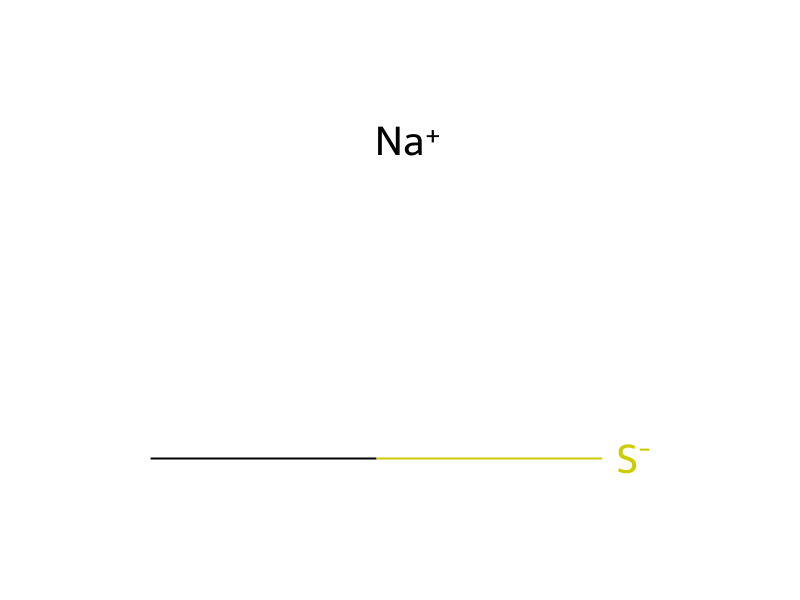
N12CCCN=C1CCCCC2.[Br:12][C:13]1[CH:14]=[N:15][CH:16]=[C:17](I)[CH:18]=1.[CH3:20][S-:21].[Na+]>C1(C)C=CC=CC=1.[Cu](Br)Br>[Br:12][C:13]1[CH:14]=[N:15][CH:16]=[C:17]([S:21][CH3:20])[CH:18]=1Participants
6





Conditions
- Temperature
- 90 °C
Procedure
Add 1,8-diazabicyclo[5.4.0]undec-7-ene (0.8 mL, 5.28 mmol) to a solution of 3-bromo-5-iodopyridine (500 mg, 1.76 mmol), (prepared as described in PREPARATION 21), sodium methanethiolate (370 mg, 5.28 mmol) and copper bromide (50.2 mg, 0.35 mmol) in toluene (3 mL). Stir in a sealed flask at 90° C. overnight and then partition between water and ethyl acetate. Separate the organic layer and wash with an aqueous saturated solution of sodium chloride. Dry (magnesium sulfate), filter and concentrate. Purify the residue by silica gel chromatography, eluting with hexane:ethyl acetate, to give the title compound (250 mg, 70%).
Workup
- custompartition between water and ethyl acetate
- customSeparate the organic layer
- washwash with an aqueous saturated solution of sodium chloride
- dry with materialDry (magnesium sulfate)
- filtrationfilter
- concentrationconcentrate
- customPurify the residue by silica gel chromatography
- washeluting with hexane
Sources & evidence
- ORD record
- ord-2183564348404f18bd97fa9e9ac7916e
- Source dataset
- uspto-grants-2011_03
- Patent number
- US07915424B2
Reaction notes
Loading…