Hydrochloric Acid → 4-(4-Bromo-2-nitro-phenylsulfanyl)-phenol
Reaction equation

[Br:1][C:2]1[CH:7]=[CH:6][C:5](F)=[C:4]([N+:9]([O-:11])=[O:10])[CH:3]=1.[SH:12][C:13]1[CH:18]=[CH:17][C:16]([OH:19])=[CH:15][CH:14]=1.C(=O)([O-])[O-].[Cs+].[Cs+].Cl>CN(C)C=O>[Br:1][C:2]1[CH:7]=[CH:6][C:5]([S:12][C:13]2[CH:18]=[CH:17][C:16]([OH:19])=[CH:15][CH:14]=2)=[C:4]([N+:9]([O-:11])=[O:10])[CH:3]=1Participants
6



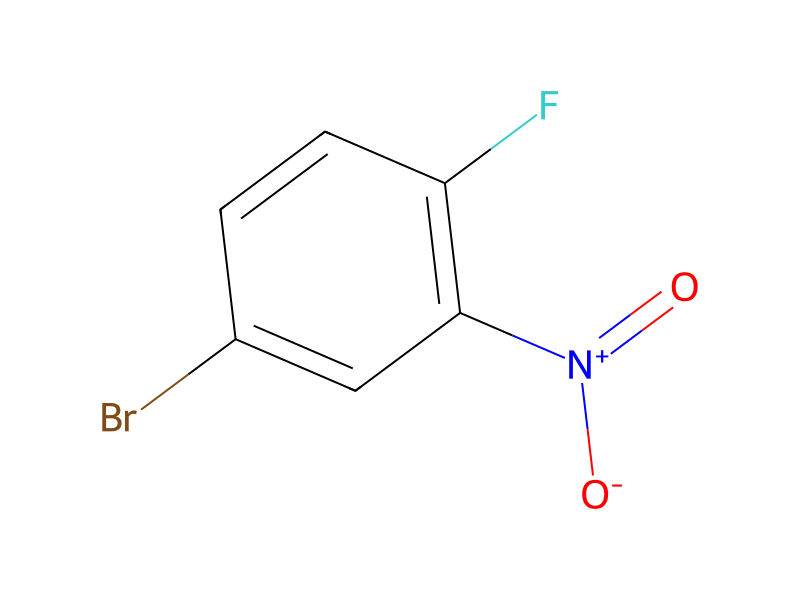


Conditions
- Temperature
- 100 °C
Procedure
A mixture of 4-bromo-1-fluoro-2-nitrobenzene (0.44 g, 2.0 mmol), 4-mercaptophenol (0.303 g, 2.4 mmol), and cesium carbonate (1.56 g, 4.8 mmol, 2.4 eq) in dimethylformamide (10 mL) was heated in a 100° C. oil bath for 3 hours and then cooled to room temperature. The reaction mixture was poured over ice water (50 mL), adjusted to pH 3 by the addition of 1N aqueous hydrochloric acid, and extracted with ethyl acetate (3×100 mL). The combined organic layers were dried over anhydrous magnesium sulfate, filtered and evaporated to provide the title compound as a thick yellow oil (0.70 g, >100%) that was utilized without further purification.
Workup
- temperaturecooled to room temperature
- extractionextracted with ethyl acetate (3×100 mL)
- dry with materialThe combined organic layers were dried over anhydrous magnesium sulfate
- filtrationfiltered
- customevaporated
Sources & evidence
- ORD record
- ord-b69b8634fde74362bc0872748a4c1f82
- Source dataset
- uspto-grants-2011_03
- Patent number
- US07915411B2
Reaction notes
Loading…