Potassium Carbonate → 1-Bromo-2-methoxy-4-propoxybenzene
Reaction equation

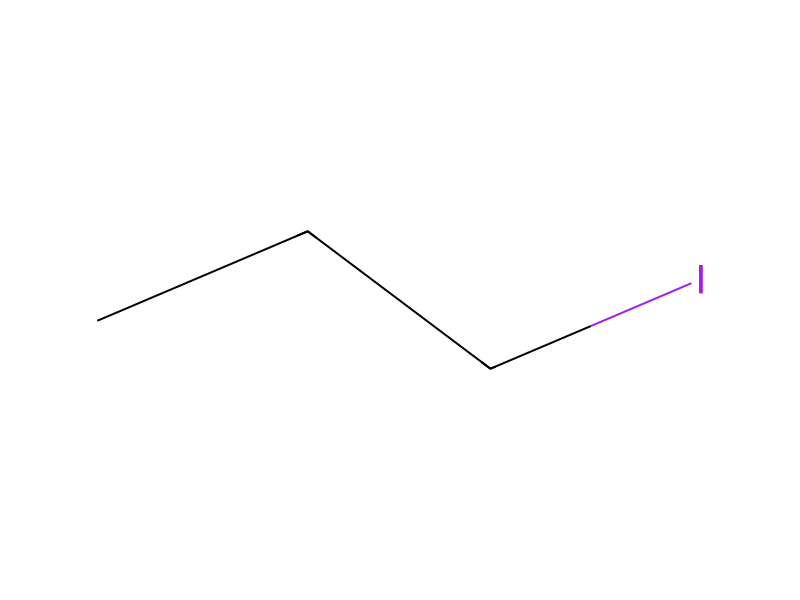
[Br:1][C:2]1[CH:7]=[CH:6][C:5]([OH:8])=[CH:4][C:3]=1[O:9][CH3:10].C(=O)([O-])[O-].[K+].[K+].[CH2:17](I)[CH2:18][CH3:19]>CC(C)=O>[Br:1][C:2]1[CH:7]=[CH:6][C:5]([O:8][CH2:17][CH2:18][CH3:19])=[CH:4][C:3]=1[O:9][CH3:10]Participants
5
Reactant 3


Product 1

Reagents, catalysts & solvents 1

Procedure
Prepare a solution of 4-bromo-3-methoxyphenol (6.5 g, 32 mmole), and potassium carbonate (15 g) in acetone (250 mL) under argon. Add n-propyl iodide (9.0 g, 5.2 mL, 53 mmole) and heat to reflux overnight. Cool to room temperature and filter. Rotovap to condense and evaporate the solvents. Check by thin layer chromatagraphy (25% ethyl aceate/75% hexane). Wash three times with 100 mL 3% potassium hydroxide. Dry the organic layer with magnesium sulfate. Filter and rotovap. Purify by chromatography and place under high vacuum to obtain the title compound (6.9 g, 88%). Rf=0.60 (EtOAc/hexane; 25:75).
Workup
- temperatureto reflux overnight
- filtrationfilter
- customRotovap to condense
- customevaporate the solvents
- washWash three times with 100 mL 3% potassium hydroxide
- dry with materialDry the organic layer with magnesium sulfate
- filtrationFilter
- customPurify by chromatography and place under high vacuum
Sources & evidence
- ORD record
- ord-c7076e5a361e4647a2e6332bb7696652
- Source dataset
- uspto-grants-1999_12
- Patent number
- US06004959
Reaction notes
Loading…