Sodium Carbonate → 4-Methyl-2-methylsulphinyloxazole
Reaction equation

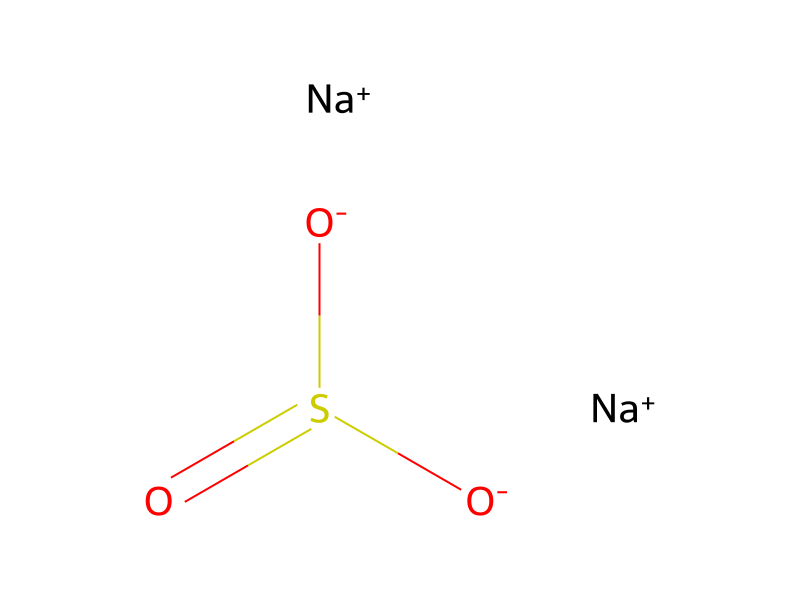
[CH3:1][C:2]1[N:3]=[C:4]([S:7][CH3:8])[O:5][CH:6]=1.C(=O)([O-])[O-:10].[Na+].[Na+].ClC1C=CC=C(C(OO)=O)C=1.S([O-])([O-])=O.[Na+].[Na+]>C(Cl)(Cl)Cl>[CH3:1][C:2]1[N:3]=[C:4]([S:7]([CH3:8])=[O:10])[O:5][CH:6]=1Participants
6





Procedure
4-Methyl-2-methylthiooxazole (6.06 g, 0.047 m) in dry chloroform (50 ml) was cooled to 0° C. with vigorous stirring and anhydrous sodium carbonate (6.06 g, 0.057 m) added. 96% 3-Chloroperbenzoic acid (8.90 g, 0.0495 m) in dry chloroform (100 ml) was then added dropwise over 45 minutes and the mixture stirred for a further 45 minutes at 0° C. Solid sodium sulphite (2.0 g) was added and the mixture allowed to warm to room temperature. The mixture was then filtered, the filtrate evaporated and the resulting oil was distilled under vacuum to give the title compound as a colourless oil 6.48 g (95%), b.p. (airbath)76° C./0.1 mm.
Workup
- stirringthe mixture stirred for a further 45 minutes at 0° C
- filtrationThe mixture was then filtered
- customthe filtrate evaporated
- distillationthe resulting oil was distilled under vacuum
Sources & evidence
- ORD record
- ord-d7e502c135f748e6b3902d2e5e20be90
- Source dataset
- uspto-grants-1979_03
- Patent number
- US04143047
Reaction notes
Loading…