Methyl Benzoate → Methyl Acrylate
Reaction equation

[C:1]([O:4][CH:5]=[CH2:6])(=[O:3])[CH3:2].[C:7]([O:11][CH3:12])(=[O:10])[CH:8]=[CH2:9].[Cl-].[Cl-].C([Al+2])C.[C:18]([O:26][CH3:27])(=[O:25])[C:19]1C=CC=C[CH:20]=1>CCCCCC>[C:1]([O:4][CH:5]=[CH2:6])(=[O:3])[CH3:2].[C:7]([O:11][CH3:12])(=[O:10])[CH:8]=[CH2:9].[C:18]([O:26][CH3:27])(=[O:25])[CH:19]=[CH2:20]Participants
Reactant 4

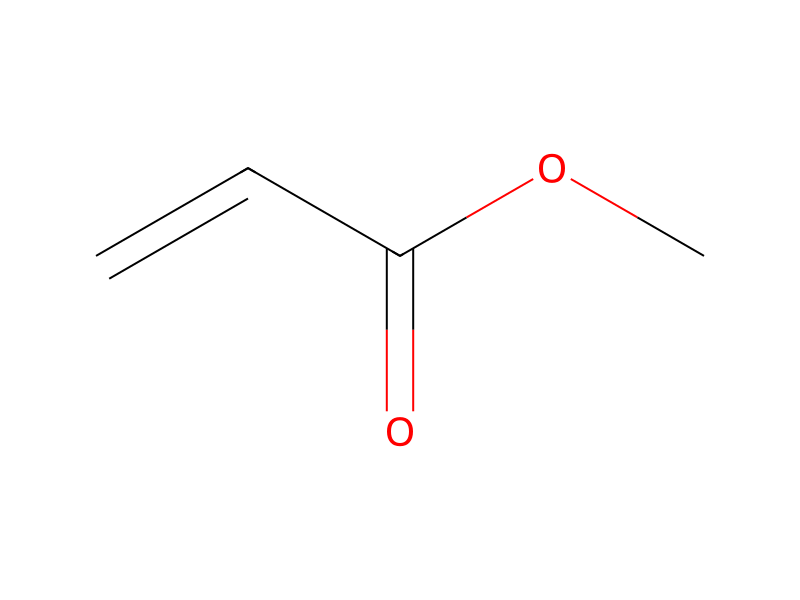


Product 2

Reagents, catalysts & solvents 1

Procedure
An equimolar mixture of vinyl acetate and methyl acrylate and an n-hexane solution of t-butyl peroxy isopropyl carbonate were continuously fed with stirring to an n-hexane solution containing a complex of ethylaluminum dichloride and methyl benzoate at 20° C. over the course of 5 hours. The reaction mixture was further polymerized for 15 hours to form a straight-chain copolymer of vinyl acetate/methyl acrylate having a methyl acrylate unit content of 50 mole% and a number average molecular weight of 10,000. The copolymer was treated in methanol in the presence of sodium methoxide as a catalyst at about 50° C. for about 5 hours to form a copolymer to be used as a starting material. From the yielded amount, elemental analysis values and infrared absorption spectrum of the starting copolymer, it was confirmed that this copolymer resulted from the conversion of the starting vinyl acetate unit of the vinyl acetate/methyl acrylate copolymer into a vinyl alcohol unit by alcoholysis.
Workup
- customThe reaction mixture was further polymerized for 15 hours
Sources & evidence
- ORD record
- ord-e69f96d7468245e58c3739fdf861a325
- Source dataset
- uspto-grants-1979_03
- Patent number
- US04144388
Reaction notes
Loading…