Triethylamine → HCID 20367044, compound
Reaction equation

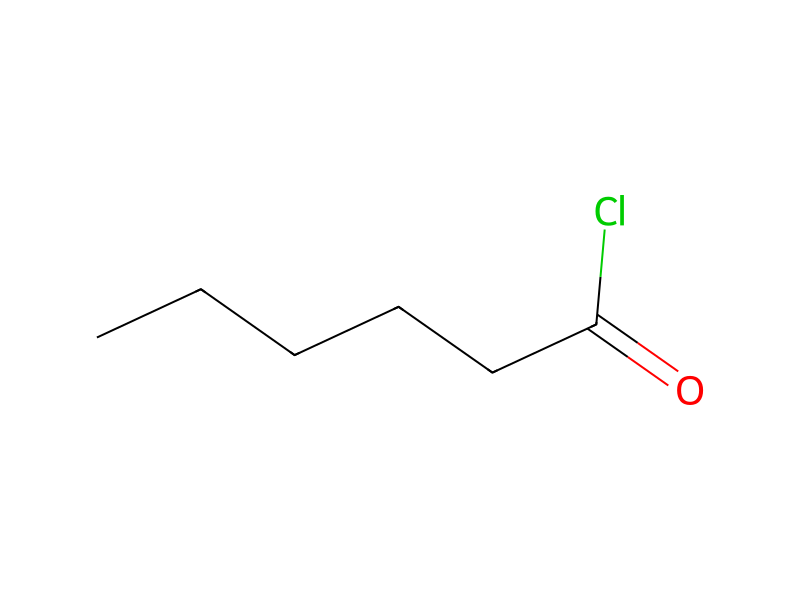
C(N(CC)CC)C.[Cl-].[CH2:9]([O:11][C:12]1([NH3+:15])[CH2:14][CH2:13]1)[CH3:10].[C:16](Cl)(=[O:22])[CH2:17][CH2:18][CH2:19][CH2:20][CH3:21]>O1CCCC1>[CH2:9]([O:11][C:12]1([NH:15][C:16](=[O:22])[CH2:17][CH2:18][CH2:19][CH2:20][CH3:21])[CH2:14][CH2:13]1)[CH3:10]Participants
Reactant 3


Product 1

Reagents, catalysts & solvents 1

Procedure
Triethylamine (2.22 g, 22 mmol) is added dropwise (15 min) with vigorous stirring at 0° to a solution of 1-ethoxycyclopropylammonium chloride (1.37 g, 10 mmol) and caproyl chloride (1.34 g, 10 mmol) in dry tetrahydrofuran (30 ml) and the mixture is stirred at room temperature for 1 hr. The precipitate is filtered off and the filtrate is evaporated in vacuo. The crystalline residue (1.85 g) is dissolved in petroleum ether (20 ml) and the solution is filtered through a short silica-gel column (2 cm × 10 cm). After evaporation the residue (1.30 g) is recrystallised from petroleum ether (at low temperature) yielding pure N-(1-ethoxycyclopropyl)-caproic amide, mp 47°-48.5° (1.0 g, 50%); NMR (60 MHz): δCDCl 3 = 0.7-1.9 (m, 16H), 2.0-2.4 and 2.4-2.8 (2 m, total 2H), 3,57 and 3.63 (2q, J=7.2 Hz, total 2H), 6.7 (br. s, 1H), (two rotamers).
Workup
- filtrationThe precipitate is filtered off
- customthe filtrate is evaporated in vacuo
- dissolutionThe crystalline residue (1.85 g) is dissolved in petroleum ether (20 ml)
- filtrationthe solution is filtered through a short silica-gel column (2 cm × 10 cm)
- customAfter evaporation the residue (1.30 g)
- customis recrystallised from petroleum ether (at low temperature)
Sources & evidence
- ORD record
- ord-2db1fd94296544b6821d0c3633512029
- Source dataset
- uspto-grants-1978_02
- Patent number
- US04076840
Reaction notes
Loading…