Ethyl Acetate → (3,5-Dinitrophenoxy)-acetonitrile
Reaction equation

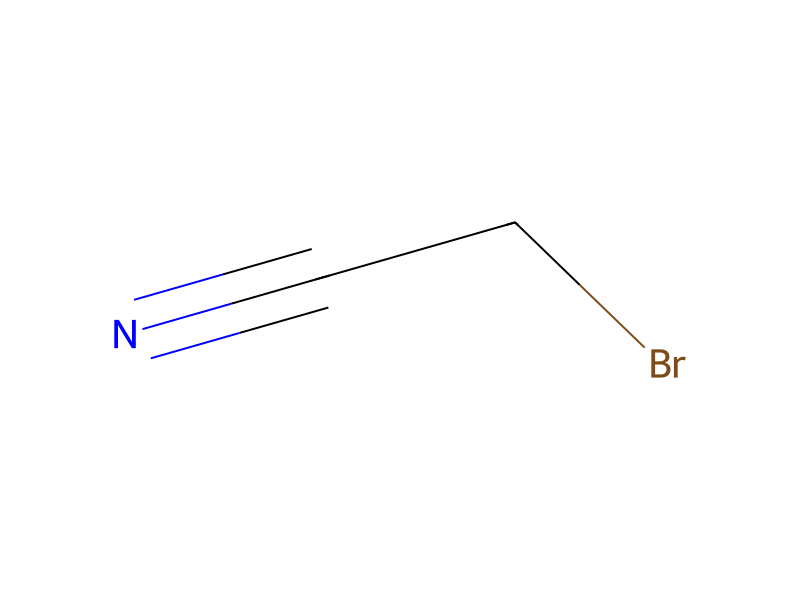
[N+:1]([C:4]1[CH:5]=[C:6]([OH:13])[CH:7]=[C:8]([N+:10]([O-:12])=[O:11])[CH:9]=1)([O-:3])=[O:2].Br[CH2:15][C:16]#[N:17].C(=O)([O-])[O-].[K+].[K+].C(OCC)(=O)C>CC(=O)CC>[N+:1]([C:4]1[CH:5]=[C:6]([CH:7]=[C:8]([N+:10]([O-:12])=[O:11])[CH:9]=1)[O:13][CH2:15][C:16]#[N:17])([O-:3])=[O:2]Participants
6
Reactant 4



Product 1

Reagents, catalysts & solvents 1

Conditions
- Temperature
- 70 °C
Procedure
3,5-Dinitrophenol (15.0 g) and 10.75 g of bromoacetonitrile were dissolved in 85 ml of 2-butanone and the solution was treated with 33.78 g of potassium carbonate. The heterogenous mixture was stirred and heated at 70° C. for 5 hours, cooled to room temperature, poured into ethyl acetate, washed with water, dried over magnesium sulfate, and evaporated. The residue was purified by silica gel chromatography eluting with dichloromethane/hexane (3:1) to give 11.24 g of (3,5-dinitrophenoxy)-acetonitrile as a light yellow solid.
Workup
- temperaturecooled to room temperature
- washwashed with water
- dry with materialdried over magnesium sulfate
- customevaporated
- customThe residue was purified by silica gel chromatography
- washeluting with dichloromethane/hexane (3:1)
Sources & evidence
- ORD record
- ord-fe5a47111e5546f59eaaf06879b7ea2b
- Source dataset
- uspto-grants-1999_09
- Patent number
- US05952362
Reaction notes
Loading…