Phosgene → (4-Phenoxyphenyl) 4-hydroxypiperidine-1-carboxylate
Reaction equation

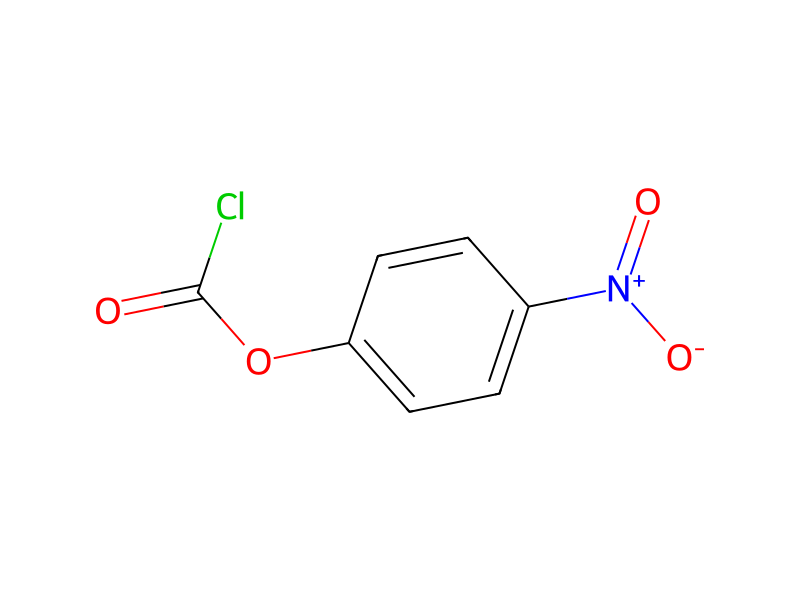
[O:1]([C:8]1[CH:13]=[CH:12][C:11]([O:14][C:15]([N:17]2[CH2:22][CH2:21][CH:20]([O:23]C(=O)NCCCCCCOC(=O)NCCCCCC)[CH2:19][CH2:18]2)=[O:16])=[CH:10][CH:9]=1)[C:2]1[CH:7]=[CH:6][CH:5]=[CH:4][CH:3]=1.C(Cl)(Cl)=O.O(C1C=CC(O)=CC=1)C1C=CC=CC=1.ClC(OC1C=CC([N+]([O-])=O)=CC=1)=O.C(=O)([O-])[O-].OC1CCNCC1>>[O:1]([C:8]1[CH:9]=[CH:10][C:11]([O:14][C:15]([N:17]2[CH2:18][CH2:19][CH:20]([OH:23])[CH2:21][CH2:22]2)=[O:16])=[CH:12][CH:13]=1)[C:2]1[CH:3]=[CH:4][CH:5]=[CH:6][CH:7]=1Participants





Procedure
A multistep synthesis of 4-[6-(hexylcarbamoyloxy)hexylcarbamoyloxy]-piperidine-1 -carboxylic acid 4-phenoxyphenyl ester (1) as disclosed in the cited European Patent Application is shown in Scheme I where intermediate hydroxy compounds are reacted with phosgene or a phosgene equivalent and the resultant mixed carbonic acid diesters are used to aryloxycarbonylate or alkoxycarbonylate an appropriate amine. Thus, 4-phenoxyphenol (2) is treated with 4-nitrophenyl chloroformate (NPC) and condensation of the corresponding carbonate (3) with 4-hydroxypiperidine affords 4-hydroxy-1-piperidine-carboxylic acid 4 -phenoxyphenyl ester (4). Repeating the NPC activation step with the latter intermediate and the following condensation of carbonate (5) with 6-aminohexanol yield 4-[(6 -hydroxyhexyl)carbamoyloxy]-piperidine-1-carboxylic acid 4phenoxyphenyl ester (6). To complete the synthesis of (1), the alcoholic function of this intermediate is activated again with NPC and treated with hexylamine, or reacted directly with hexylisocyanate. ##STR1##
Sources & evidence
- ORD record
- ord-f2c9d46a33334d52be86956ec7aa9fff
- Source dataset
- uspto-grants-1999_09
- Patent number
- US05952506
Reaction notes
Loading…